






A flurry of doom-laden posts over social media followed the announcement, on Friday, by the minister of environment and energy, that the government has found a way to override the expert opinions of its own technical agencies, when they don’t go along with what it (the government, pressured by Brussels) wants.
As Expresso explains, “although it continues to respect the decisions of environmental licensing bodies, the government admits to considering the possibility of considering a particular project as having superior national interest”, in which case the decisions of environmental licensing bodies, if these are negative, will stand for nothing.
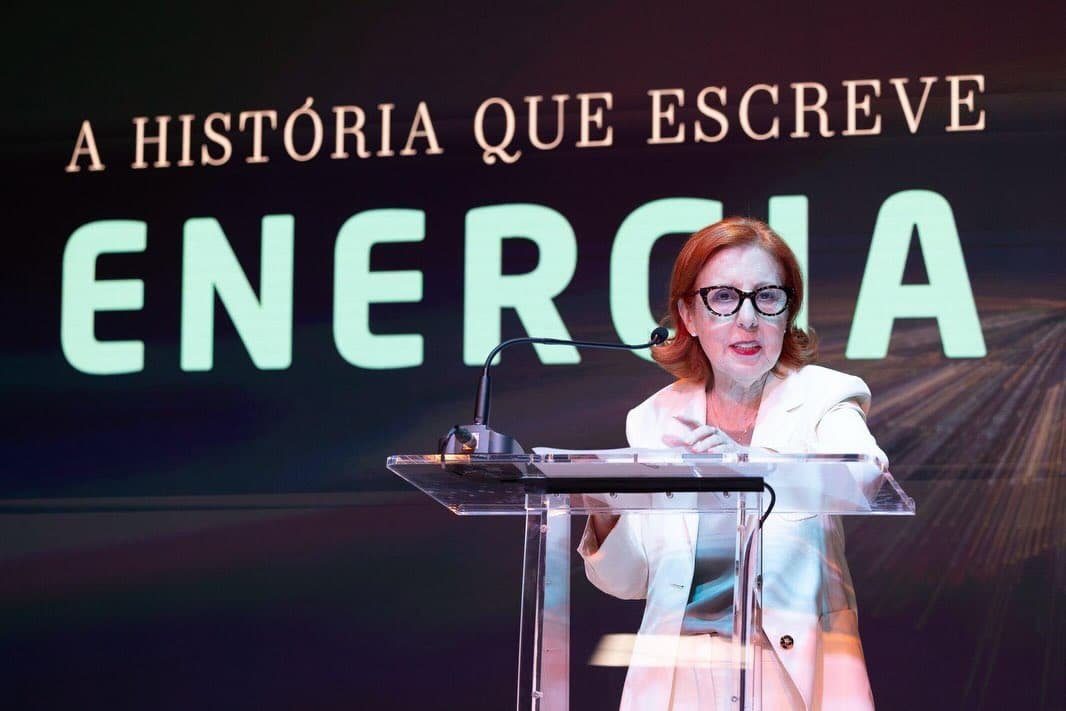
Of course, minister Maria de Graça Carvalho didn’t put it quite so starkly.
“Our priority will always be to develop processes with all competent entities (…) But, ultimately, this possibility (of ignoring the competent entities) will exist, and we will not forgo using it in duly justified cases,” she said.
The issue here is RED III – the EU’s Renewable Energies Directive, binding member states to a set of targets. In Portugal’s case, these targets have seen the mega solar farm projects that communities in Beira Baixa have risen up against (amongst many others) – and which environmental agency APA has vetoed, on the basis of ‘serious structural impacts’.
It has been clear for months that the government is on the side of the projects’ promoters in the Beira Baixa projects. Prime minister Luís Montenegro referred in parliament early this year of the need for promoters to ‘change the wording’ (of their vetoed proposals) in order to satisfy APA misgivings.
But now, it looks like the government has come up with a more effective ruse, altogether: just do away with APA’s decision-making, “in the superior interest of the nation”.
The problem with this argument, say all those who blanched at the words of the environment minister on Friday, is that it depends on who is deciding what is in the superior interest of the nation.
Maria da Graça Carvalho periodically refers to the irritation posed by citizens who challenge environmental projects. She did so again on Friday, when she announced that the ‘green map’ of Renewable Energy Deployment Acceleration Zones is currently undergoing consultation with various entities, and will then move to a public consultation phase, in time for the summer holidays (this being the usual time for governments to put ‘contentious’ environmental projects up for consideration, as many people will be more distracted than usual, with children home from school, etc.)
“The minister hopes that this “green map will improve the relationship between projects, developers, populations, and citizens”, writes Expresso – “and also that it will yield results in terms of court rulings.
“We have several injunctions being filed in court every week. In certain regions of the country, there isn’t a single project without an injunction,” minister Carvalho pointed out. “There are projects with seven lawsuits simultaneously. To move forward, we need greater consensus, and for the courts to act accordingly.”
Critics may hold on to the fact that the courts – by their very nature/ the separation of powers – are not bound by political arguments of superior national interest. This is also almost certainly why the government sees “several injunctions being filed in court every week”.
Suffice it to say, the following statement was one of the most poignant that have appeared over social media this weekend, and should make everyone in positions of power ‘pause and think’. There have been hundreds of other comments – many of them under Expresso’s text, and each one showing antipathy towards the minister’s statements. In fact, there have been many comments calling for “the people to rise up, and tell politicians they cannot do this to our country”. But the followig is perhaps the most ‘poignant text’, posted on the ‘Movimento Não as Minas – Montalegre’ – another civic group set up to try and protect a corner of the country threatened by open-pit mining on an industrial scale, again justified by Brussel’s ‘energy transition’:
“It is my conviction that if this government completes its term, there will be nothing left of the country, period. I’m talking about the megalomaniac photovoltaic projects that will ruin agricultural reserves and the populations that preserve and depend on them. I’m talking about lithium and tungsten mining that will ruin everything else – including our only natural park, Peneda-Gerês. We can safely say goodbye to nature tourism and rural tourism. Goodbye to cattle grazing and sustainable agriculture. Goodbye to the biodiversity that is fundamental to the health of ecosystems. Goodbye to ecosystems. With the reshuffling of those in charge of public environmental services, the only aim is to pave the way for multi-million dollar deals from the European Union; they are creating companies with that sole purpose. Further south, the outlook is not encouraging. Goodbye Iberian Lynx. And with the erosion of the Portuguese coast, we can soon say goodbye to Algarve tourism. With the massive destruction of our natural heritage from north to south of the country, coupled with the systematic destruction that public services—health, housing, education, justice—have been suffering for decades, we will have no country left to tell the tale. Of the country we once were, with good people, good food, good weather, and beautiful landscapes, only memories will remain.”
Jornal Económico gives one hint of ‘hope’ for those who are losing it fast. Transposition of the RED III European Directive “was approved by the government in March”, but the diploma still “awaits promulgation by President of the Republic, António José Seguro.”
Sources: Expresso/ Jornal Económico/ Facebook