








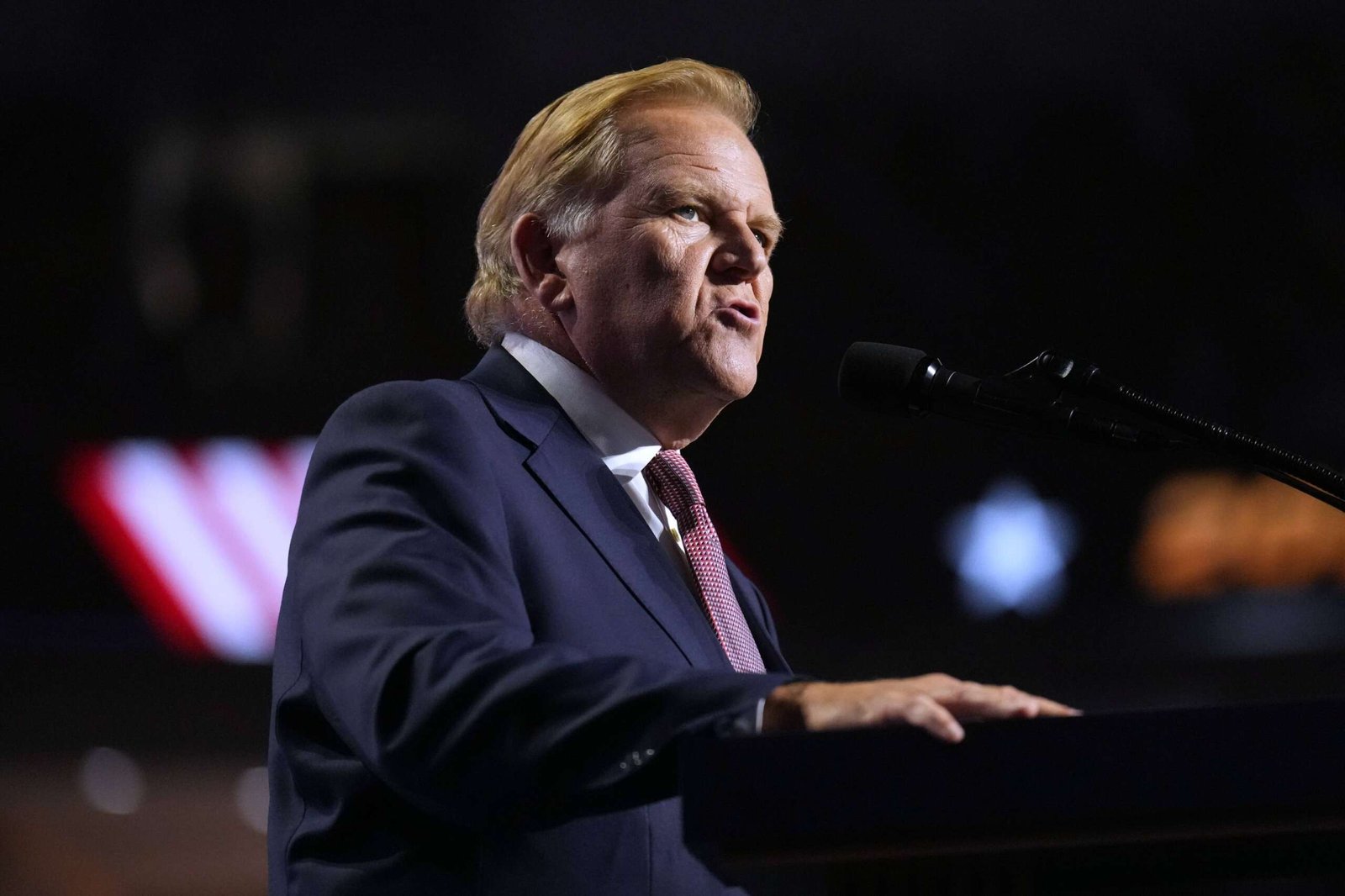
The ambitious $350 billion defense reconciliation package, a cornerstone of the Trump administration’s fiscal 2027 budget request, is effectively dead, according to Rep. Mike Rogers (R-Mich.).
Rogers, the top Republican on the House Armed Services Committee, confirmed during a Hudson Institute event on Wednesday that the massive figure is politically unachievable. However, he signaled that a “skinny” version of the reconciliation bill—potentially scaled down to around $100 billion—remains a viable path forward as Congress races to address urgent defense requirements.
The Trump administration had requested a record-setting $1.5 trillion in total defense spending for the upcoming fiscal year, with $1.15 trillion in discretionary funding and the $350 billion reconciliation request. The latter was intended to fund high-priority items like the “Golden Dome” missile defense system and critical munitions. While the package faced intense opposition from Democrats, the administration had used it as a signal of its strategic priorities.
With current government funding set to expire on Dec. 11 and a looming transition of power on Jan. 3, the window for action is rapidly closing. “It looks like we are going to be able to get a reconciliation bill of some size,” Rogers said. “But $350 billion is not going to happen—you may have guessed that.”
As the reconciliation prospects shrink, congressional appropriators are scrambling to move key priorities into the base defense budget. Senate appropriators recently unveiled a $1.1 trillion spending plan, shifting nearly $69 billion from the doomed reconciliation proposal into the baseline to ensure stability for the Joint Force.
The legislative maneuvering comes at a high-stakes moment, as lawmakers are also struggling to finalize the annual National Defense Authorization Act (NDAA), which has been passed for 65 consecutive years. Rogers poured cold water on several controversial provisions being debated for the NDAA, specifically ruling out the inclusion of a “right to repair” measure for military equipment. He argued that the Department of Defense had failed to provide any evidence that contractors were withholding necessary repair capabilities, calling the proposal a non-starter.
Similarly, the proposed establishment of a new Autonomous Warfare Command, championed by Defense Secretary Pete Hegseth, is unlikely to survive this session. “Autonomy is going to be here to stay, but it’s too premature to say that we need a command for that,” Rogers stated, noting that major defense reforms require more time for debate.
To avoid a government shutdown and navigate the partisan divide, leadership is now considering a massive “omnibus” style legislative bundle. Reports suggest House Republicans are weighing a plan to combine the fiscal 2027 NDAA, a continuing resolution, the renewal of the Foreign Intelligence Surveillance Act, and full-year appropriations into one colossal package to clear the decks before the new Congress is sworn in.
Disclaimer: This content is auto-generated for informational purposes only.
Source: Read Original News