






Clean Energy Shield: PM Modi Credits Renewable Focus for Buffering India Against Geopolitical Volatility
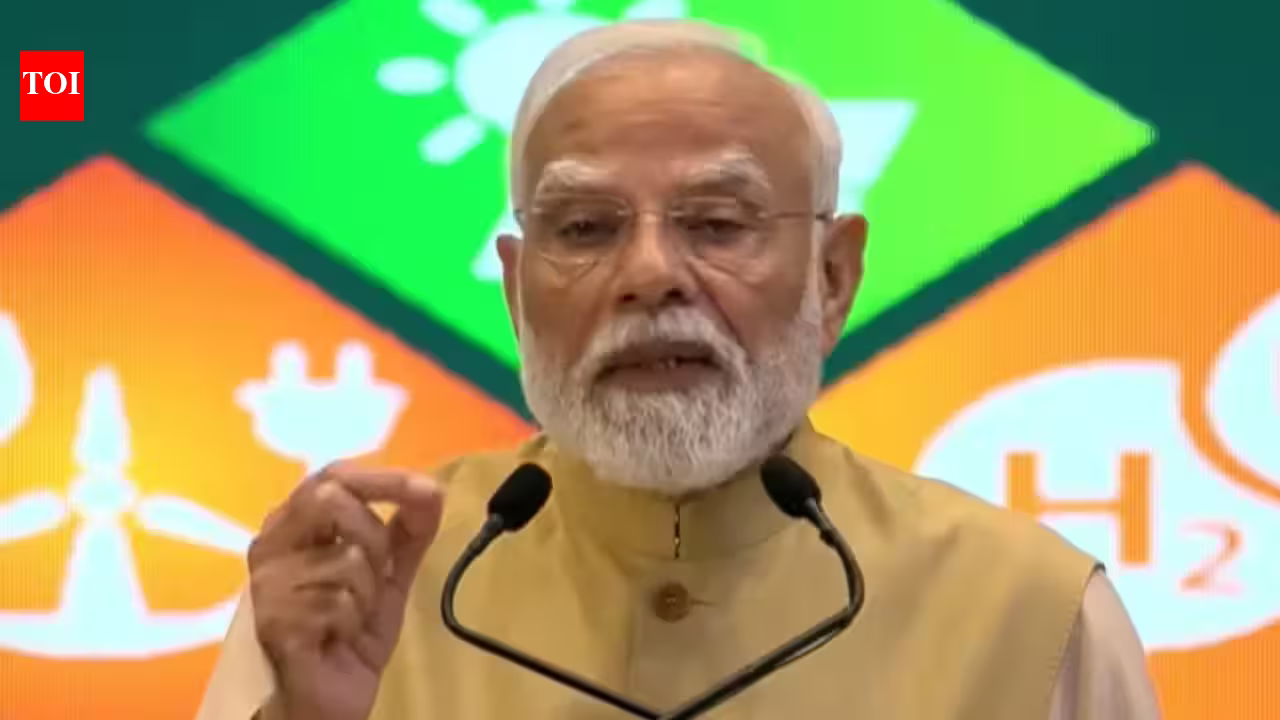
NEW DELHI: Prime Minister Narendra Modi asserted on Monday that India’s strategic pivot toward renewable energy over the last decade has served as a vital shock absorber for the national economy. Speaking at the inauguration of the Bharat Renewable Energy Summit at Bharat Mandapam, the Prime Minister highlighted that the country’s robust clean energy infrastructure has shielded it from the worst impacts of the ongoing West Asia crisis, which has historically threatened global energy supplies and market stability.
A Strategic Buffer Against Global Chaos
Addressing the summit, PM Modi emphasized that the link between energy security and economic security has become increasingly undeniable. The volatility in global energy markets, exacerbated by regional conflicts, serves as a stark reminder of the dangers of over-reliance on fossil fuels.
“The global crisis has sent a clear message to every nation: economic stability is inextricably tied to energy security,” the Prime Minister stated. He noted that had India not committed to a rapid transition toward non-fossil fuel sources over the past ten years, the country’s economic growth trajectory would have faced significantly more severe disruptions due to fluctuating oil and gas prices.
The Road to 500GW
India’s progress in the green sector is not merely a goal but a demonstrated reality. The country has already achieved an installed non-fossil power capacity of nearly 300GW, which now constitutes more than half of the nation’s total energy mix. Building on this momentum, the government has set a firm target to scale this to 500GW by 2030.
The financial roadmap for this transition is equally ambitious. Projections suggest that the clean energy sector—encompassing power generation, state-of-the-art transmission networks, manufacturing hubs, and advanced energy storage systems—is poised to attract over Rs 20 lakh crore ($220 billion) in investment by the end of the decade. This follows a highly productive decade that saw Rs 15 lakh crore poured into the sector, with Rs 6 lakh crore invested in just the last two years.
From ‘Annadata’ to ‘Urjadata’
Beyond large-scale utility projects, the Prime Minister advocated for the democratization of energy production. Through initiatives like the PM Surya Ghar Muft Bijli Yojana and PM-KUSUM, the government is actively integrating solar technology into the daily lives of citizens.
A significant highlight of the address was the Prime Minister’s vision for the farming community. He urged farmers to transcend their traditional roles and transform into energy producers. By utilizing vacant farmland and field boundaries for solar panel installation, the Prime Minister stated that the Annadata (food providers) could evolve into Urjadata (energy providers).
Innovations in Clean Cooking
Looking toward the next phase of energy independence, the Prime Minister launched a call to action for the nation’s startup ecosystem. He challenged innovators to devise sustainable solutions that would allow households to utilize rooftop solar power for cooking, thereby reducing the country’s substantial dependence on imported gas. Furthermore, he encouraged the widespread adoption of electric vehicles, paired with home-based solar charging, to create a truly circular and self-sufficient green energy ecosystem.
By highlighting India’s unique combination of political stability and investor-friendly policies, PM Modi extended an open invitation to global and domestic stakeholders, declaring that a “new sky of opportunities” is ready to be captured within India’s flourishing clean energy landscape.
Disclaimer: This content is auto-generated for informational purposes only.
Source: Read Original News