






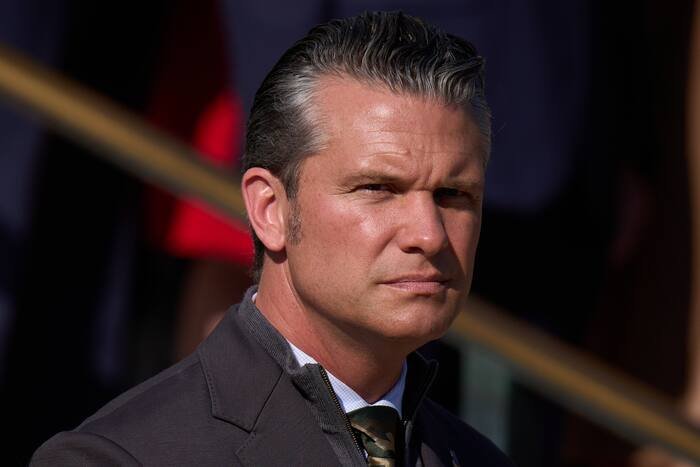
CARACAS – Defense Secretary Pete Hegseth arrived in Caracas on Wednesday for an unannounced visit to meet with interim Venezuelan authorities, a move that highlights the Trump administration’s deepening influence over the South American nation following the U.S.-led ouster of Nicolás Maduro earlier this year.
The surprise visit to the presidential palace comes as the White House aggressively pursues a strategy of resource acquisition and regional military alignment. During his visit, Hegseth held discussions with acting President Delcy Rodríguez, with Venezuelan state television airing footage of the two officials in the capital. The meeting signals a further hardening of ties between the current Venezuelan interim government and Washington, following visits earlier this year from the U.S. Interior and Energy secretaries.
The Trump administration’s engagement is largely driven by a sweeping, controversial energy deal brokered by Hegseth, which granted the United States significant control over Venezuela’s vast oil reserves. In a report released this month, the White House stated it has returned nearly $12 billion—or 99% of the revenue generated from these oil sales—back to the Venezuelan government.
Beyond energy, the defense partnership is expanding into the security sector. Rodríguez confirmed that the countries have signed cooperation agreements that will provide U.S. training and technology to the Bolivarian National Armed Force.
“The possibility again to strengthen the training of our armed force, to favor its operational equipment, and to facilitate access to new technologies is very beneficial,” Rodríguez said during the broadcast, framing the collaboration as a necessary step to “face common threats.”
The Pentagon’s direct involvement mirrors the work of Gen. Francis Donovan, head of U.S. Southern Command, who has visited the country at least twice this year. The military buildup is part of a broader Trump administration initiative to assert dominance in the Western Hemisphere, specifically under the banner of combating drug cartels. Since September 2025, U.S. forces have engaged in frequent strikes against alleged smuggling vessels in the Caribbean and Pacific, resulting in at least 240 deaths, though U.S. officials have provided minimal public evidence to substantiate claims that the vessels were transporting narcotics.
Despite the high-level military cooperation, the political climate in Venezuela remains volatile. Rodríguez, a former Maduro ally, has remained in power well past the expiration of her court-approved term in July. The uncertainty surrounding future elections has drawn criticism from within the country, with many Venezuelans questioning the White House’s priorities. While the capture of Maduro in a clandestine nighttime raid was welcomed by many, critics argue that the U.S. focus on securing oil and minerals has sidelined the push for a return to democratic governance.
Opposition leader María Corina Machado recently returned from exile, a move U.S. Secretary of State Marco Rubio touted as a byproduct of “reconciliation talks.” However, with no date set for a new presidential election, the path forward for Venezuela remains deeply uncertain.
Disclaimer: This content is auto-generated for informational purposes only.
Source: Read Original News