








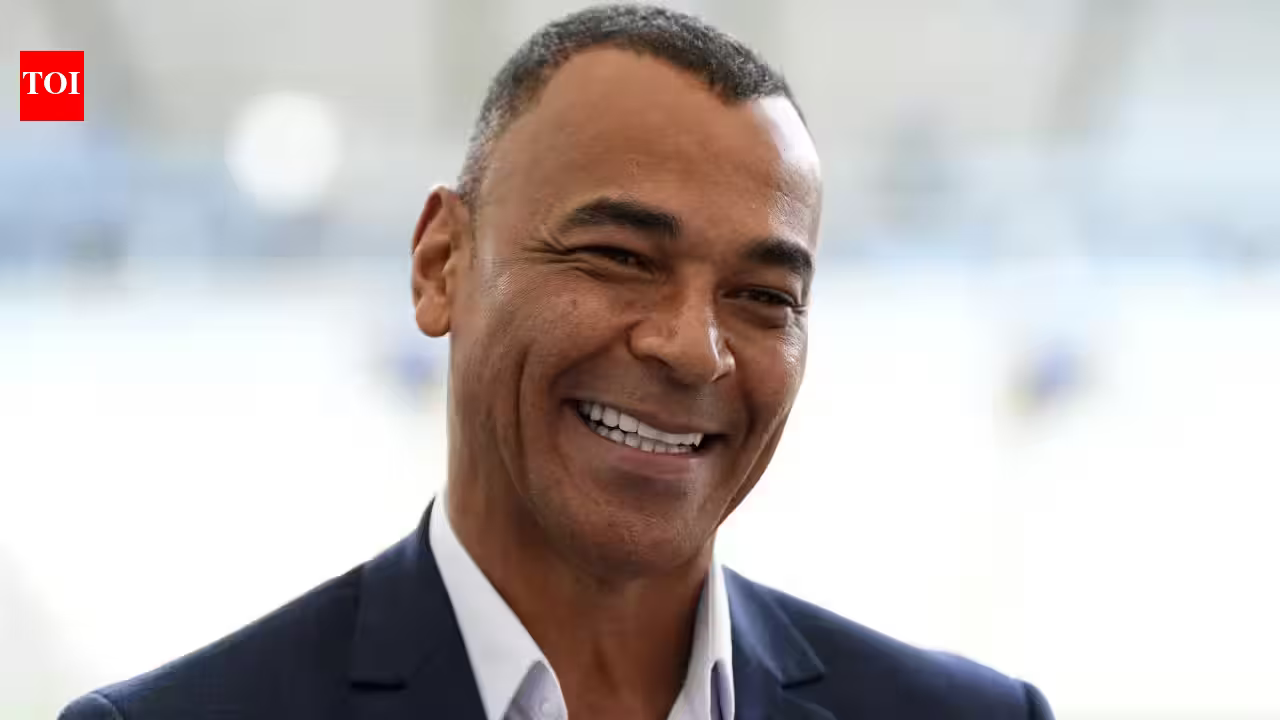
Football Legend Cafu Inspires Students in Navi Mumbai, Offers Insight into Brazil’s Future
Navi Mumbai: The air at Pillai University was thick with anticipation as one of football’s most iconic figures, Cafu, stepped onto the stage. Even two decades after his final whistle, the legendary Brazilian full-back retains the same warmth and infectious energy that defined his storied career. With his trademark smile lighting up the auditorium, he engaged with hundreds of students, many of whom had donned the iconic yellow and green jerseys of the Seleção to catch a glimpse of a man who stood atop the footballing world in 2002.
The event reached a fever pitch when the two-time World Cup winner took to the turf for an impromptu skills display alongside Indian international Nikhil Poojary. The lighthearted exchange served as a tantalizing preview of a much larger spectacle: the upcoming high-profile friendly between India and Brazil in Kolkata.
Bridging the Gap: India’s Opportunity
The announcement of the match has triggered widespread debate across the Indian football fraternity. With India currently ranked 138th by FIFA, critics have questioned the tangible benefits of facing a juggernaut like Brazil. However, Cafu remains an optimist, viewing the fixture as a critical milestone for the development of the sport in the region.
“Football has evolved significantly,” Cafu noted during a media interaction. “Rankings are numbers, but the pitch is where the truth lies. We have seen in recent World Cups that teams previously considered underdogs can compete on equal terms with the titans of the game. For the Indian national team, testing themselves against a five-time world champion is an invaluable experience. It fosters a connection between our nations and provides the players with a benchmark of excellence.”
The Brazilian icon believes that with FIFA’s expansion of the World Cup, the global landscape is opening up, and India’s participation in high-level exposure matches is a vital step toward future growth.
Reflecting on the “Seleção” Drought
While the mood was celebratory, the conversation inevitably shifted toward the current state of the Brazilian national team. The country has not tasted World Cup glory since Cafu himself lifted the trophy in Yokohama in 2002. As the drought stretches toward 28 years by the 2030 tournament, pressure on the team continues to mount.
Cafu is the only player in history to have appeared in three consecutive World Cup finals, a feat that defines the golden era of Brazilian football. He is quick to emphasize that the current climate cannot be compared to the one he played in.
“You cannot compare the past to the present,” he asserted. “That was a different era with different challenges. This is a new generation of players, and we must support them as they strive to reclaim the glory that our generation enjoyed. The World Cup is not an exact science; the strongest side on paper doesn’t always emerge as the champion. Success requires a perfect alignment of factors.”
The Challenge of “Brasilidade”
One of the most pressing questions surrounding modern Brazilian football is whether the trend of exporting young talent to European clubs at an increasingly early age has hollowed out the national identity. Cafu, who enjoyed a glittering career in Italy with AC Milan and Roma, admits he is conflicted on the matter.
“When I played my third final, I was based in Europe, so I understand the path,” he explained. “However, I believe there is a nuance here. Most of our successful teams were comprised of players based abroad, but today’s players leave so young that they perhaps fail to develop a deep identity with the Brazilian public and the domestic game.”
He identified this missing link as Brasilidade—the fundamental feeling of playing for one’s roots. “They need that connection—feeling the weight of the national jersey and the pride of representing the country’s culture before they move overseas. That sense of belonging is essential for the national team’s success.”
Evolution of the Modern Full-Back
Known for his tireless, surging runs up the right flank, Cafu’s playing style revolutionized the full-back position. He recalls a time when he would cover 22 kilometers in a single match, attacking with the fervor of a winger and defending with the discipline of a center-back.
When asked about the tactical shifts in the modern game, he expressed a degree of sympathy for today’s wing-backs. “Modern coaching systems are much more restrictive,” he observed. “They prioritize tactical rigidity, which often prevents full-backs from overlapping or reaching the byline with the same freedom I had. In my day, we were ‘stubborn’—we played with intensity, and we didn’t wait for permission to attack. We simply loved the game.”
As the session drew to a close, the legend was asked the eternal question: Ronaldo Fenômeno or Lionel Messi? The answer came without a second’s hesitation, delivered with a broad, knowing grin: “Ronaldo Fenômeno.”
Disclaimer: This content is auto-generated and paraphrased.
Source: Read Original News