







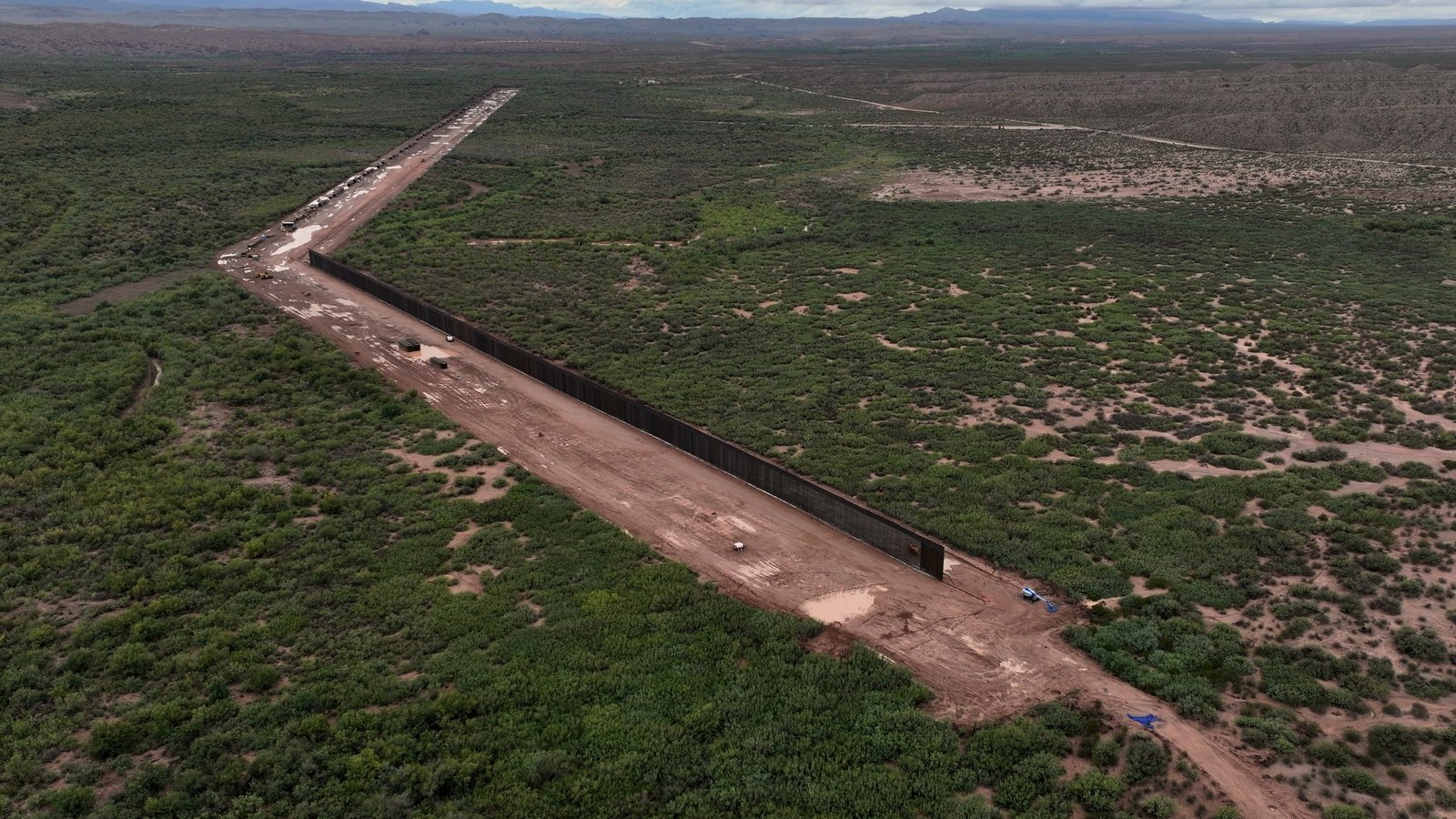
WASHINGTON — The Supreme Court cleared the way Monday for the Trump administration to resume construction of the border wall in the Big Bend region of Texas, handing a significant victory to the White House while dealing a sharp blow to a bipartisan coalition of opponents.
The border wall, a signature centerpiece of President Donald Trump’s domestic agenda, is aimed at fulfilling a campaign promise to secure the entirety of the U.S.-Mexico border. With $46 billion in funding authorized by Congress last summer, the administration has maintained a rapid pace of development, currently erecting approximately 12 miles of barriers per week across the southern boundary.
To facilitate this rapid progress, the federal government has utilized sweeping waivers to circumvent environmental regulations and construction oversight laws that historically delay large-scale infrastructure projects. This strategy has sparked intense legal battles, most notably in the rugged terrain of Texas’s Big Bend region.
Local opponents, including a bipartisan group of stakeholders, have vocally protested the construction, which includes plans for 30-foot-tall steel walls, vehicle barriers, and expansive new road networks. Critics contend the project is a colossal waste of taxpayer funds, arguing that the Big Bend area—which contains the iconic Big Bend National Park—experiences some of the lowest rates of illegal immigration along the entire border. Local leaders have urged the administration to prioritize surveillance technology, such as drones and sensors, over static barriers, arguing that the wall threatens the region’s unique landscape, local economy, and historical way of life.
The controversy previously reached a boiling point when a Texas judge ruled in favor of these opponents, finding that Congress had likely not authorized such broad regulatory waivers for a region where border security challenges are minimal. The judge ordered an immediate halt to all construction activity, impacting both state-owned and private lands in addition to federal park acreage.
The Trump administration quickly challenged that ruling, arguing that the judiciary had overstepped its authority. Federal attorneys maintained that the law strictly limits court challenges against construction waivers and warned that leaving “gaps” in the wall would inadvertently create new funnels for drug trafficking and illicit migration.
Monday’s Supreme Court order effectively stays the lower court’s injunction, allowing the administration to proceed with construction while the underlying legal case continues to move through the appeals process.
For the White House, the decision serves as a significant boost to its strategy of using executive authority to expedite the wall’s completion. For the local communities in Big Bend, however, the decision marks a grim milestone in their ongoing fight to protect the area’s environmental integrity. As the litigation unfolds, the steel barriers will continue to rise across the Texas landscape, cementing a project that remains one of the most divisive and consequential infrastructure efforts in modern American history.
Disclaimer: This content is auto-generated for informational purposes only.
Source: Read Original News