







TEMPO.CO, Jakarta – The rapid evolution of artificial intelligence (AI) has revolutionized how travelers around the world plan and book their journeys, triggering a massive shift in travel patterns, particularly within the global Muslim travel market, which is increasingly dominated by digitally savvy younger generations.
Latest data from the 2026 Global Muslim Travel Index (GMTI) report reveals that up to 80 percent of travelers now rely on AI tools as personal vacation assistants. The integration of this technology has radically streamlined the consumer decision-making process. Tasks such as sourcing destination information, verifying Muslim-friendly amenities, and finalizing bookings, which previously took days, are now completed by algorithmic engines in a matter of seconds.
Reflecting on this phenomenon, CrescentRating and HalalTrip CEO and Founder Faizal Bahardeen emphasized that AI algorithms have compressed the travel decision-making window from days to mere moments.
In response to these changing patterns, tourism industry players are beginning to deploy the AI Recommendation Readiness Audit (AIRA) to assess the contextual clarity of their offerings and ensure destination websites are optimally optimized for recommendation by AI-driven travel engines.
“If it cannot be read by machines (machine-readable), then it will not be visible to the next generation of Muslim travelers and will not be recommended by AI systems,” Bahardeen noted during the virtual launch of the Mastercard-CrescentRating Global Muslim Travel Index (GMTI) 2026 on Thursday, June 18, 2026.
Furthermore, the latest GMTI data highlights Asia as the primary center of gravity for the sector, accounting for 65 percent of all global Muslim arrivals, or roughly 128 million trips. Amid ongoing global geopolitical volatility, intra-Asian travel corridors continue to strengthen.
This year’s GMTI rankings place Malaysia at the pinnacle with a score of 83, followed closely by Indonesia, Saudi Arabia, and Turkey, which are tied for the next position with scores of 79. In the non-Organization of Islamic Cooperation (OIC) category, Singapore leads the world in 10th place overall with a score of 72.
AI Drives the Emergence of “Hidden Gems”
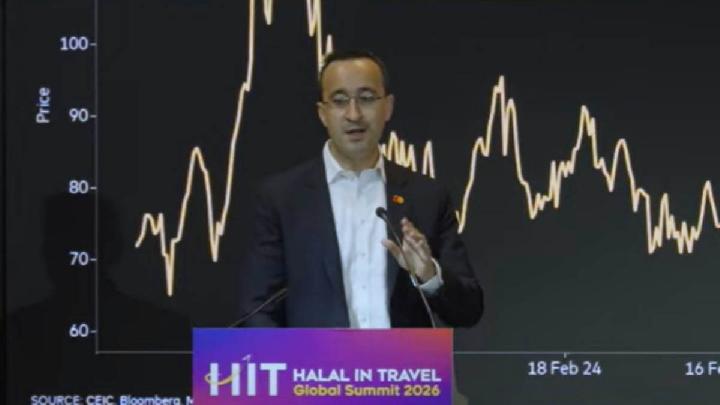
Concurrently, the technology-driven shift in travel behavior has brought welcome diversification to the wider tourism sector. Mastercard Economics Institute Chief Economist David Mann pointed out that active AI users have different spending patterns compared to conventional tourists.
Global tracking analytics reveal that AI users allocate significantly larger shares of their budgets to accommodation and experiential travel sectors. Remarkably, instead of funneling tourists toward oversaturated mass-tourism hotspots, artificial intelligence algorithms are guiding travelers toward unique alternative destinations, widely celebrated as ‘hidden gems’.
“So, it’s not just about going to the usual places, but also finding other destinations,” said Mann. The shift in interest toward alternative destinations directly contributes to the distribution of economic activity across new areas.
In addition to harnessing AI, the Mastercard Economics Institute also found that, despite unfavorable economic conditions, people still prioritize travel expenditure. However, they are more selective, seeking the best value and prioritizing regional travel. From flight capacity data, Malaysia has shown a robust recovery, while Indonesia indicates an increasing trend in seat capacity until the end of the year.
LAODE MUHAMAD ASHEGAF
Read: Stonehenge Revelers Ring in Summer Solstice
Click here to get the latest news updates from Tempo on Google News