







Artificial Intelligence poses a huge threat to Planet Earth – and many of the animals living on it.
It will harm the environment and contribute to global warming in at least four major ways:
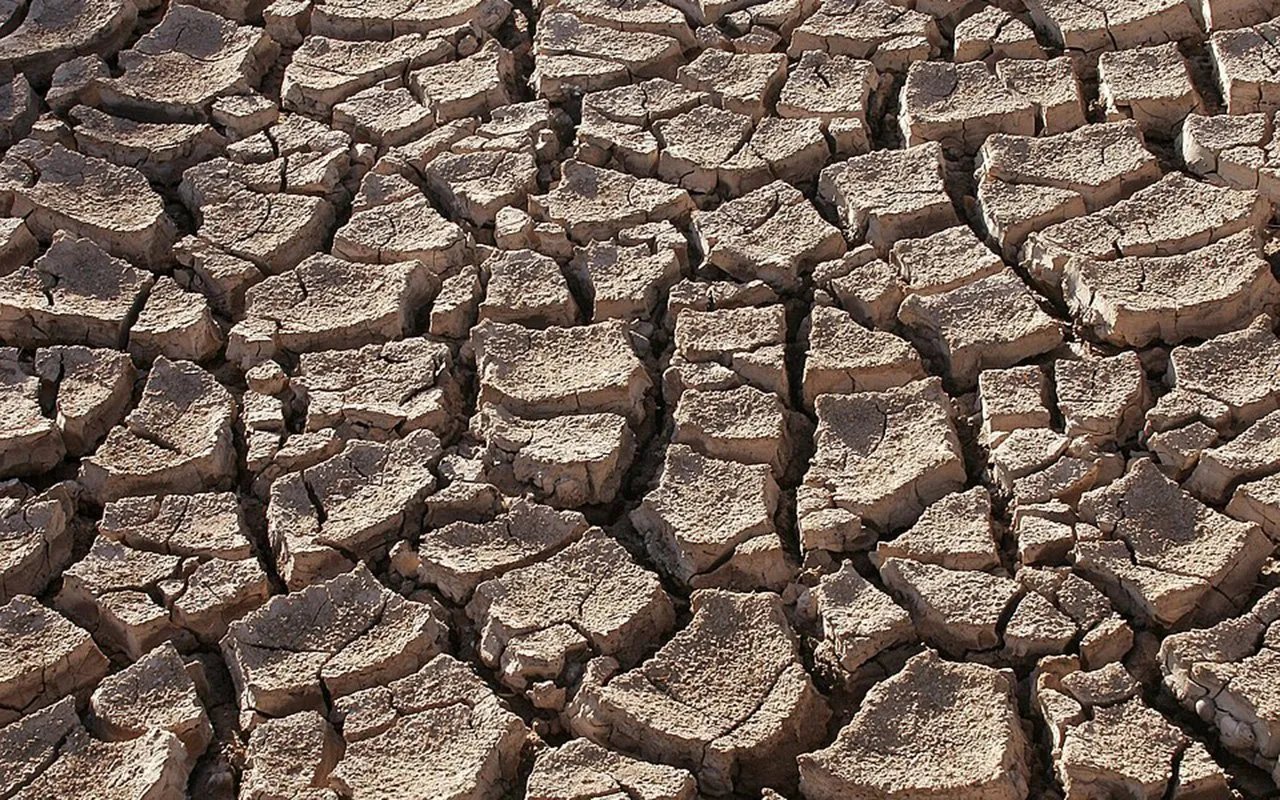
Firstly, there will be AI’s likely impact on water resources. AI data centres use vast quantities of fresh water to cool their data-processing systems. That will seriously exacerbate water stress in many areas of the world.
Although freshwater resources are abundant in some parts of our planet (especially the tropics), around 25% of global population suffer from permanent water shortages – and another 25% suffer from shortages for parts of each year. Half of the world’s 100 largest cities are now experiencing serious water shortages.

As the number of AI data centres rapidly increase so will their demand for water.
It’s estimated that, by 2050, AI data centres will require 54 cubic kilometres of water per year! That’s equivalent to the entire water volume of the North Sea!!
That vast quantity of water will not only be needed to cool the data centres but also to cool the power stations which supply the electricity to the data centres (and to cool the machines used to manufacture the billions of electrical chips needed by the centres).
At some stage over the next 15 years, the global AI industry is likely to face a ‘fresh water deficit’ – because the global gap between freshwater supply and demand is set to widen dramatically.
Secondly, AI infrastructure etc is likely to use around 3% of global electricity production by 2050. A sizable percentage of that electricity will over the coming years inevitably come from fossil-fuel-powered sources.
Some estimates suggest that in the USA alone, over the next ten years, there is likely to be a 19-29% increase in CO2 emissions, driven by AI data centre expansion. But AI may also, at some stage, help to very substantially improve energy use efficiency, thus cutting at least some CO2 emissions. So AI’s future likely net emissions are as yet difficult to calculate.
The third major way in which AI will damage our planet will be through so-called e-waste. By the middle of this century, data centres are likely to have dumped up to 100 million tonnes of often toxic and dangerous waste into landfill refuse sites. That waste includes lead, mercury, chromium, cadmium and other metals used for some AI data centre equipment and components – and there are fears that at least some elements will leach into groundwater and rivers and will potentially affect human and animal health.
Many AI data centre components have relatively short life-spans (often just two to five years) – and that exacerbates and will continue to exacerbate the e-waste problem.
Inevitably, there are informal recycling activities which involve burning e-waste to recover copper – but those practices result in very dangerous medium-to-long-distance air pollution.
Last but not least, AI data centres will require vast quantities of rare earth and other minerals – and a major source for that expanding demand is likely to be the seabed at the bottom of the world’s major oceans.
The competition to acquire seabed rare earth minerals will almost certainly become intense – and widespread damage to marine habitat is very likely.

Mechanical dredging for such rare and ultra valuable materials, needed for AI expansion, will destroy literally millions of square kilometres of seabed, thus permanently and seriously damaging major ecosystems which often depend on the nutrients stored in the top 20 centimetres of the seabed. But millions more square kilometres will be ecologically compromised by so-called sediment plumes (disturbed sediments which can be carried, like a semi-fluid deep-sea fog, by ocean currents across tens of thousands of square kilometres, smothering marine organisms and clogging up their respiratory and feeding systems. Dredging is also likely to inadvertently release some toxic rare earth minerals from the seabed into the ocean itself, thus poisoning sea life across wide areas and threatening the health of human populations who eat the affected fish. What’s more ,large-scale disruption of the global seabed will inadvertently release tens of billions of tonnes of CO2 over the next few decades (thus further speeding up global warming) – but will also seriously reduce the ocean’s future ability to absorb CO2. In that sense, the expansion of AI will harm the ocean’s capacity to act as our planet’s greatest carbon sink. That indirect AI-generated harm will likely be much much greater than all the direct AI-related carbon emissions themselves!
AI also threatens the environment in other less obvious ways. Its ever increasing hunger for rare earths and other minerals and its insatiable demand for electricity is driving up costs for green energy providers. That’s because the ever increasing numbers of AI data centres all need to be connected to the electricity grid – and that creates connection bottlenecks that are likely to damage the economic viability of future green energy infrastructure.
Because data centres have an insatiable thirst for electricity 24 hours a day 365 days a year (and because it’s mainly fossil-fuel-generated electricity that can offer that continuous supply), AI demand for coal and oil generated energy is substantially greater than demand from other sectors.

What’s more, AI’s ever expanding demand for rare earth minerals is adversely impacting key parts of the green energy production industry, especially the offshore wind sector (which, like AI, also relies on components, specifically magnet generators, made in part from rare earths). As a result of AI competition for these crucial minerals, offshore wind energy producers will face increasing supply chain bottlenecks and cost imbalances (Offshore wind is a major part of the clean energy industry. In the UK, for instance, just over a third of clean energy comes from offshore wind – and in 10 years time that figure is likely to rise to around half). Similar bottlenecks are also likely to hit the electric vehicle production industry.
Through all these different mechanisms, the Artificial Intelligence industry will threaten our planet’s ecosystems and the survival of literally millions of species.
If you found today’s article of interest (but have not yet read the previous three articles in the series (on AI’s likely economic impacts, on its military/security impacts – and on its psychological and social ones), you can access them, below:
Tomorrow, in the final part of this unique five-part survey of the emerging AI threat, we will look at what governments and politicians should do to try to mitigate the emerging threat from AI