







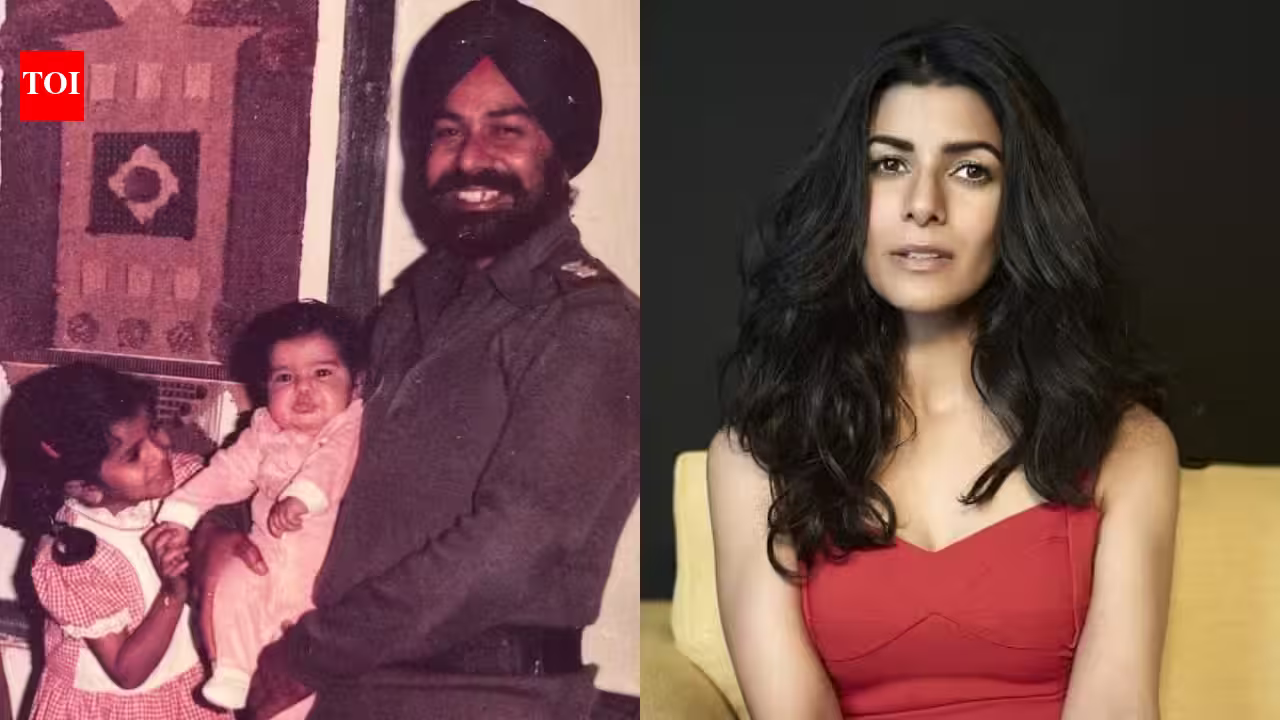
The glitz and glamour of Bollywood often serve as a glittering veil, shielding us from the profound, soul-shattering histories that shape the stars we see on screen. For Nimrat Kaur, known for her nuanced, deeply internal performances in films like The Lunchbox and Airlift, the stoicism she projects as an actor is not merely a stylistic choice—it is a byproduct of a childhood defined by an unthinkable tragedy.
In a recent, candid conversation, the actor peeled back the layers of her past, revisiting the January of 1994, when her father, Major Bhupender Singh, was kidnapped and murdered by terrorists in Kashmir. For the first time in years, the details of that agonizing period were laid bare, offering a sobering look at the true cost of duty and the long shadow of terrorism on those left behind.
A Life Altered in an Instant
To be eleven years old is to believe in the permanence of your world. For young Nimrat, that world consisted of a loving father serving in the Indian Army and a family life stationed in the scenic, yet increasingly volatile, terrain of Kashmir. That sense of normalcy was obliterated on a routine workday.
Nimrat recounts the final morning she saw her father with a clarity that only trauma can provide. “I saw my father leave for work that morning,” she shared. “I just remember him leaving and then, after that, the next time I saw him was in a coffin.”
The mechanism of his abduction was particularly insidious. Major Bhupender Singh was traveling back from an official assignment when he was intercepted by insurgents posing as Army personnel. Clad in the very fatigues that represented his life’s work and honor, his captors weaponized his own identity against him. The betrayal was absolute. For seven harrowing days, the family lived in a state of suspended animation, waiting for news that would ultimately shatter their lives.
The Agony of the Waiting Game
During the week of his abduction, the captors issued a series of demands, citing the release of prisoners held in India among other “ridiculous” conditions. These seven days were a crucible for the family. Nimrat, along with her mother and sister, were shifted from Verinag to the relative security of Srinagar as the gravity of the situation intensified.
The image of a father pleading for his life is a heavy burden for any child to carry into adulthood, but Nimrat finds a sliver of solace in what she knows of his final moments. She revealed that, even in the face of certain death, her father’s thoughts remained anchored to his home. “He told them that, ‘I have a family, I have two girls.’ I know that he was thinking of us in his last thoughts.” It is a testament to the man he was, and a haunting reminder of the lives that exist behind the uniform—lives that are often the silent casualties of geopolitical conflict.
A Mother’s Unyielding Resilience
If Nimrat’s father is the symbol of sacrifice, her mother is the pillar of endurance. Widowed in her early to mid-30s, she was suddenly thrust into the role of a single parent, tasked with navigating the wreckage of a life that had effectively collapsed overnight.
Nimrat speaks of her mother with a reverence that borders on awe. “I don’t know of many women who would be able to do that single-handedly and so respectfully and in such a dignified way,” she reflected. For the young widow, the choice was not between grief and moving forward, but rather between succumbing to the trauma or securing the future of her two daughters. She chose the latter, rebuilding their lives after moving to Noida to live with her parents, shielding her children from the worst of the fallout while providing them with the stability they desperately needed.
The Myth of Closure
There is a common, often reductive narrative in media that suggests time is the ultimate healer—that after three decades, the edges of a tragedy should soften. Nimrat categorically rejects this notion. “There is no closure there,” she says bluntly.
For the Kaur family, the loss of Major Bhupender Singh—who was posthumously awarded the Shaurya Chakra for his bravery—is not a static event in the past. It is an ongoing experience, a baseline of their emotional landscape. “It’s a strange feeling even after all these years,” she notes. “Technically, you feel like it’s been so long. It’s been a few decades, but nothing quite repairs that. Not for my mom, not for my sister, not for me, and not for the rest of the family.”
The Echoes in Her Art
As fans watch Nimrat Kaur on screen, there is a certain gravity in her eyes that now feels contextualized. Whether she is portraying a neglected housewife finding solace in a lunchbox or an official navigating a massive evacuation in Airlift, there is a grounded, quiet strength in her performance.
Understanding her history doesn’t just add depth to our appreciation of her work; it humanizes the public persona of the “celebrity.” It reminds us that behind every character, every interview, and every red carpet appearance, there is a person who has weathered storms most of us cannot fathom.
Nimrat Kaur’s willingness to share this story is not for the sake of headlines or sympathy; it is an act of remembrance. By speaking about the man behind the uniform, she ensures that Major Bhupender Singh is remembered as more than just a casualty of the Kashmir insurgency. He was a father, a husband, and a hero to the two women who continue to carry his memory with the same dignity and courage he displayed in his final, terrifying hour.
Disclaimer: This content is auto-generated for informational purposes only.
Source: Read Original News