








India Outpaces Global Benchmarks in TB Mortality Reduction, WHO Report Reveals
India has achieved a significant milestone in its public health journey, recording a 38 per cent decline in tuberculosis (TB)-related mortality since 2015. According to the World Health Organisation’s (WHO) Global TB Report 2026, this performance surpasses the global average reduction rate of 35 per cent, marking a major success for the nation’s ongoing National TB Elimination Programme (NTEP).
The data highlights a marked improvement in survival outcomes, with the estimated TB mortality rate falling from 280 deaths per million in 2015 to 180 deaths per million in 2025.
Sustaining the Fight Against a Persistent Challenge
Despite these advancements, the report underscores the scale of the challenge that remains. India continues to carry a heavy disease burden, appearing among the top eight nations that collectively accounted for 67 per cent of the world’s new TB cases in 2025. India alone represents 25 per cent of the global caseload, followed by Indonesia, the Philippines, China, and Pakistan.
The global health body noted that India’s official TB profile is set for a comprehensive revision. This follows the submission of data from a nationally representative TB prevalence survey conducted by the ICMR’s National Institute for Research in Tuberculosis. WHO, in collaboration with India’s Central TB Division and the Indian Council of Medical Research (ICMR), is currently analyzing district-level sentinel surveillance data. A finalized and updated country profile for India is expected to be published in early 2027.
The report further addressed the prevalence of multidrug-resistant (MDR) TB, noting that India is one of four countries responsible for over half of the global MDR-TB cases. However, both the WHO and the Union Health Ministry pointed out a silver lining: the incidence of drug-resistant strains is on a consistent downward trajectory.
A “Patient-Centred” Success Story
The Union Health Ministry attributed the sharp decline in mortality to a robust, patient-centred approach. Citing a treatment success rate of 94 per cent, the ministry highlighted how strengthened delivery systems and sustained support for patients have been pivotal.
“The progress reflects the impact of intensified interventions under the National TB Elimination Programme,” the ministry stated. These interventions range from the deployment of AI-enabled X-rays and rapid molecular diagnostics to the widespread implementation of the Ni-kshay Poshan Yojana, which provides essential nutritional support to patients. The Ni-kshay Mitra initiative has also played a vital role in fostering community-level support for those affected.
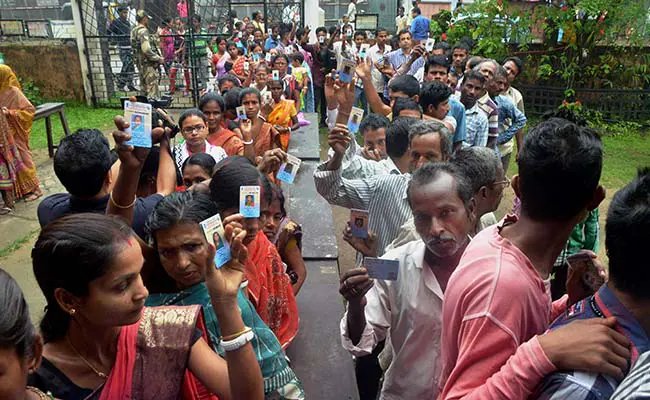
The scale of the government’s screening efforts has been vast, with over 250 million people covered through the TB Mukt Bharat Abhiyaan. By utilizing 110 million chest X-rays and 30 million molecular tests, health authorities successfully identified 4.86 million TB cases—including 1.49 million asymptomatic patients who might have otherwise gone undiagnosed.
Financing and Future Outlook
A notable highlight from the WHO report is India’s self-reliance in the health sector. Approximately 96 per cent of the funding for India’s TB control programmes is sourced domestically, reflecting a strong national commitment to eradicating the disease.
Looking ahead, the government plans to build on these gains by expanding access to high-quality diagnostics and preventive treatments. By deepening community engagement and maintaining a high intensity of screening, officials aim to continue the downward trend in TB incidence, moving closer to the national goal of a TB-free India.
Disclaimer: This content is auto-generated for informational purposes only.
Source: Read Original News