








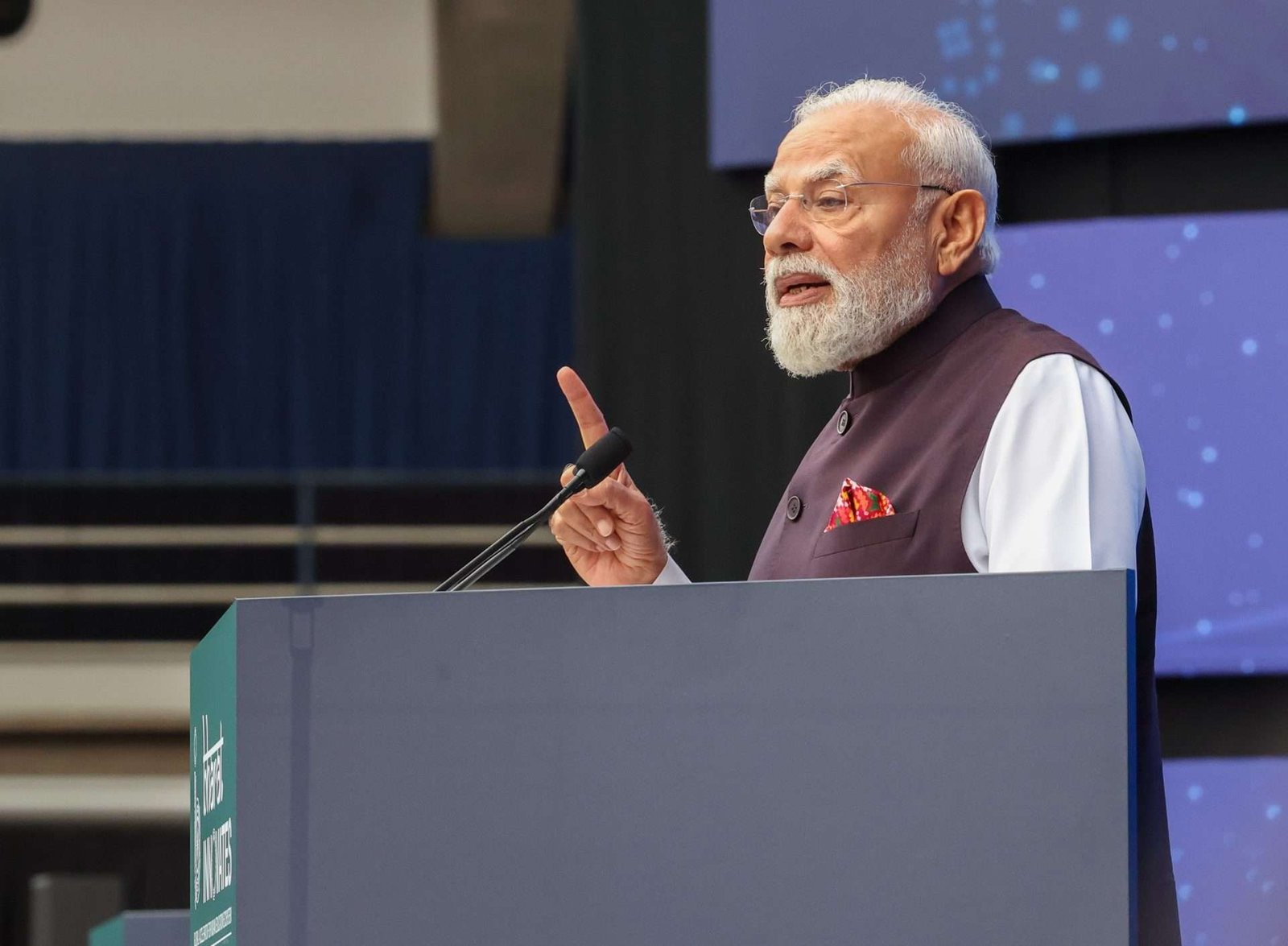
Critics said Narendra Modi’s government was trying ‘not to regulate but to strangulate NGOs’.
Ministry of External Affairs
Legislative amendments announced on 23 June allow asset seizure, cancellation of licences and control of the funds of Non-Governmental Organisations and minority bodies upon the expiry, surrender or denial of renewal.
Christians in India of all denominations united in a day of prayer and fasting on Sunday opposing a draconian bill to regulate foreign funding.
During the nine-hour Eucharistic Adoration on 28 June at its headquarters in New Delhi, the Catholic Bishops’ Conference of India (CBCI) led prayers for the repeal of the proposed Foreign Contribution Regulation Act Amendment (FCRA) Bill 2026, which would introduce significant restrictions on funding for religious organisations and other non-government bodies.
Parishes across India said specially-prepared prayers and observed fasts as a “peaceful protest” against the legislation.
The Archbishop of Hyderabad Cardinal Anthony Poola, president of the CBCI, had asked Christians to unite in prayer on 28 June for an “ecumenical expression of our common faith and concern”.
The FCRA, after its tenth amendment, has “raised concerns regarding its possible implications for the charitable, educational, healthcare and social ministries carried out by Churches and Christian institutions across our country”, he warned.
The cardinal said the Church in India has “consistently served society, particularly the poor and the marginalised, as an expression of the Gospel values of love, justice and compassion”.
Church leaders strongly objected to the amendments in the legislation announced on 23 June, which allow asset seizure, cancellation of licenses and control of the funds of Non-Governmental Organisations (NGOs) and minority bodies upon the expiry, surrender or denial of renewal, besides cumbersome compliance barriers.
“We object to the clause for selection of activities from the federal government-mandated list and new provisions that place significant operational and financial burdens on non-profit organisations across the country,” said Fr Mathew Koyickal, CBCI deputy secretary general.
Every entity is required to obtain purpose‑specific registration, clearly declaring the activities for which foreign contributions will be used and the geographical space where they will operate.
CBCI spokesman Fr Robinson Sylvester Rodrigues said health care is notably missing from the 105 permitted sectors for NGO service, which heavily impacts institutions that have long served the marginalised – notably the Catholic Health Association of India (CHAI), which has over 3,500 member institutions across the country catering to over 21 million people each year.
He said the new rules for consideration of applications for renewal of registration and cancellation would now require proof that at least one million rupees of foreign contribution has been utilised for approved purposes in the last two financial years.
However, “many organisations receive only modest foreign contributions and utilise those funds fully for community service. The proposed threshold may adversely affect their ability to continue functioning,” Fr Rodrigues said.
The Kerala Catholic Bishops’ Council (KCBC) warned that the legislation would not only affect Christian institutions but would also have wider consequences for society by reducing services available to both minority and majority communities.
Archbishop Varghese Chakkalakal of Calicut, the KCBC president, called for the immediate withdrawal of the proposed amendments in the interest of protecting citizens’ constitutional freedom and preserving India’s long-standing charitable and humanitarian initiatives.
KC Venugopal, a parliamentarian for the opposition Congress party, said the latest amendments reflect a “disturbing intent to micromanage, harass and financially cripple” the voluntary sector that form the backbone of India’s grassroots developmental and social frameworks.
In a letter addressed to Prime Minister Narendra Modi demanding withdrawal of the FCRA rules, he said they were “an overt and systemic assault on India’s civil society, [and are] designed not to regulate but to strangulate NGOs”.
To select the voluntary sector’s activities from a rigid, government mandated list and restrict their operational geography destroys the very flexibility that allow these organisations to respond to on-ground realities and emergencies, Venugopal said.
Levying a separate fee for every additional state or category is nothing short of an administrative toll tax designed to discourage pan-India social work, he said, while mandating the disclosure of social media accounts, websites and every publication including news articles betrays a mindset of mass surveillance.
Venugopal said that “adding vague caveats that educational or cultural awareness programmws must ‘exclude political or ideological content’ is a transparent tool to silence civil society, throttle dissent and ensure NGOs are intimidated into becoming mouthpieces for the ruling dispensation”.
Since 2014, the federal government has cancelled the FCRA licenses of more than 20,000 NGOs, including high profile organisations such as the Lawyers Collective and Greenpeace India.
Modi will turn on Christians, Indian bishops warned
Hindu nationalism threatens India’s collective spirit
Stay updated — add us as a preferred news source on Google: