








India’s Green Leap: A Bold 900-Gigawatt Clean Energy Vision for 2035
As global leaders convene for the COP31 climate talks in Turkey, India has unveiled a transformative energy roadmap, pledging to install enough clean power capacity to sustain over 1 billion homes by 2035. This ambitious target of 900 gigawatts (GW) marks a significant acceleration in the nation’s climate commitments, effectively doubling its previous 2030 goal and cementing its status as one of the world’s most aggressive players in the transition away from fossil fuels.
Doubling Down on Renewables
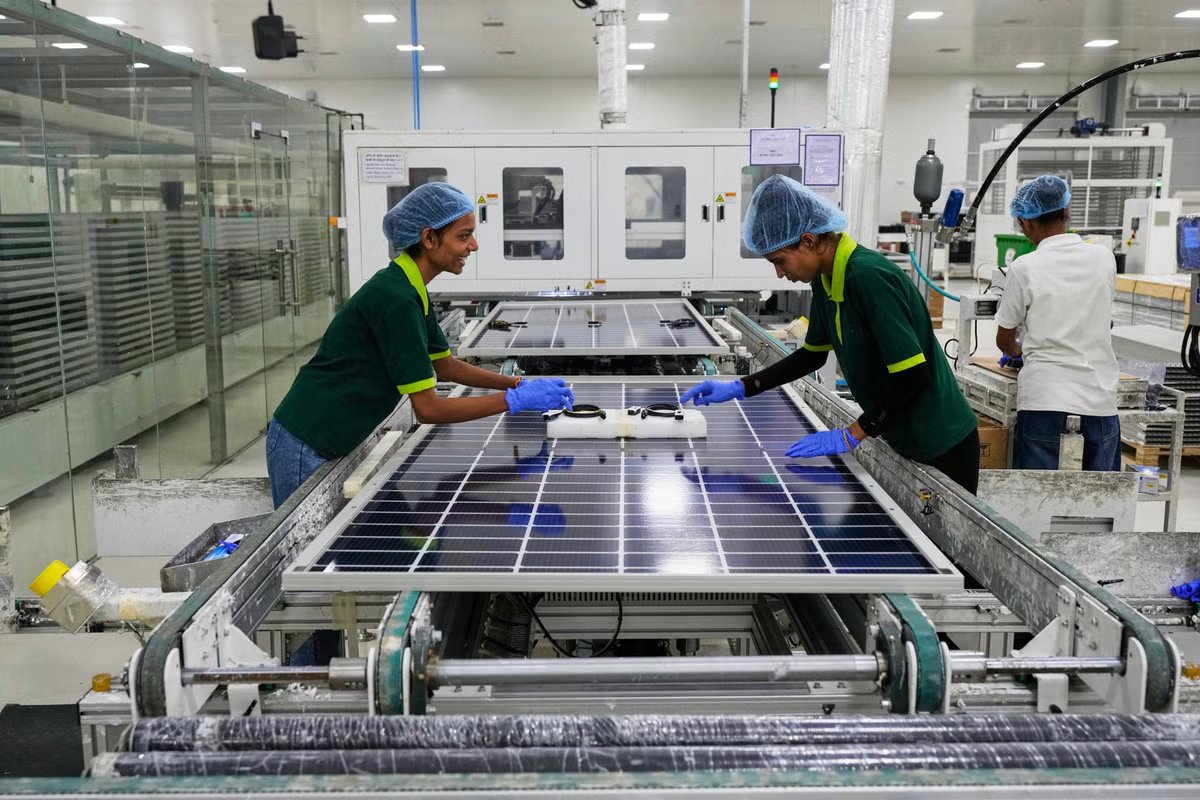
India’s current landscape of 300 GW of clean power—comprising solar, wind, hydropower, and nuclear—already positions it as the third-largest producer of renewable energy globally, trailing only China and the United States. The new 2035 mandate reflects a strategic push to pivot the economy toward what economists are calling an “electrostate” model. By leveraging cheap labor alongside rapidly plummeting costs for solar and wind energy, India aims to replace expensive, imported fossil fuels with domestic, sustainable electricity.
Experts suggest this shift could drastically lower utility bills for households and industries, fostering a new era of economic competitiveness. However, the path forward is complex. While clean energy is increasingly cost-competitive, the country remains heavily reliant on coal, which provided approximately 71% of its electricity in 2025.
The Infrastructure Bottleneck
The core challenge facing India’s energy revolution is not necessarily the ability to generate power, but the ability to deliver it. The nation currently faces significant grid bottlenecks, with enough solar energy curtailed over the last 16 months to have powered roughly 10 million homes.
“If the grid doesn’t catch up, then there is no way India can meet this target,” noted Nikit Abhyankar of the India Energy and Climate Center at UC Berkeley. The current transmission infrastructure is struggling to keep pace with the rapid influx of renewable projects. In response, the Indian government has authorized nearly $20 billion in funding under the “Green Energy Corridor” initiative, aimed at expanding transmission networks and deploying large-scale battery storage solutions.
The Coal Dilemma and Storage Needs
Despite the green momentum, energy planners remain cautious about grid reliability. Government officials have indicated that a continued reliance on coal may be necessary to meet fluctuating demand when weather-dependent sources like wind and solar are inactive. Some estimates suggest an additional 150 GW of coal-fired capacity might be required by 2035 to ensure stability.
However, energy analysts warn that building new coal plants today risks creating “stranded assets.” Researchers at UC Berkeley argue that once the currently approved coal projects are completed, additional fossil fuel investment will become economically redundant if the 900 GW goal is met. The key, according to experts like Ember’s Neshwin Rodrigues, is a massive expansion in battery storage—estimated at upwards of 250 GW—to effectively bridge the gap during non-generation hours.
Policy Reforms and Economic Hurdles
Transitioning the world’s most populous nation also requires deep structural reforms. Economists point to existing “choke points,” where government interference in pricing and distribution prevents the market from operating efficiently. Moving toward a model where electricity prices fluctuate based on real-time supply and demand, alongside easing restrictions for foreign investors, will be critical to funding the massive capital requirements of this transition.
Furthermore, India faces the challenge of supply chain security, specifically regarding battery cell manufacturing. To truly maximize the economic benefits of this transition, analysts suggest the country must move beyond being a consumer of battery technology and become a domestic hub for production.
If India can overcome these hurdles, its model of rapid, affordable decarbonization could serve as a vital blueprint for the Global South, proving that developing economies do not need to sacrifice growth to lead the fight against climate change.
Disclaimer: This content is auto-generated for informational purposes only.
Source: Read Original News