








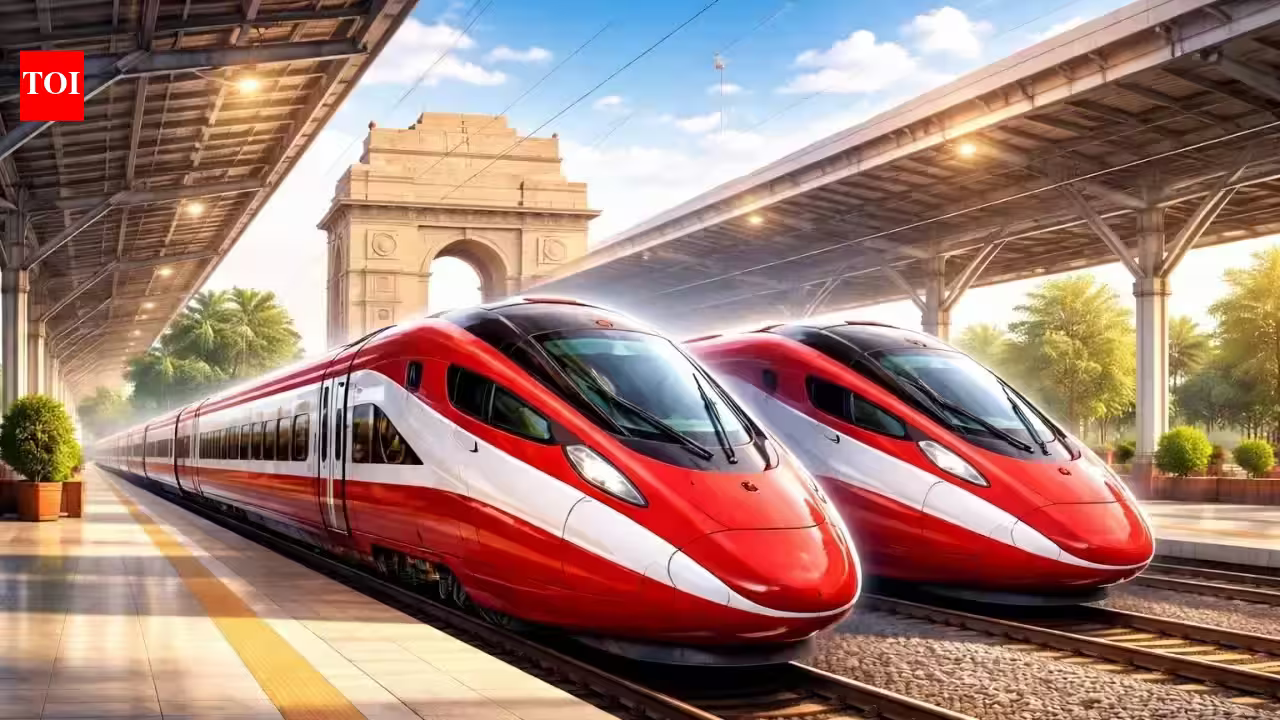
The ambitious roadmap unveiled by the Indian government for seven new high-speed rail (HSR) corridors represents a pivotal moment in the nation’s infrastructure narrative. With an allocated push of approximately Rs 16 lakh crore for integrated connectivity, the Indian Railways is shifting its focus from incremental capacity expansion to a radical overhaul of inter-city travel. By designating these proposed corridors as “growth connectors,” the government is signaling that high-speed rail is not merely a transportation upgrade but a strategic tool for economic decentralization and regional industrial integration.
The Strategic Rationale Behind Growth Connectors
The selection of these seven specific routes—Delhi-Varanasi, Mumbai-Pune, Pune-Hyderabad, Hyderabad-Bengaluru, Hyderabad-Chennai, Chennai-Bengaluru, and Varanasi-Siliguri—reveals a deliberate strategy to link India’s major economic hubs. In the current landscape, the travel time between these cities often acts as a friction point for business, logistics, and labor mobility.
For instance, the Mumbai-Pune corridor is perhaps the most significant in terms of immediate economic impact. By reducing travel time to 48 minutes, the railway aims to create a hyper-integrated twin-city economic zone. This allows for seamless professional movement between India’s financial capital and its burgeoning technology and manufacturing hub. Similarly, the southern “diamond” formed by the Hyderabad, Bengaluru, and Chennai corridors addresses the needs of the IT and manufacturing sectors. When business travel is reduced to a three-hour window, firms can effectively treat these cities as a single, expanded talent pool, fostering cross-pollination of innovation and management.
Furthermore, the extension of these lines toward cities like Varanasi and Siliguri highlights a secondary objective: balanced regional development. By connecting the National Capital Region (NCR) to the religious and trade centers of Uttar Pradesh and the northeast corridor via Bihar and West Bengal, the government is looking to stimulate economic activity in regions that have historically lagged behind the western and southern industrial belts.
Technological Sovereignty and the Manufacturing Leap
One of the most profound aspects of this initiative is the emphasis on indigenization. India’s pivot toward manufacturing its own bullet trains marks a departure from total reliance on technology imports. The development of high-speed train sets by BEML, which are slated for testing in early 2027, suggests that India is aiming to build a domestic ecosystem for HSR technology.
Manufacturing high-speed rolling stock involves mastering complex engineering disciplines, including aerodynamics, lightweight material science, and precision braking systems. By fostering local manufacturing, India intends to lower the long-term capital expenditure associated with scaling these corridors. If successful, this move will position India as a competitive exporter of rail technology, potentially creating a new manufacturing vertical that supports the broader “Make in India” framework. The target of operationalizing a portion of the Mumbai-Ahmedabad project by 2027 serves as the testing ground for this local expertise.
Economic Impacts on Transit-Oriented Development
The implementation of high-speed rail is globally recognized as a driver for transit-oriented development (TOD). As stations become hubs for high-velocity traffic, the surrounding land use invariably changes. In the Indian context, this implies the creation of modern logistics parks, commercial office spaces, and housing complexes near terminal points.
These seven corridors are likely to transform the real estate and commercial footprint of Tier-2 and Tier-3 cities located along these routes. When a passenger can travel from a smaller city to a major metropolitan business district in under four hours, the viability of living in the smaller city while working in the metro increases significantly. This decentralization helps alleviate the pressure on urban infrastructure in saturated cities like Mumbai, Delhi, and Bengaluru, while simultaneously stimulating local economies in transit regions. The economic ripple effect—ranging from increased tax revenue to the emergence of service-based industries around stations—is the intended multiplier effect of the Rs 16 lakh crore investment.
Navigating Challenges in Infrastructure Deployment
While the vision is robust, the deployment of these projects requires overcoming significant structural and operational hurdles. Land acquisition remains the primary bottleneck for large-scale rail infrastructure in India. Unlike expressways, rail corridors require continuous, high-precision geometry, meaning they cannot easily navigate around land parcels or complex topographic challenges. The successful execution of the Mumbai-Ahmedabad project serves as a precursor to identifying the regulatory frameworks and compensation models that will be needed to scale these seven new corridors.
Additionally, the integration of high-speed services with existing suburban and freight operations is a delicate balancing act. Indian Railways must ensure that the introduction of premium, high-speed rail sets does not compromise the capacity available for the movement of essential goods and the vast volume of daily commuter traffic. Advanced signaling systems, dedicated tracks (segregated from traditional freight routes), and world-class maintenance facilities are non-negotiable requirements for safety and efficiency at these high speeds.
The Future of Passenger Experience and Connectivity
The transition toward high-speed rail, combined with the parallel rollout of Vande Bharat sleeper sets, reflects a shift toward a passenger-centric railway model. The current passenger demographic is increasingly expecting travel that mirrors the convenience of aviation without the logistical complexities of airports. By offering city-center to city-center connectivity, HSR projects provide a time-efficient alternative to short-haul air travel.
The environmental angle is equally significant. HSR systems, when powered by an increasingly green national grid, present a lower carbon footprint per passenger-kilometer compared to short-haul flights or private vehicles. By positioning these projects as sustainable growth connectors, the government is aligning its transport policy with global climate commitments, effectively promoting rail as the primary mode of green transit for the future.
In conclusion, the proposed expansion of the high-speed rail network is a bold assertion of India’s economic aspirations. While the path to completion involves rigorous engineering, complex land-use negotiations, and substantial capital deployment, the long-term gains in productivity, regional integration, and technological self-reliance are immense. As India moves from planning to implementation, these seven corridors will likely redefine the geography of the nation’s commercial and industrial activity, transforming how citizens live, work, and connect across the subcontinent.
Disclaimer: This content is auto-generated for informational purposes only.
Source: Read Original News