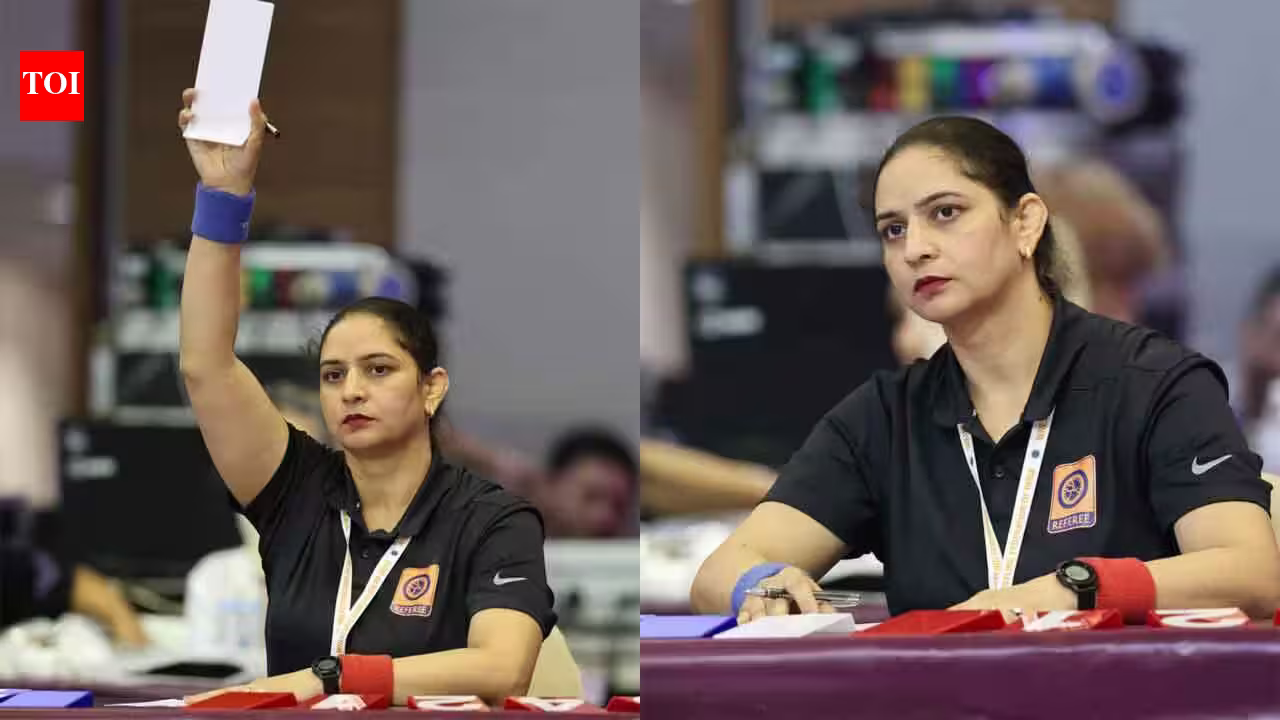










CHENNAI: While the absence of an Indian basketball team at the Aichi-Nagoya Asian Games is a somber reality for the nation’s hoop enthusiasts, the Indian tricolor will still command a presence on the hardwood. R Rakesh, a seasoned veteran of the refereeing world, is set to make his long-awaited Asian Games debut, serving as the sole representative carrying the country’s basketball hopes on the international stage.
For the 36-year-old from Karnataka, this assignment is the culmination of a journey that began more than a decade ago. While the players may be missing from the lineup, Rakesh’s presence in Japan underscores a quiet but significant milestone for Indian officiating.
A Journey Forged in the Crucible of the Court
Rakesh’s path to the continental stage has been anything but conventional. Having earned his FIBA refereeing license at the tender age of 23, he has spent the better part of his adult life traversing international borders to officiate high-stakes games. His resume is as diverse as the environments he has worked in, spanning leagues in the Philippines, Lebanon, Syria, Indonesia, and a remarkable decade-long tenure in the Maldives.
“Till now, I have officiated on almost all the days,” Rakesh told The Times of India from Japan. “At the Asian Championships last year in China, I officiated until the semifinals. Since it was my maiden edition, I could not proceed further.”
He is refreshingly candid about the volatile nature of the profession. In the world of elite officiating, one is only as good as their last whistle. “There have been many ups and downs in my journey. In some tournaments, I get to officiate in the final, but in some, I do not even get to officiate in the semifinals. It depends on the performance, and that is common in sports.”
The Professionalism Gap
Despite his high-profile career—which includes a prestigious stint at the 2018 World Junior NBA Championships in Miami—Rakesh remains one of the few Indians operating at this elite level. When asked about why India struggles to produce a pipeline of world-class officials, he points to the cold, hard reality of professional sports: economics.
“How long can a referee manage to officiate in matches without much monetary benefit?” Rakesh asks. “Passion can only push a person to a certain point. Why do people prefer cricket? It is because of the monetary benefits. We need to have leagues, more international matches in India and popularize the sport.”
For Rakesh, the road to international acclaim was paved with uncertainty. He recalls the early days of his career, where domestic tournaments were often at the mercy of the elements—frequently washed out by monsoon rains or scrapped entirely due to a lack of sponsorship. “Initially, I also struggled and used to do only domestic matches,” he admitted. “Sometimes, tournaments used to get cancelled in rainy seasons and at times due to lack of sponsorships the tournaments got scrapped. However, now I get to officiate regularly.”
Raising the Profile of the Whistle
Rakesh’s success serves as both an inspiration and a cautionary tale. While his individual talent has propelled him to the Asian Games and beyond, he is acutely aware that he is an outlier. His call for more domestic leagues isn’t just about entertainment; it is about infrastructure. In his view, a sustainable professional environment is the only way to retain talent and ensure that officiating becomes a viable career path for the next generation of Indian athletes.
Without leagues that offer consistent scheduling and compensation, many potential officials simply walk away from the game, unable to reconcile the demands of the sport with the lack of financial security. Rakesh’s decade-long consistency—marked by his ability to remain a permanent fixture in the Maldives league—demonstrates that if the opportunities are present, Indian officials can certainly compete with the best in Asia.
Carrying the Burden of Representation
As Rakesh steps onto the court in Aichi-Nagoya, he is doing so with the knowledge that he is the only face of Indian basketball in the arena. It is a lonely distinction, but one he wears with professional pride. His presence at the Asian Games acts as a reminder that the sport’s development in India is not merely restricted to the quality of players, but also the caliber of those who govern the flow of the game.
His ability to navigate the complex pressure of international officiating—where cultural nuances, language barriers, and intense tactical styles collide—speaks to his growth since his FIBA debut. As he prepares to potentially officiate late into the tournament, Rakesh isn’t just representing Karnataka or India; he is representing the possibility that with the right support, the country can produce more than just an occasional solo act.
For now, the basketball community in India will have its eyes on the officiating crew, rooting for the man who, in the absence of a national squad, has become the de facto ambassador of the Indian game on the continent’s biggest stage. Whether he finds himself in the middle of a semifinal or the gold medal match, Rakesh’s debut is a victory for perseverance—a testament to a man who kept running, kept learning, and eventually, found his way to the pinnacle of Asian basketball.
Disclaimer: This content is auto-generated for informational purposes only.
Source: Read Original News