








The Evolution of Interstellar Exploration in Update 7.10
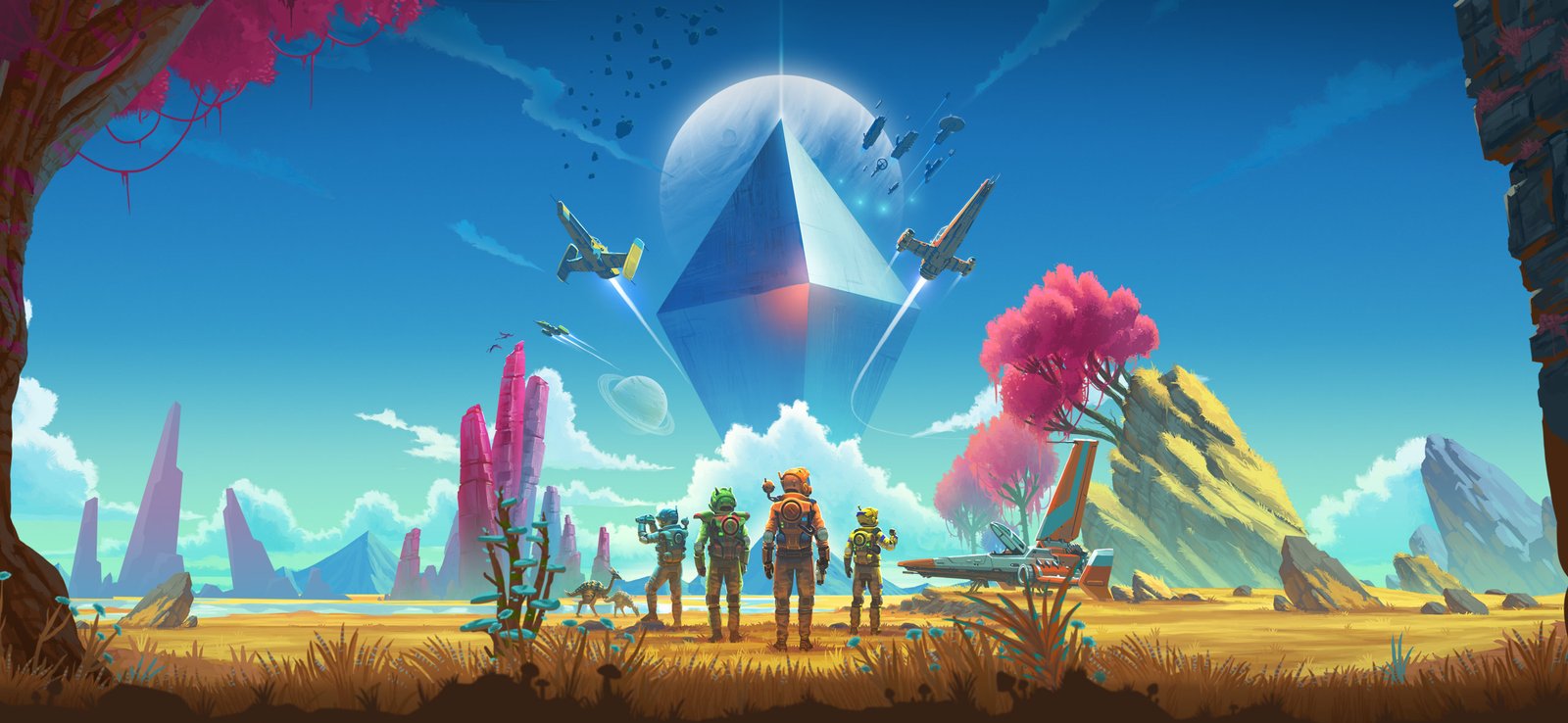
The latest update for No Man’s Sky, titled Forsaken, represents a significant technical milestone for the long-running space exploration title. By introducing a suite of atmospheric mechanics alongside a comprehensive expansion to mobile hardware, the developers have shifted the scope of the simulation. Update 7.10 focuses on layering complex, narrative-driven gameplay loops over the existing procedural foundation, while simultaneously achieving parity between high-end desktop hardware and the constraints of the mobile ecosystem. This update integrates advanced rendering techniques to accommodate the iOS platform, ensuring that the visual fidelity and mechanical depth remain consistent across all supported devices.
Expanding the Narrative Through Strange Encounters
At the core of the Forsaken update is a revamped interaction system that adds depth to the lifeforms encountered throughout the galaxy. Players will now encounter mysterious entities known as strange traders, who operate outside the standard economic frameworks of the game. These NPCs offer access to haunting mementos—unique, procedurally generated artifacts that function as both currency and historical data logs. These mementos serve as keys to unlocking hidden sub-plots, allowing players to piece together the history of abandoned systems.
The gameplay loop involving these traders is tied to a new logistical mechanic: the delivery of mysterious packages. These items possess specific volatility parameters, requiring players to navigate through dangerous sectors while managing the physical stability of their cargo. This addition forces players to reconsider their traversal paths, turning routine travel into a risk-versus-reward decision. By prioritizing these deliveries, explorers can gain favor with clandestine factions, unlocking blueprints that were previously restricted.
Technological Advancements in Seamless Warping
One of the most notable technical additions in 7.10 is the implementation of a new seamless warping system. Previously, transit between star systems was mediated by brief loading transitions or cinematic masks. The updated engine architecture now allows for a continuous spatial transition, maintaining the integrity of the game state as the vessel passes through the fold. This technical achievement relies on a combination of streaming-asset management and high-frequency coordinate updates, ensuring that the transition remains visually coherent even on mobile processors.
This change is not merely cosmetic; it directly impacts the tactical dimensions of space travel. Players can now initiate warps while under pursuit, utilizing the transition period to recalibrate shields or reroute power systems without the interruption of a screen transition. This fluid movement system enhances the immersion of the exploration experience, making the galaxy feel like a singular, unified space rather than a collection of disjointed zones.
The Construction of the Eerie Corvette
The update introduces the Eerie Corvette, a modular capital ship design that deviates from the standard aesthetic of the game’s previous fleet offerings. The Corvette features a distinct architectural style characterized by angular plating and integrated spectral lighting. More importantly, the ship functions as a mobile base of operations designed specifically for the long-range, high-risk missions introduced in this patch.
Players can customize the internal layout of the Corvette using a new suite of building modules designed to withstand the harsh environments of the newly added “haunted” star systems. These modules include specialized sensor arrays that can detect fluctuations in local space-time, providing early warnings for incoming environmental hazards. The vessel serves as the primary hub for managing the haunting mementos and delivering packages, cementing its role as an essential asset for advanced players who seek to delve into the game’s most challenging frontiers.
Bridging the Gap: Bringing the Experience to iOS
Perhaps the most ambitious aspect of Forsaken is the full deployment of No Man’s Sky onto iOS devices. Porting a procedurally generated universe of this complexity requires significant optimization. The development team utilized Metal API, Apple’s graphics framework, to ensure that the lighting models, atmosphere shaders, and complex collision detection systems perform reliably on mobile chips.
This implementation allows for a uniform save-state system, meaning that players can transition from a desktop environment to a mobile device without sacrificing progress. The technical burden of the port involved rewriting the game’s memory allocation strategy to prevent thermal throttling on handheld devices, allowing for sustained sessions of exploration. By maintaining full feature parity, the developers have ensured that the iOS version does not feel like a secondary experience but rather a portable iteration of the core simulation.
Future Implications of the Forsaken Update
Update 7.10 signals a strategic shift in how No Man’s Sky handles environmental storytelling and technical cross-platform play. The inclusion of eerie, atmospheric content suggests that future updates may continue to explore the darker, more obscure corners of the lore. By balancing these thematic additions with the demanding requirements of mobile hardware, the developers have demonstrated that the underlying engine is capable of scaling to meet evolving industry standards. This dual focus on narrative depth and hardware versatility provides a framework for future expansions, positioning the game to remain a competitive force in the simulation genre as it continues to grow across diverse computing platforms.
Disclaimer: This content is auto-generated for informational purposes only.
Source: Read Original News