








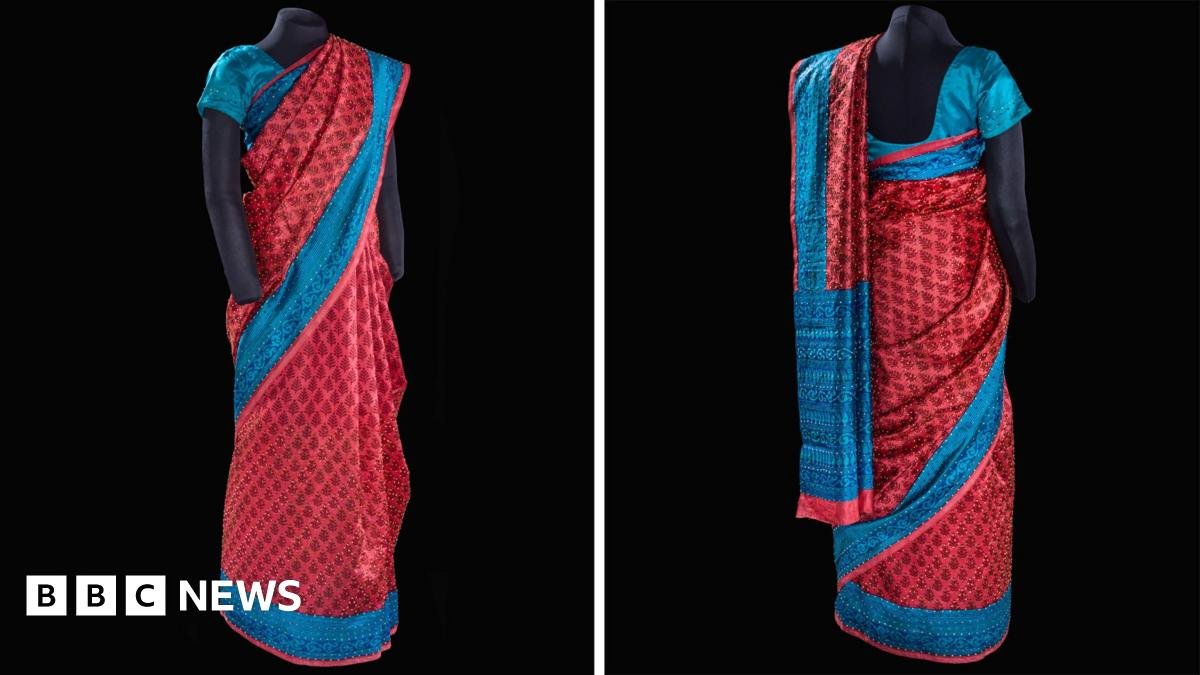
Smithsonian, which is visited by tens of thousands of people every week, also has several objects from India in their collections – but most are from the Air Force and airline companies.
It also has a commemorative silver tray Isro presented to the science fiction author Arthur C Clarke in 2007 on his 90th birthday.
“But Nandini’s sari is the first object I have collected from India for our interplanetary science collection and it’s our very first sari,” Shindell says.
The garment is on display in the Air and Space Museum’s “Futures in Space” gallery, alongside different objects, including toys, games and movie posters. It’s placed right next to the iconic blue t-shirt worn by Sally Ride on the 1983 Shuttle mission when she became the first American woman in space.
The idea behind this display, Shindell says, “is to engage visitors to recent things that happened in space and what could happen next”.
“We have lots of questions when it comes to space and the installation invites visitors to consider some of today’s biggest questions: Who decides who goes to space? Why do we go? And what will we do when we get there?”
This exhibition, he says, deals with the question of why and the display of objects speaks to the motivations behind going to space.
Nandini’s sari speaks to two motivations, he adds. “One, it’s a symbol of India’s national pride in its first Mars mission and the country’s successful space programme. The second is her personal story which is inspiring as her success could encourage more women to pursue careers in science.”
The sari, he says, was chosen also because it has cultural value and that it’s visibly easy to identify. The display invites museum visitors to use the touchscreen to find out more about the exhibits.
“I’m overjoyed that visitors are watching the sari and wanting to find out more about it. It’s a fantastic addition to our collection,” Shindell says.