









Beyond Heating: The Unexpected Cool Factor of Heat Pumps in a Warming Climate
As the UK grapples with increasingly frequent and intense heatwaves, homeowners are seeking innovative solutions to maintain comfort. While traditionally associated with efficient heating, heat pumps are emerging as a surprising answer to the challenge of keeping cool, offering a dual functionality that could redefine domestic climate control.
Andrew Ingram, a resident of Maidenhead, Berkshire, and his wife Sue, have experienced this revelation firsthand. “If it is 35C outdoors, I can get the temperature down to 21C,” he states, describing his living room as a summer sanctuary. Ingram humorously adds, “On the nights I’ve slept in there, you have to put your thick pyjamas on.” When sharing his experience on social media, the common response is often, “‘That’s air conditioning’,” to which Ingram clarifies, “‘No, it’s the heat pump.’ It’s just working the other way around.”
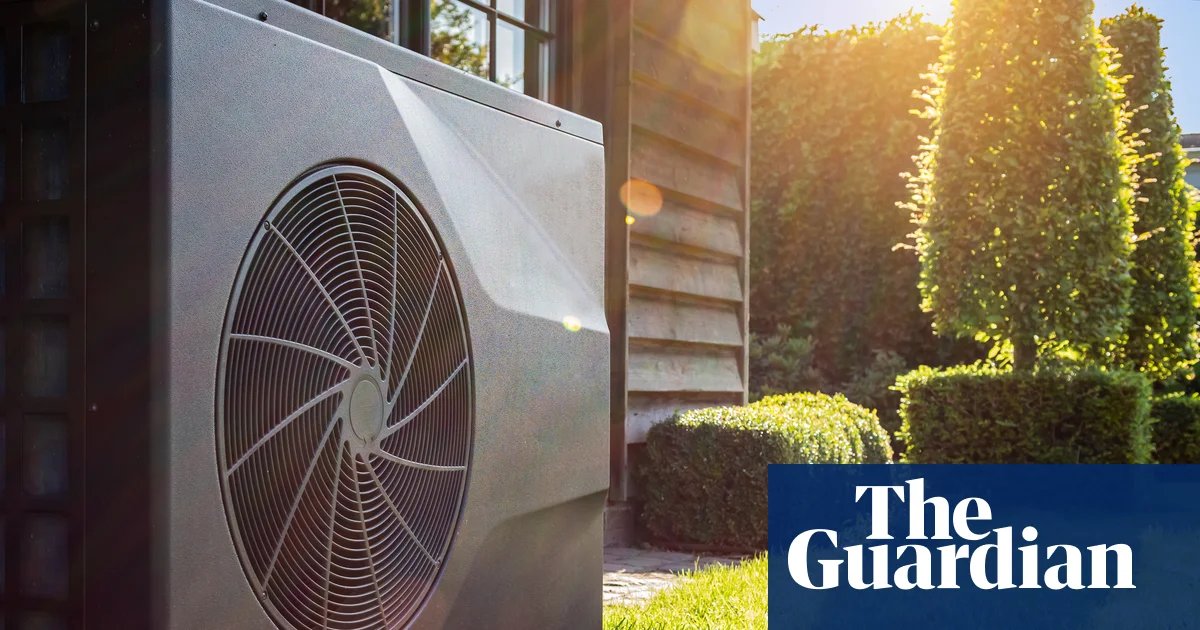
Indeed, the fundamental principle of a heat pump is to transfer heat energy from one place to another, rather than generating it through combustion. While this often means drawing heat from the outside air to warm a home (as with the Ingrams’ air-to-water system, which warms their radiators), the same technology can be reversed to extract heat from indoors and expel it outside, effectively cooling the living space.
The Ingrams’ journey to this unexpected cooling comfort began in 2023 when they replaced their gas boiler. The installers suggested considering cooling capabilities for their new heat pump system. “We thought about it because the sitting room gets really hot, and that’s the room we spend time in,” Ingram explains. This foresight proved invaluable. “It’s been a revelation. We bought it on the basis that there might be a heatwave, and it’s been an absolute lifeline this year.” The ability to “turn it right down” for immediate relief and then allow the temperature to gradually rise again offers a welcome escape from oppressive summer heat.
Andrew and Sue Ingram with the GivEnergy home battery storage and inverter system they use with their heat pump.
While their home primarily uses radiators, their living room is equipped with a fan coil unit – an “emitter” that blows air over either hot or cold pipes. The total investment for their new home energy system was approximately £18,600, with the cooling aspect adding around £1,700 to the cost. Ingram notes a potential challenge with this method: “If you’re pumping cool water around a property, it’s a bit like putting cool beer in a glass on a warm day.” This can lead to condensation, necessitating “sophisticated trunking” for internal pipes or, as the Ingrams opted, external pipework.
The growing awareness of overheating homes, exacerbated by recent heatwaves, has prompted government action. The Boiler Upgrade Scheme in England and Wales offers grants of £7,500 for air-to-water or ground-to-water heat pump installations, with an additional £1,500 for off-gas-grid properties. In Scotland, interest-free loans or grants are available for energy efficiency improvements. Crucially, recent updates to permitted development rights now allow cooling functionalities in heat pumps without requiring additional planning permission, a significant barrier in the past.
While air-to-water systems dominate the current market (323,000 of the UK’s 358,000 heat pumps), the landscape is set to evolve. The government plans to offer £2,500 grants for air-to-air heat pumps – systems that use wall-mounted fans for both heating and cooling, typically costing around £4,500 for smaller homes. This is considerably less than the approximately £12,000 for air-to-water units.
The need for cooling solutions is becoming increasingly urgent. The Climate Change Committee’s report highlights that hotter heatwaves could lead to 92% of existing homes overheating by 2050, suggesting that traditional passive measures may be insufficient. Research from the University of Salford’s “Energy House 2.0” further supports the efficacy of heat pump cooling. In a climate-controlled chamber, scientists paired a heat pump with fan coils in a mock home. When external conditions simulated 32°C, the internal temperature remained a comfortable 19°C to 24.9°C, at a running cost of £2.50-£3 per day. Professor Lubo Jankovic, leading the research, confirms that “reversible heat pumps can play an important role in protecting future homes against overheating,” though he emphasizes the need for integrated heating and cooling system design.
Despite growing interest, consumer hesitation remains due to unfamiliarity, upfront costs, and uncertainty about energy bills, particularly with the predicted October price cap exceeding £1,700 for a typical dual fuel bill. Organizations like Nesta are bridging this gap with their “visit a heat pump” scheme, offering tours of over 1,200 homes, including the Ingrams’, allowing prospective buyers to gain firsthand insights.
For those concerned about running costs, the Energy Saving Trust advises combining heat pumps with dedicated energy tariffs and other green technologies like solar panels. Heat pumps run on electricity, which can be more expensive than gas. However, switching to a time-of-use tariff can save approximately £330 annually, rising to £800 with solar panels and battery storage – a setup the Ingrams utilize. “There’s lots of juice in the batteries from the solar,” Ingram notes, “So if you want to run the pump, it is running on free or very cheap electricity.” This integrated approach offers a glimpse into a future where homes are not only efficiently heated but also effectively cooled, providing year-round comfort and resilience against extreme weather.