









Navigating the Hardware Landscape: Why Prices Shift During Holiday Cycles
The personal computing market has experienced significant volatility over the past three years. Driven by supply chain constraints, inflation, and the integration of highly advanced silicon architectures, the cost of entry for a high-performance machine has climbed steadily. For consumers, the challenge lies in distinguishing between a legitimate discount and marketing inflation. As the holiday shopping season peaks, manufacturers and retailers are clearing inventory to make room for newer iterations, creating a window of opportunity for users to acquire premium hardware at significantly reduced price points.
Understanding why prices fluctuate requires a brief look at current architecture. Whether you are looking at Apple’s M-series silicon or Intel’s latest Core Ultra processors, these components carry high manufacturing costs. When retailers offer deep discounts during the Black Friday window, they are often absorbing costs to drive traffic or liquidating specific configurations—such as 8GB RAM models—that are becoming obsolete for professional workflows. The current market trend shows that while base models are becoming cheaper, machines configured for longevity, particularly those with 16GB of unified memory or higher, remain the most coveted targets for smart shoppers.
Evaluating the Apple Ecosystem: Finding Value in M-Series Silicon
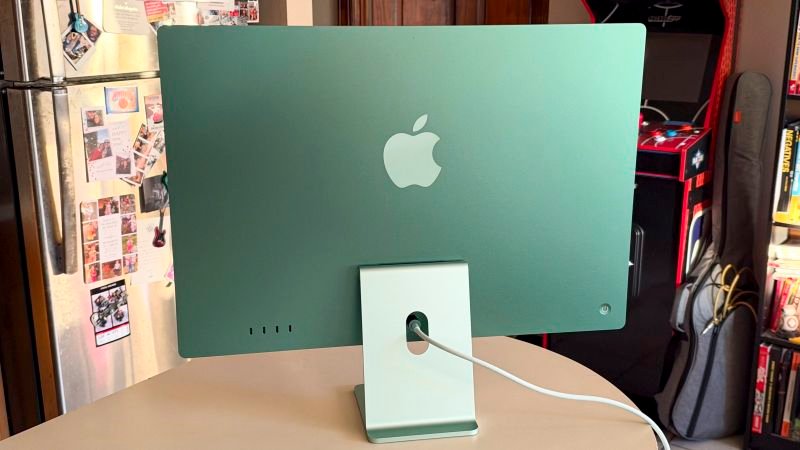
Apple’s recent hardware updates have focused on the transition to the M4 architecture, which places immense pressure on the pricing of previous-generation M2 and M3 models. The latest iMacs and MacBook Air variants are lauded for their power efficiency and thermal management, but the real value proposition often resides in the previous generation of machines that remain entirely capable of handling modern software requirements.
When shopping for an Apple device, the priority should be the memory architecture. Apple’s transition to Unified Memory Architecture (UMA) means that RAM is shared between the CPU and GPU. For any user planning to engage in photo editing, video streaming, or heavy multitasking, 16GB of memory has become the new functional floor. Black Friday deals frequently feature base-model laptops with 8GB of RAM at steep discounts. While these appear to be bargain prices, users must weigh the potential for future bottlenecking against the immediate financial savings. The most effective strategy is to target the 16GB configurations that retailers are eager to move to keep their SKU distribution balanced.
Performance Metrics for Windows Workstations
On the Windows front, the landscape is dictated by competition between Intel, AMD, and the emerging influence of ARM-based Windows processors. Current deals are heavily concentrated on laptops equipped with Intel Core i7 or i9 chips from the 13th and 14th generations. These processors remain industry leaders in raw computational throughput, making them ideal for engineering software, complex data analysis, and high-fidelity gaming.
When selecting a Windows desktop or laptop, users should prioritize the display panel and the cooling solution. High-performance CPUs generate significant heat, and budget-tier laptops often struggle to manage these thermal loads, leading to “throttling” where the processor slows down to prevent damage. A quality Black Friday deal includes a machine with a robust chassis and adequate venting. If you are targeting a desktop, focus on modularity. A pre-built desktop from a major manufacturer is often discounted heavily during this season, providing a stable foundation that can be upgraded with additional storage or a more powerful dedicated graphics card in the future.
Use Cases: Matching Hardware to Computational Needs
Selecting the right machine is less about buying the most expensive component and more about matching hardware capabilities to specific computational tasks. For a student or a remote professional whose primary workflows involve web-based applications, cloud-managed documents, and video conferencing, a machine with an efficient mid-range processor and an integrated graphics unit is more than sufficient. In this sector, weight and battery life are the primary metrics of quality.
Conversely, creative professionals—such as graphic designers or video editors—require hardware that supports high-speed data transfer and color-accurate displays. During the current promotional cycle, manufacturers are bundling high-spec laptops with extended warranties or additional peripherals. For these power users, the return on investment is found in machines featuring dedicated cooling fans and high-resolution IPS or OLED panels. Recognizing your primary use case prevents the mistake of overpaying for features like top-tier discrete graphics cards that may never be fully utilized by standard office software.
Maximizing Longevity Through Strategic Hardware Choices
The goal of purchasing a computer during the Black Friday period should be to maximize the time between upgrades. To achieve this, consumers should look for specific indicators of future-proofing. Beyond the aforementioned memory requirements, port selection is a critical factor often overlooked by bargain hunters. A machine featuring Thunderbolt 4 or USB4 ports offers significantly more utility over a five-year horizon than a device limited to older USB-A standards.
Furthermore, storage should not be the primary concern at the point of purchase, provided the device has external expansion capabilities. It is generally more cost-effective to buy a machine with a modest 512GB internal drive and supplement it with an external solid-state drive (SSD) later, rather than paying the significant premiums manufacturers charge for factory-installed storage upgrades. By focusing on the core processor and memory—components that cannot be swapped out later—users can secure a machine that performs reliably well into the end of the decade, ensuring that the initial discount pays dividends in long-term usability.
Disclaimer: This content is auto-generated for informational purposes only.
Source: Read Original News