









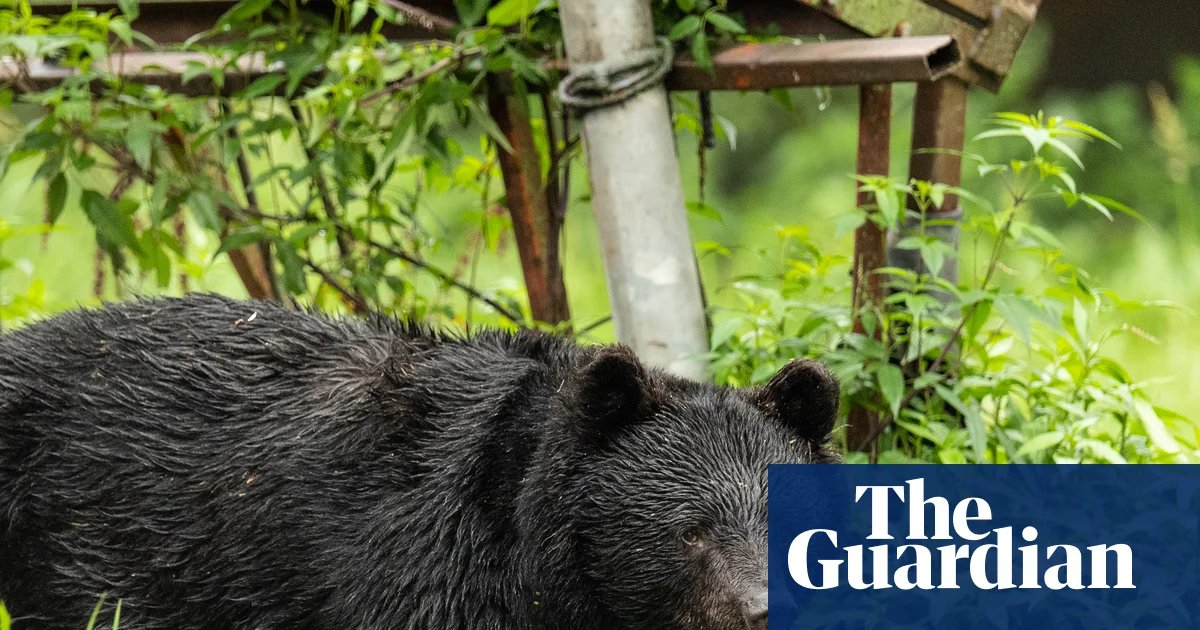
Japan’s Coexistence Crisis: The High Cost of Record-Breaking Bear Encounters
Every summer, millions of urban dwellers escape the suffocating heat of Tokyo to find respite in the verdant, high-altitude embrace of Karuizawa. Tucked away at the foot of Mount Asama, this tranquil resort town is famous for its bamboo-lined paths and the Japanese wellness practice of shinrin-yoku—forest bathing among cool, towering hinoki trees. However, in recent years, this idyllic retreat has become the frontline of a nationwide wildlife crisis.
As temperatures climb, Asiatic black bears are increasingly drawn from the deep woods to the outskirts of residential areas. Lured by low-calorie natural food sources like mulberries and cherry blossoms, these animals are venturing closer to human populations than ever before.
A Nation on Edge
The conflict between humans and bears has reached a boiling point. Last year, Japan recorded its deadliest period in history, with more than 230 people attacked and 13 killed. The surge is linked to a “perfect storm” of environmental and demographic shifts: climate change has decimated the nut harvests in northern prefectures like Akita and Iwate, forcing hungry bears to forage in abandoned orchards and rural villages.
In response, the Japanese government has initiated a sweeping culling program. Between April 2025 and January 2026, over 14,000 bears were killed, a figure that has sent shockwaves through the global conservation community. Experts note that this scale of extermination is unprecedented in the modern era, with many countries limiting hunting to less than 10% of their bear populations.
The bear culling policy, however, has faced heavy criticism for its failure to stem the tide of violence. Since April, six more people have been killed, and local authorities have been forced to take extreme measures, including the closure of nearly 100 schools in one city due to bear sightings.
The Karuizawa Model: A Non-Lethal Alternative
While much of the country relies on lethal force, the town of Karuizawa offers a blueprint for coexistence. Since the 1990s, the conservation group Picchio has pioneered a proactive approach. Using Karelian bear dogs—a breed specifically trained to chase bears back into the wild—the team successfully deters animals before they become habituated to human presence. When necessary, they safely tranquilize and relocate bears deeper into the forest.
“People would be seeing little molehills in their garden and think it was bear poop,” says Amelia Hiorns, a British zoologist formerly with Picchio. She explains that mass panic and misinformation have caused significant economic damage to tourism, despite the fact that aggressive incidents in Karuizawa remain rare due to their targeted, non-lethal management.
The Limits of Culling
Conservationists argue that the government’s focus on reducing numbers is a short-sighted strategy. Yuko Muroya, chair of the Japan Bear and Forest Society (Kumamori), warns that the strategy is unsustainable. “A government strategy focused solely on reducing bear numbers will not solve the bear problem until bears themselves are driven to extinction,” she says.
Ecologists point out that the Asiatic black bear, while not globally extinct, is facing a shrinking habitat. Furthermore, the lack of accurate population data—with current government estimates of 42,000 largely based on outdated surveys—means the authorities are operating in the dark.
A Path Toward Tolerance
International experts suggest that Japan is witnessing the consequences of its own conservation success. Since the 1970s, as rural populations moved to cities, abandoned farmland reverted to forest, allowing bear populations to rebound across Honshu. The challenge now is transitioning from a “cull-first” mentality to modern bear-proofing strategies.
“We can either learn to live with the bears we share habitat with, or we can remove them,” says Geoff York, an American bear biologist. “I hope we are moving towards tolerance.”
For now, the Japanese government has promised a new, three-year nationwide survey to better understand its bear population. Whether this will lead to a more nuanced, coexistence-focused policy—or merely continue the current path of mass removal—remains to be seen. In the meantime, the citizens of rural Japan continue to adapt, installing electric fences, clearing fruit trees, and learning to navigate a landscape where the boundary between the wild and the suburban has all but vanished.