








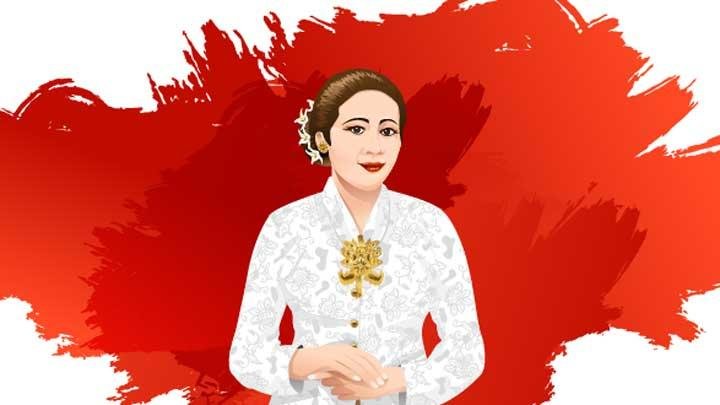
CANTIKA.COM, Jakarta – Refreshing our memory together, April 21, 1879, is the birth date of Raden Ajeng Kartini which is commemorated every year as /Kartini Day’ in Indonesia. This commemoration is a form of tribute to her struggle in advocating for gender equality, starting from the right to speak up, education, to the opportunity to create.
To get to know her better, here are some interesting facts about R.A. Kartini:
1. Comes from A Priyayi Family
Kartini was born into a priyayi or Javanese noble family. She was the daughter of Raden Mas Adipati Ario Sosroningrat, a regent who was later appointed as the Regent of Jepara.
Kartini was a child of the first wife, M.A. Ngasirah, who came from a family of religious teachers in Jepara. On the paternal side, Kartini’s lineage was connected to Hamengku Buwana VI.
At that time, colonial regulations required a regent to have a wife from a noble family. Therefore, Kartini’s father remarried Raden Adjeng Woerjan. After the marriage, he was appointed as the Regent of Jepara.
2. The Fifth Child of 11 Siblings
Kartini was the fifth child out of 11 siblings, both biological and step siblings. She was also the oldest daughter among her biological siblings.
Her grandfather, Pangeran Ario Tjondronegoro IV, was known as one of the first regents to provide Western education to his children.
3. Seriously Ill During Childhood
When Kartini was seven years old, she suffered from a severe illness with high fever that did not subside. Various medical treatments were carried out but did not yield any results.
Eventually, a Chinese man known to their family suggested an alternative treatment. After following the advice, Kartini’s condition gradually improved.
She later wrote about this experience in a letter to Rosa Abendanon on October 27, 1902. In the letter, Kartini also compared the Javanese and European perspectives, including beliefs and traditional treatments.
4. Nicknamed “Trinil”
Since childhood, Kartini was known to be active, agile, and sociable. She enjoyed playing outside, running, and laughing freely.
In one of her letters to Stella Zeehandelaar, Kartini described herself as an energetic person. Because of her nature, she was nicknamed “Trinil” by her family, referring to a lively little bird.
5. Proficient in Dutch
Kartini had the opportunity to attend Europese Lagere School (ELS) until the age of 12. There, she learned the Dutch language.
After leaving school, Kartini continued to study independently at home. She actively corresponded with her friends in the Netherlands, including Rosa Abendanon.
Through European literature, Kartini began to understand the thoughts of modern women. This prompted her to advocate for the progress of native women, whose access was still limited at that time.
6. Passed Away at the Age of 25
Kartini passed away in Rembang, Central Java, on September 17, 1904, four days after giving birth to her first child. She died at the age of 25. Although her life was short, her thoughts and struggles are still remembered to this day.
Read: Kartini Museum Officially Opened in Jepara
Click here to get the latest news updates from Tempo on Google News