









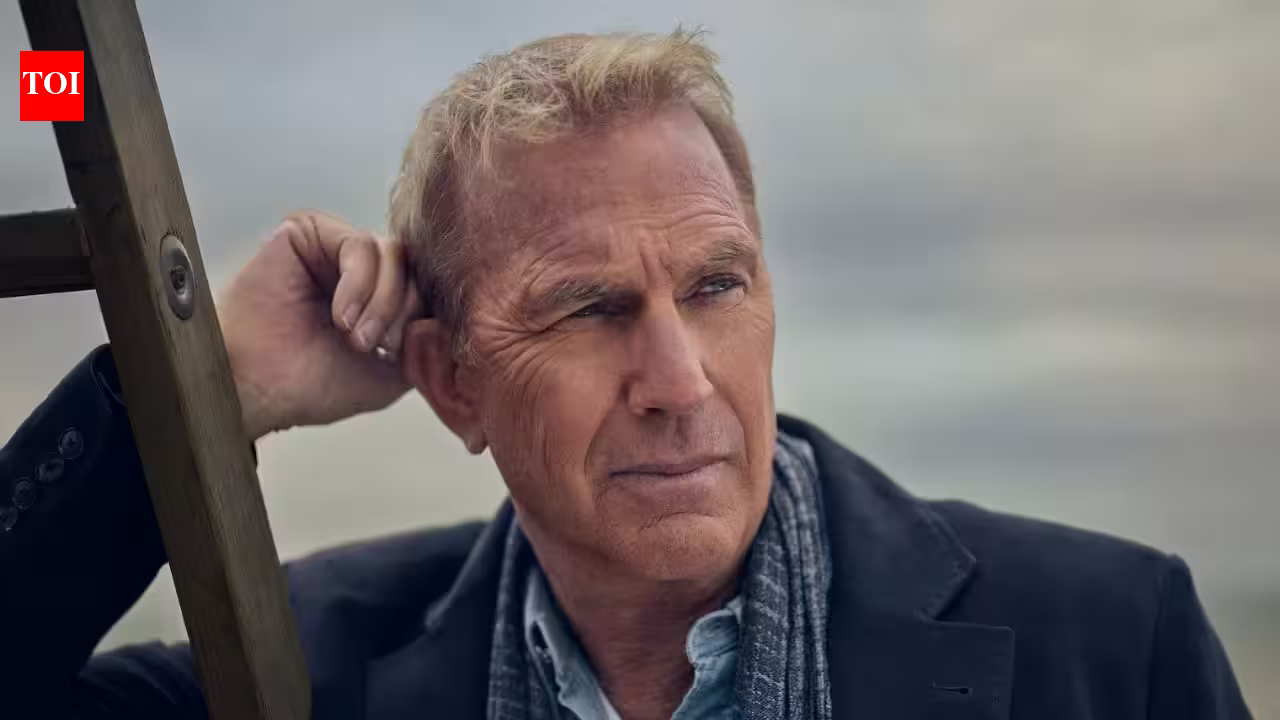
In the glittering, often fickle ecosystem of Hollywood, success is frequently mistaken for a stroke of overnight luck. We see the red carpets, the Academy Awards, and the box office dominance, and we assume it was a straight line to the top. But look closer at the career of Kevin Costner, and you’ll see something far more rugged. You’ll see a man who understands that the distance between a dream and a reality is usually paved with doubt—and that most people fold their cards the moment the dealer raises the stakes.
Reflecting on his journey, Costner once dropped a truth bomb that resonates far beyond the soundstages of Burbank: “I’m a big fan of dreams. Unfortunately, dreams are our first casualty in life; people seem to give them up, quicker than anything, for a ‘reality.'” It is a stark observation from a man who spent decades turning his own “unrealistic” visions into the very fabric of American cinema.
The Mirage of “Practicality”
Why is it that our dreams are the first things we sacrifice when the wind turns cold? Costner’s philosophy hits on a painful social nerve. We live in a culture that fetishizes “practicality.” From the time we are young, we are taught to pivot, to adjust, and—ultimately—to shrink our ambitions to fit into the box of what others define as “attainable.”
When Costner speaks about dreams being a “casualty,” he isn’t suggesting that we should live in a fantasy world, ignoring our bank accounts or our obligations. Instead, he’s pointing to the fragility of human resolve. It is easy to hold onto a dream when the sun is shining and the path is clear. It is entirely different when life presents a wall. Most people look at the wall and call it “reality,” using that word as a polite excuse to give up. Costner argues that “reality” is often just a mask worn by fear. To trade a dream for a stable, predictable existence is, in his eyes, the ultimate surrender.
The Architecture of a Long Game
If you want to see this philosophy in action, you don’t need to look at his awards; you need to look at his resilience. Before he was the icon, Costner was a marketing student at California State University, Fullerton, playing the long game. His start was not paved with gold. There’s a legendary, almost cruel anecdote from his early days: he landed a role in the 1983 ensemble classic The Big Chill, only to have his character’s scenes cut entirely from the final edit.
Imagine being an aspiring actor, getting your foot in the door of a massive, star-studded project, and then being told that, effectively, you didn’t exist on screen. Most would have taken that as a sign to go back to a safe career in marketing. Most would have retreated into the “reality” that they weren’t cut out for the big leagues. Costner didn’t. He treated the setback not as an ending, but as part of the tuition he had to pay to become the craftsman he is today.
From ‘Field of Dreams’ to ‘Horizon’
The irony of Costner’s career is that his greatest hits are often stories about people who refused to listen to common sense. In Field of Dreams, he plays a man who hears a voice in a cornfield and chooses to build a baseball diamond, despite his family’s impending bankruptcy. It is a cinematic meditation on his own life philosophy: the audacity to trust a vision that no one else can see.
Decades later, he doubled down on this belief with Horizon: An American Saga. This wasn’t a standard studio play; this was a passion project that required him to put his own skin in the game. When the industry told him the Western was a dying genre or that the scope of his vision was too ambitious, he didn’t pivot. He moved forward. That is the definition of refusing to make your dream a casualty. He turned his creative vision into a tangible reality by rejecting the “reality” that his financiers tried to impose on him.
Why We Need This Lesson Today
In an era of instant gratification and digital burnout, Costner’s perspective feels like a necessary anchor. We are constantly pressured to curate our lives, to show quick results, and to abandon projects that don’t pay off in the first quarter. We are exhausted by the “reality” of algorithm-driven trends and short-term metrics.
Yet, true longevity—the kind Costner has enjoyed from the 80s to the current cultural juggernaut that is Yellowstone—comes from a refusal to play by the short-term rules. Whether it’s his transformation into the gritty, complex John Dutton or his transition from a leading man to an auteur, Costner’s career proves that you don’t have to give up your dreams; you just have to be willing to evolve them.
The Takeaway: It’s Your Choice
Ultimately, Costner isn’t just offering advice for aspiring actors; he’s offering a manual for living. The next time you find yourself at a crossroads, tempted to trade a long-standing goal for the comfort of a safer path, remember his words. Is it really “reality” that is stopping you, or is it just the easy way out?
Dreams are, by nature, irrational. They exist outside the boundaries of what is currently proven to work. That is their power. To hold onto them is to accept a degree of risk that most are unwilling to stomach. Kevin Costner’s career is a testament to the fact that while “reality” may be the first thing to offer you a way out, the dream is the only thing that will eventually lead you home. Don’t let your ambitions become a casualty of your circumstances. Keep the field open, even when the critics say it’s just a patch of corn.
Disclaimer: This content is auto-generated for informational purposes only.
Source: Read Original News