







KYOTO—An unprecedented collection of approximately 150 modernist buildings will open their doors to the public this autumn as the Kyoto Modern Architecture Festival returns for its fifth installment. Running from October 31 through November 8, the event seeks to spotlight the rich architectural legacy of Japan’s ancient capital, ranging from the Meiji era to the late Showa period (1868–1989), while raising critical awareness for structures currently at risk of demolition.
Since its launch in 2022, the festival has evolved from a niche architectural initiative into a major cultural draw, attracting over 70,000 visitors last year alone. Notably, the demographic is skewing younger, with nearly half of the attendees under the age of 40, signaling a growing interest among the next generation in preserving the city’s built heritage.
A cornerstone of the festival is the popular viewing pass, which grants attendees independent access to a curated selection of properties. This year, the pass covers a record-breaking 61 structures, 18 of which are participating for the first time. Proceeds from these passes, alongside corporate sponsorships, are funneled directly into the vital maintenance and revitalization of the showcased buildings.
Among the new highlights is the Holy Annunciation Orthodox Church in Nakagyo Ward. Completed in 1903 and designed by Shigemitsu Matsumuro, the church is a striking example of Russian-Byzantine architecture, complete with an octagonal bell tower and a prominent dome. Its interior houses a rare, czarist-era iconostasis—a screen adorned with religious icons that survived the devastation of the 1917 Russian Revolution.
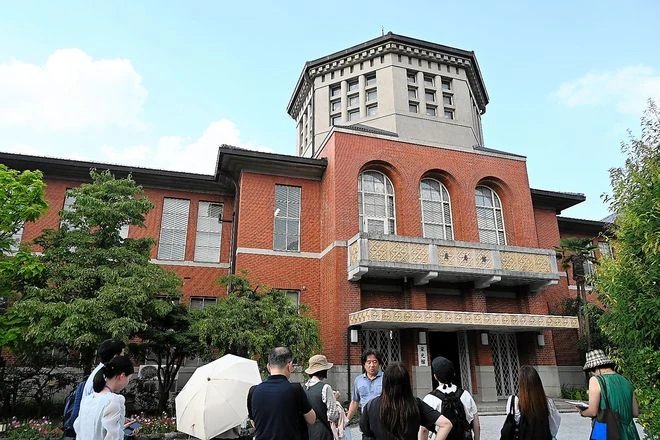
Other notable additions include the Eiko-kan building and James Hall at Doshisha Women’s College, both designated as tangible cultural properties, and the newly reconstructed Miyagawacho Kaburenjo, a traditional theater for geisha and maiko apprentices. The theater renovation, overseen by renowned architect Kengo Kuma, seamlessly blends modern design with the building’s original Taisho-era gables.
“We would like you to walk everywhere around the city and enjoy encounters with a wide variety of buildings that grace Kyoto,” said Kazuto Kasahara, an associate professor at the Kyoto Institute of Technology and head of the festival.
The festival offers two tiers of viewing passes: 3,000 yen for either the first leg (Oct. 31–Nov. 1) or the second leg (Nov. 7–8), or 5,000 yen for full access to both periods. To encourage student and youth participation, the festival offers a reduced rate of 2,000 yen for attendees aged 29 and younger. Early bird discounts are available for those who purchase passes by October 25.
For those seeking a deeper experience, guided tours are available via prior reservation throughout the festival duration. With a free audio guide included for all pass holders, the event invites both locals and tourists to see the city through a new, architectural lens—one that balances the preservation of the past with the vitality of the future. Full details can be found at the official festival website at https://kyoto.kenchikusai.jp/.
Disclaimer: This content is auto-generated for informational purposes only.
Source: Read Original News