









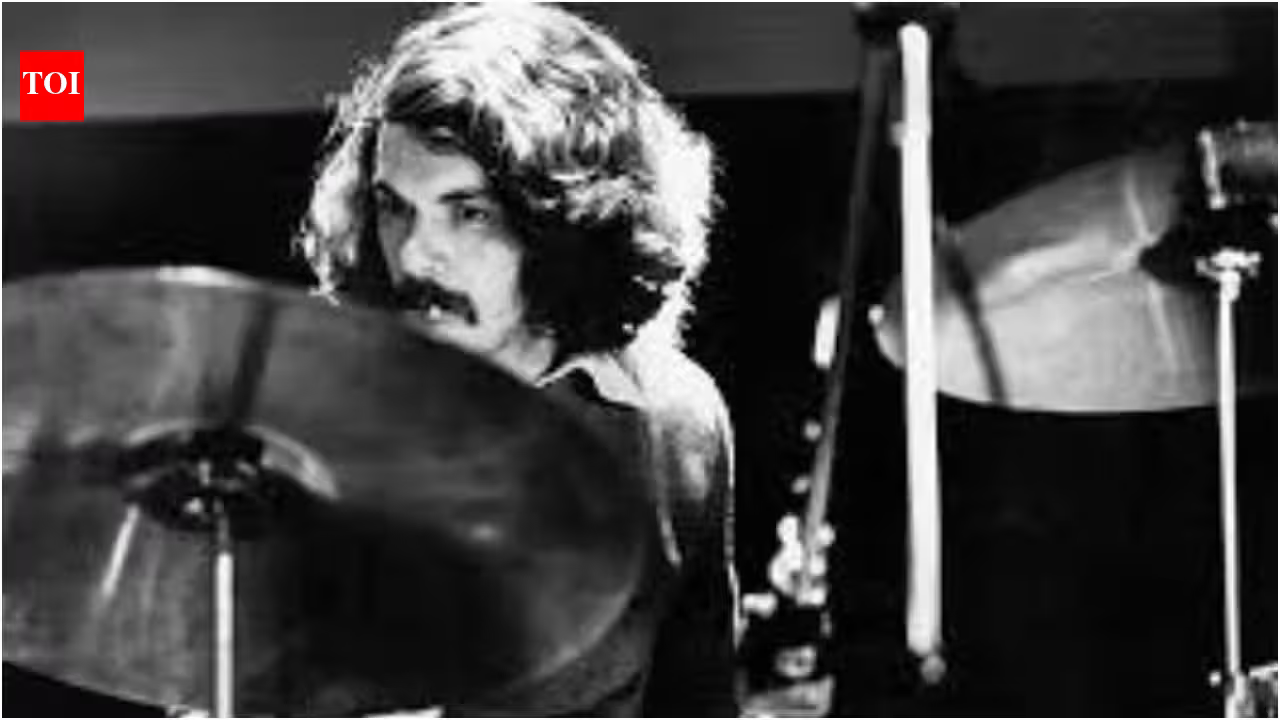
The progressive rock world has lost one of its most innovative architects. Michael Giles, the rhythmic heartbeat behind the explosive emergence of King Crimson and a pioneer of the genre’s complex, percussive landscape, has passed away at the age of 84. His death, confirmed by the band’s label DGM, marks the end of a career that redefined what a drum kit could do in the service of rock music. While the cause of death remains undisclosed, the outpouring of grief from the music community serves as a testament to the quiet, yet seismic, impact he had on the evolution of 20th-century sound.
DGM remembers Michael Giles’ contribution to progressive rock
In the wake of the news, DGM issued a statement that captured the reverence in which Giles was held by his peers. The label didn’t just highlight his technical prowess; they celebrated his “originality, musical curiosity, and uncompromising commitment to creative freedom.” It is a sentiment that rings true for anyone who has dissected the frantic, jazz-inflected drumming that characterized his tenure with King Crimson.
Giles was never a drummer who simply kept time. He was an orchestrator of chaos, capable of navigating the labyrinthine time signatures that defined the band’s aesthetic. His influence transcended the progressive rock bubble, impacting generations of musicians who viewed his work as the gold standard for blending technical rigidity with an organic, improvisational flair. For his family—his sister Marion, brother Peter, and his five children and grandchildren—the loss is personal, but for the global rock community, it is the silencing of one of the genre’s most distinct voices.
From Giles, Giles and Fripp to King Crimson
To understand Michael Giles, one must look at his origins in Bournemouth, England. It was here, alongside his brother Peter, that he began forging a path that would eventually cross with guitarist Robert Fripp. The formation of “Giles, Giles and Fripp” in 1967 served as the creative crucible for what was to come. They were an eccentric, forward-thinking trio, and while their single studio album in 1968 didn’t set the charts on fire, it laid the structural foundation for the musical revolution that followed.
By 1969, the trio had evolved into the juggernaut known as King Crimson, with the addition of Greg Lake and Ian McDonald. Their debut, In the Court of the Crimson King, remains a foundational text of progressive rock. It was a record that dared to be grand, abrasive, and delicate all at once—and in the eye of that storm was Giles. His drumming on tracks like the title cut and the monumental “21st Century Schizoid Man” provided the high-tension wire upon which the rest of the band danced. He didn’t just accompany the music; he pushed it into territories that had previously only been mapped by jazz fusion masters.
Michael Giles continued working with former bandmates
Giles’s departure from King Crimson in 1970, alongside Lake and McDonald, might have signaled the end for a lesser musician, but for Giles, it was merely a pivot. He was a collaborator at heart, characterized by a restless creative spirit that saw him contributing to the band’s second album, In the Wake of Poseidon, even after his official exit.
Throughout the subsequent decades, he remained deeply entwined with his former comrades. The formation of the 21st Century Schizoid Band in 2002 was perhaps the most poignant of these reunions. By pulling together Peter Giles, Greg Lake, Ian McDonald, and guitarist Jakko Jakszyk to perform the early King Crimson repertoire, he wasn’t just rehashing the past; he was cementing his legacy. He understood, perhaps better than anyone else, that those early compositions were not relics, but living, breathing pieces of music that demanded to be played with the same intensity they possessed in 1969.
Fans pay tribute to the legendary drummer
The reaction on social media following the announcement was instantaneous and heartfelt. Platforms like X became a makeshift memorial, with fans posting clips of his most iconic performances and sharing personal anecdotes. One sentiment appeared repeatedly: the comparison to Bill Bruford. To be mentioned in the same breath as Bruford is the highest praise a progressive rock drummer can receive, yet many fans argued that Giles’s contribution was more fundamental—a “primitive genius” that set the stage for everything that followed.
“He gave us the drumming in ’21st Century Schizoid Man’—that is enough to make anyone a legend,” wrote one fan. It’s a point that cannot be overstated. That specific track, with its frantic, aggressive shifts and complex fills, effectively introduced a new lexicon for rock drumming. His influence lives on in the hands of every drummer who has since tried to balance the raw power of rock with the intricate demands of progressive composition.
Solo projects and later musical releases
Though his time in the spotlight with King Crimson was relatively brief, Giles never stopped working. His creative life was a long, winding road that led him through various independent projects. His solo album, Progress, recorded in 1983 but left unreleased until 2002, serves as a fascinating look at where his head was at mid-career. Later, his work with the Michael Giles MAD BAND allowed him to continue exploring his interest in experimental sounds, proving he never lost that “musical curiosity” the DGM statement so rightly identified.
Even in his later years, he remained active. The release of the compilation Shadows/Solo earlier this year serves as a final bow, a career-spanning retrospective that showcases a musician who refused to stagnate. Michael Giles leaves behind a legacy defined by his refusal to compromise. In a world of pop-music conformity, he chose the complex, the difficult, and the beautiful. He leaves us with his drums still ringing in our ears, a permanent fixture in the history of rock and roll.
Disclaimer: This content is auto-generated for informational purposes only.
Source: Read Original News