





Expanding the Googlebook Ecosystem
The hardware landscape for Google’s branded computing devices is set to expand significantly in early 2027. Following the introduction of the Lenovo Googlebook 15 in October 2026, industry attention has shifted toward the upcoming Lenovo Googlebook Duet 13. This new addition signals a strategic push by Google to capture the detachable 2-in-1 market, offering users a device that balances the mobility of a tablet with the functional requirements of a laptop.
The branding of this device pays homage to Lenovo’s successful IdeaPad Duet line, which previously carved out a significant niche for users seeking portable, secondary machines. By adopting the “Googlebook” designation, the manufacturer is clearly aligning this hardware with a more unified and premium software experience, positioning these devices to compete more directly in the productivity sector.
Design Specifications and Build Quality
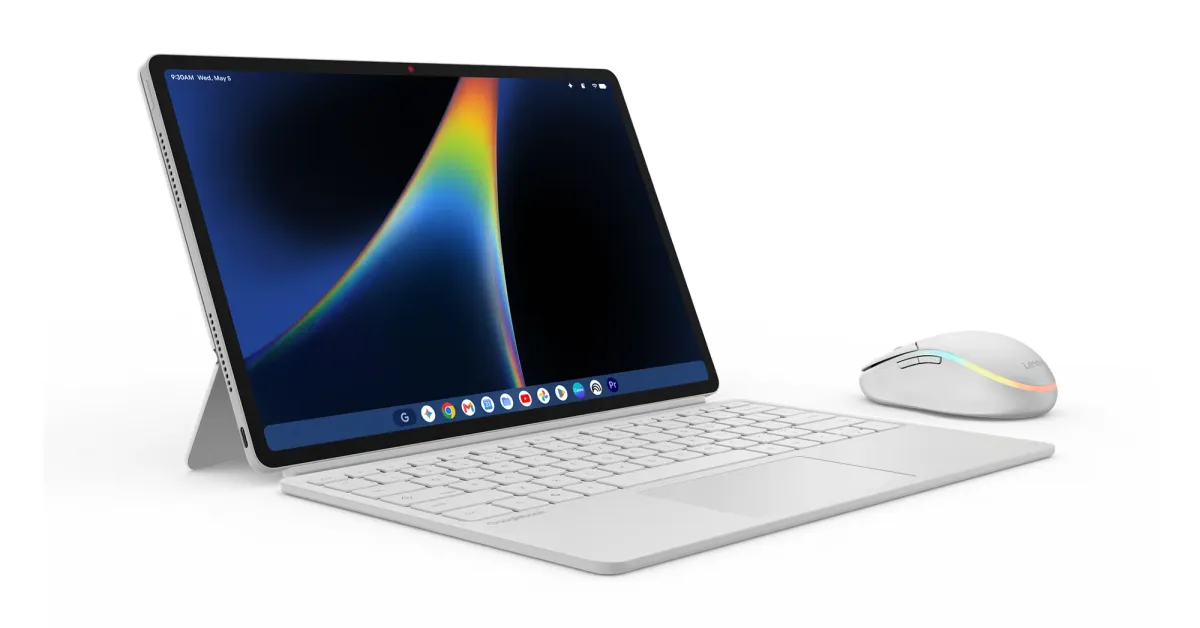
Leaked imagery of the Lenovo Googlebook Duet 13 reveals a highly refined industrial design. The device features a 13-inch display, a standard size that provides a balanced workspace for professional or academic tasks while remaining compact enough for travel. The detachable keyboard is a central component of this design, featuring keys with a distinct bottom curvature, which suggests a focus on ergonomic input.
Underneath the keyboard, the trackpad appears relatively compact, likely a compromise to maintain the overall slim profile of the peripheral. A physical “Googlebook” label is prominently placed below the Control key, reinforcing the brand identity. The back of the device incorporates a magnetic, foldable stand that adds structural stability when the device is used in laptop mode. Notably, a “Glowbar”—a signature lighting element—is positioned adjacent to the rear camera module, providing visual feedback or status notifications, a design trait becoming synonymous with this new class of hardware.
Connectivity and Peripheral Integration
The Lenovo Googlebook Duet 13 demonstrates a thoughtful approach to I/O and peripheral management. The unit features dual USB-C ports located on the side edges, ensuring that users can connect accessories and power cables regardless of their orientation. A mysterious, pill-shaped cutout on the top-right edge has sparked discussion, with early assessments suggesting it may house an additional high-speed interface or port.
Stylus support is a confirmed feature of the hardware, with the pen designed to attach magnetically to the top edge of the tablet. This placement serves a dual purpose: it provides a secure storage solution for the stylus while simultaneously enabling wireless charging, ensuring the tool is ready for use without requiring separate battery management. The integration of these features highlights an intent to provide a seamless transition between handwriting, drawing, and traditional typing tasks.
Performance and Market Positioning
The anticipated January 2027 release window for the Duet 13 aligns with the CES trade show cycle, a frequent stage for major hardware reveals. This timeline is intentional, providing a fresh momentum for the Googlebook line as the manufacturer continues to refine the underlying operating system. Recent months have seen a high volume of software-level maintenance, including targeted bug fixes and performance enhancements designed to optimize stability across the Googlebook range.
By introducing a 13-inch detachable model, the company is bridging the gap between ultra-portable media consumption devices and more powerful, productivity-oriented laptops. This positioning suggests that the device will rely on modern, power-efficient processors capable of handling multitasking in a browser-centric environment without sacrificing the longevity of the battery.
Expected Impact on the Computing Sector
The move to solidify the Googlebook brand through varied form factors—from the 15-inch clamshell to the 13-inch detachable—reflects a maturing strategy. Rather than merely offering low-cost entry points, these devices are designed as viable alternatives for users who have migrated their primary workflows to cloud-based applications and web-integrated services.
The inclusion of high-quality components, such as the suspected OLED panels seen in earlier models and refined keyboard mechanics, indicates that the manufacturer is prioritizing long-term user retention. As the competition for the desktop-to-tablet hybrid market intensifies, the Googlebook Duet 13 enters as a highly anticipated entry that promises to combine the agility of a mobile operating system with the hardware robustness required for daily office and creative work. The upcoming launch will be the next major indicator of whether this hardware category can successfully command a significant share of the premium computing market.
Disclaimer: This content is auto-generated for informational purposes only.
Source: Read Original News