







Mike Pigott, MIoD FCMI FNucI MAPM
Executive Director of Sites & Operations
This Environmental Safety Case (ESC) is the product of sustained commitment, expertise, and collaboration across a multidisciplinary project team drawn from the UK’s nuclear, environmental, and scientific communities. Scientists, engineers, safety case specialists, and operational experts have worked together to develop a comprehensive and robust body of evidence that demonstrates it is safe to continue the disposal of low-level radioactive waste at the Low Level Waste Repository (LLWR).
Established in 1959, the Low Level Waste Repository is the UK’s only facility authorised by the Environment Agency to dispose of low-level radioactive waste, and is licensed by the Office for Nuclear Regulation, making it a national asset of strategic importance. The Repository accepts waste from across the country and manages its disposal in a manner that protects people and the environment, both now and in the long term.
The ESC underpins our environmental permit and is fundamental to our continued ability to provide this essential national service. The 2026 ESC addresses environmental safety during operations and over timescales extending to thousands of years into the future, reflecting the longevity of the hazards we manage and the standards expected of the UK’s radioactive waste disposal facilities.
We recognise that the responsibility we hold is generational. The decisions we take today will shape environmental protection and public confidence long after active operations have ceased. That is why we work closely with regulators, supply chain partners, and local communities, sharing knowledge, maintaining transparency, and building enduring relationships founded on trust and evidence.
Through this work, we are demonstrating our commitment to our vision to make nuclear waste permanently safe, sooner, and to sustaining confidence in a future that is secure, environmentally responsible, and worthy of public trust.
1. Introduction
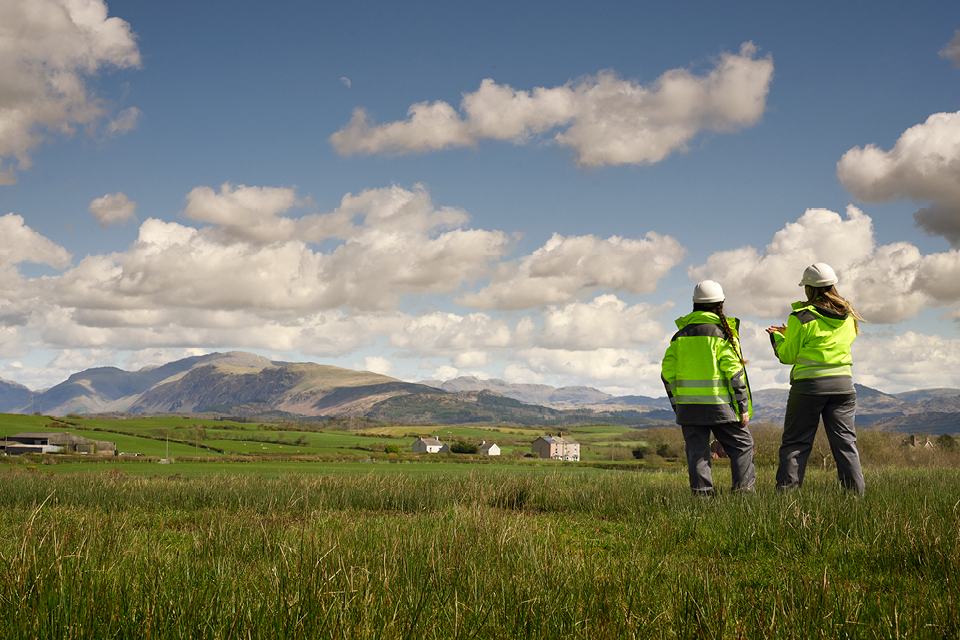
Image of two Repository employees looking at mountains
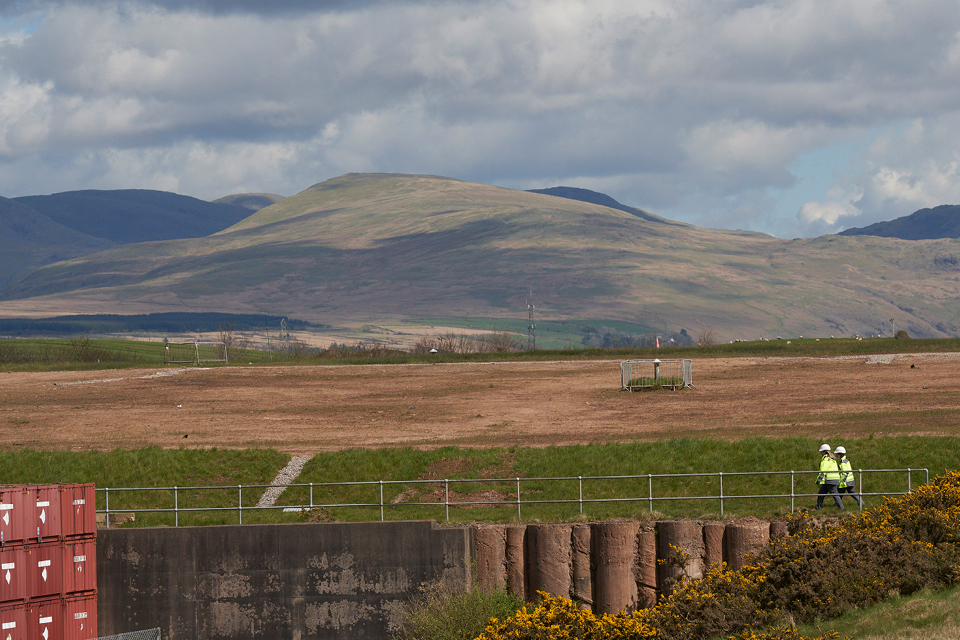
Image of Repository employees walking past vaults
The Low Level Waste Repository (LLWR) is the principal facility for the disposal of solid Low Level Waste (LLW) in the United Kingdom (UK). It is a near-surface disposal facility in which waste was previously disposed of in trenches and is now being disposed of in vaults excavated into the ground surface.
We, Nuclear Waste Services, are committed to operating the LLWR as a safe and efficient facility that provides a continuing option for the disposal of LLW in the UK. This will be achieved consistent with good practice for the near-surface disposal of radioactive waste, in accordance with environmental, health and safety, and security regulation and guidance, and in compliance with the terms of our Nuclear Site Licence and Permit to dispose of radioactive waste.
One of the means we use to operate the LLWR safely is to maintain and implement an Environmental Safety Case (ESC) for the site. The ESC provides a clear demonstration of the environmental safety of the disposal of radioactive wastes at the LLWR. It is designed to satisfy the requirements of the responsible regulator, the Environment Agency, as set out in its guidance. The 2026 ESC is a major update based on a comprehensive review of our previous 2011 ESC and subsequent developments.
As well as being required as a condition for an environmental permit to dispose of radioactive waste, we use the insight gained from the ESC to develop the LLWR as an environmentally safe facility, and to communicate the arguments and evidence concerning the environmental safety of the facility.
The ESC presents the knowledge and understanding on which our plans for waste management and assessments of environmental safety are based. Geology, hydrogeology, waste characterisation, waste processing, engineering of the waste vaults, potential radiological impacts, coastal erosion and engagement with stakeholders are among the issues examined in detail.
The ESC has significant practical and strategic implications for management of the LLWR as well as for our waste management customers. For example, it dictates the types of waste that can be disposed of at the Repository and therefore influences the UK decommissioning landscape. It also informs choices around the design and future development of the Repository as a strategic national asset.
This document provides a summary guide to the 2026 ESC. It describes the role of the ESC, what it involves and how it will demonstrate that it is safe to continue to dispose of radioactive waste at the site.
We have operated the Repository safely to protect the public and the environment for more than 65 years. We will keep improving the facility to ensure that this record is maintained even after the site is closed.
What do we mean by environmental safety?
Environmental safety in the context of the ESC is about making sure the Repository does not harm the public or the natural surroundings (groundwater, plants, and animals), either now or in the future. We consider both radiological impacts and non-radiological releases, but only where they enter the environment (not workplace exposures). Because the waste stays hazardous for a long time and, eventually, the site will be left to passive control, we have to consider impacts far into the future, long after today’s infrastructure and management have gone.
It is also not enough simply to stay below regulatory limits. We must show that we have reduced risks and impacts as far as is reasonably practicable. That means showing not just that the design and operations are safe enough, but that we have chosen the safest reasonably achievable options across the whole life of the facility.
What is an environmental safety case?
An environmental safety case is defined as: ‘a set of claims concerning the environmental safety of disposals of solid radioactive waste, substantiated by a structured collection of arguments and evidence.’ Similar definitions are used internationally. For example, the International Atomic Energy Agency, which provides advice and guidance on safety case development, defines it as ‘a collection of arguments and evidence in support of the safety of a facility or activity’ [1].
In providing evidence to support our arguments, we are expected to demonstrate the application of good science. This means that we must show that we are aware of, and make use of, state-of-the-art scientific understanding of relevant physical, chemical and microbiological processes affecting contaminant release and migration, as well as larger-scale phenomena such as climate change and coastal erosion.
The ESC is a live body of documentation that is continuously updated as the facility is developed, further wastes are emplaced, more monitoring data are acquired (see Subsection 3.9), there is improved scientific understanding of the evolution of the wastes, or knowledge of climate change advances.
1.1 Regulation of the Low Level Waste Repository
Disposal of radioactive waste and radioactive discharges from the LLWR are regulated by the Environment Agency under the Environmental Permitting (England and Wales) Regulations 2016.
The regulatory requirements that must be met to allow disposal of radioactive waste in near-surface facilities, such as the LLWR, are set out in the ‘Near-surface Disposal Facilities on Land for Solid Radioactive Wastes: Guidance on Requirements for Authorisation’ (the GRA). The scope and content of the ESC must, therefore, be consistent with the GRA, and satisfy the qualitative and quantitative requirements it sets out.
Following submission of our 2011 ESC, the Environment Agency’s technical review concluded that the 2011 ESC met the principles and requirements of the GRA. Radiological doses and risks were shown to be within legal and guidance limits, and the overall quality of the assessment was considered high.
1.2 The scope and structure of the ESC
Our current Permit is based on the Environment Agency’s review and consideration of our 2011 ESC. The Permit includes requirements that we must fulfil to retain the Permit. One such requirement is that we submit an update to the Environmental Safety Case for the site by 1st May 2026.
Further new requirements are for a Waste Management Plan that demonstrates the optimisation of waste management over the whole life cycle of the Repository, and a site-wide Environmental Safety Case (SWESC), which complements the ESC by covering the entire site, not just the disposal facility.
These documents support the site’s journey towards eventual release from radioactive substances regulation.
The relationship between the SWESC, the Waste Management Plan and the ESC is illustrated in Figure 1.1.
The requirements that must be met by the Waste Management Plan and the SWESC are set out in the environment agencies’ ‘Management of Radioactive Waste from Decommissioning of Nuclear Sites: Guidance on Requirements for Release from Radioactive Substances Regulation’ (the GRR). The scope and content of our SWESC must, therefore, also be consistent with the GRR, and satisfy these qualitative and quantitative requirements.
In the 2026 ESC, we consider impacts from the whole of the site, bringing together the SWESC, the ESC and the Waste Management Plan into a single suite of documents for clarity and efficiency. We refer to the suite of documents as the 2026 ESC. Whilst the scope has been extended, the focus remains on the disposal facility and its ESC, as it is the source of the greatest hazard.
Although the ESC is not concerned with conventional safety, including demonstrating protection of workers, or security, which are regulated by the Office for Nuclear Regulation, we do take such considerations into account when making decisions about the site. Similarly, the ESC is not concerned with conventional environmental impacts, for example, traffic, noise, and visual amenity, although these are also considered in planning and decision-making. These important aspects are formally dealt with in submissions to Cumberland Council under local planning procedures. Although the ESC is submitted to the Environment Agency to meet its requirements, it is also important for Cumberland Council because it needs to be assured that the site is safe when considering planning applications for developments on the LLWR site.
Site-wide Environmental Safety Case
The site-wide Environmental Safety case:
- demonstrates risks to the public from radioactive waste materials on the LLWR site are acceptable and that the environment is protected
- encompasses the ESC but also includes information on other sources of radiological and non-radiological contamination on the site and shows that these are also safe
- meets the requirements of the GRR
Environmental Safety Case
Defined as: ‘a set of claims concerning the environmental safety of disposals of solid radioactive waste, substantiated by a structured collection of arguments and evidence.’
(GRA, Requirement 3)
The ESC:
- provides information on disposed and future wastes
- sets out our arguments to demonstrate that current and future disposals will be safe both now and in the future
- provides the detailed evidence base
- meets the requirements of the GRA
Waste Management Plan
- optimisation of waste management over the life cycle of the entire site
- principally for radioactive waste but integration of non-radioactive waste encouraged
1.3 The 2026 ESC
The 2026 ESC presents a comprehensive set of safety arguments, covering:
- site characterisation and evolution
- radiological and non-radiological impact assessments
- engineering design and optimisation
- coastal erosion and climate change impacts
- Waste Acceptance Criteria
Government policy advocates a ‘risk-informed’ approach to the disposal of radioactive waste. As such, the 2026 ESC also considers the potential of the site to accept some less-hazardous Intermediate Level Waste (ILW).
It is important to state, however, this does not imply a decision has been made. We have simply included the information to inform our engagement with regulators and stakeholders and help support a decision-making process.
This means that in the future less-hazardous ILW might be disposed of in near-surface facilities, such as the LLWR site, but only if it is considered safe to do so. Our 2026 ESC shows us that:
- a portion of the UK’s ILW could be safely disposed of at the LLWR, such as that containing a high proportion of short-lived or less radiotoxic radionuclides
- we can implement controls to ensure that we would only accept ILW that meets the stringent safety requirements of the ESC
We currently operate to a ‘live’ ESC that is the basis for some of our on-site operational controls, and our current Waste Acceptance Criteria and capacity management approach. The 2026 ESC is a comprehensive update, taking into consideration improved understanding of the site, its optimised design, the future inventory, wider scientific developments and regulatory feedback.
The 2026 ESC will be reviewed by the Environment Agency, and we expect this review to last for several years, during which time we will be responding to feedback. Once the Environment Agency has completed its review, it may issue us with a revised permit or we may apply for a new permit to reflect the findings of the 2026 ESC.
1.4 How do we use the ESC?
The ESC is more than a regulatory requirement; it is a practical tool for managing the LLWR. It helps us understand the risks from the waste already in place and from any future waste we might accept.
The quantitative assessment of the radiological and non-radiological risks (see Section 4) is a key component of the ESC, where we calculate the impacts associated with the existing disposals in the trenches and Vaults 8 and 9. We also assess the additional impacts that could arise with a potential future inventory. By comparing these with the limits set by regulators, we can decide how much additional waste can be safely accepted for disposal. We term these safe disposal limits our ‘radiological capacities’ and use them to set clear limits for future operations. The quantitative assessments also guide other decisions, such as whether certain chemicals can be accepted without causing an unacceptable increase in risk.
We can also determine the implications of engineering design choices. For example, the properties of the profile fill material, and its thickness, under the final cap influence the amount of radon gas released from the Repository. We can use the quantitative assessment to fine-tune the requirements for the profile fill once the basic engineering requirements have been met.
The ESC is embedded in the way we manage the site. We have formal processes to ensure that any proposed changes to the disposal system or supporting equipment are assessed for their implications on the ESC, and we update the ESC as appropriate. We also continually evolve our monitoring programme to ensure it reflects the needs to the ESC, such as measuring the concentrations of the most important radionuclides.
In short, the ESC gives us the evidence we need to make informed decisions, keep the site safe now and in the future, and update our controls whenever new information becomes available.
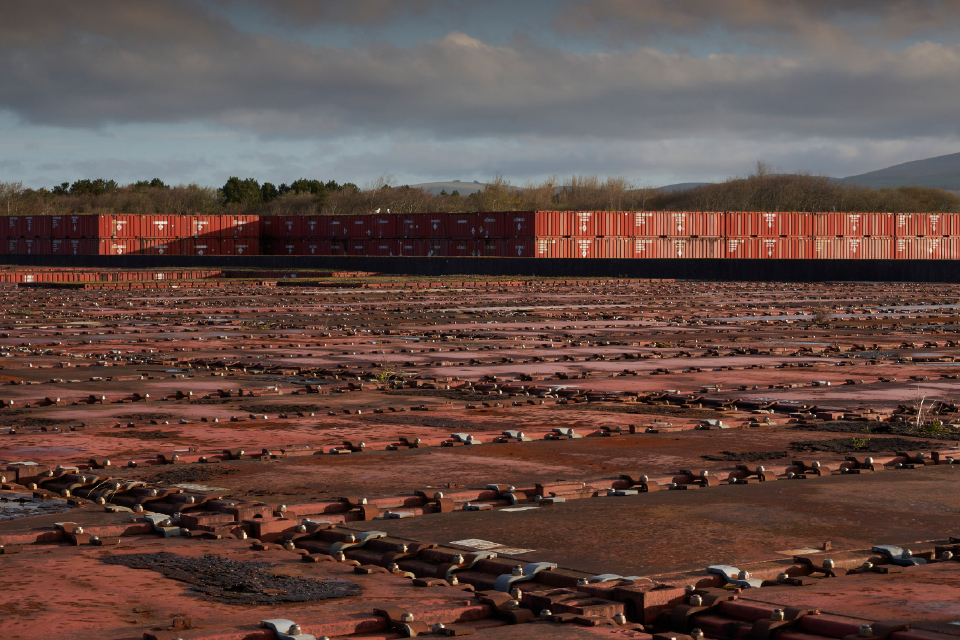
Image of Repository vaults
2. Background and context
The LLWR is the UK’s principal facility for the disposal of solid low-level radioactive waste. It is a near-surface disposal facility in which waste was originally placed in trenches excavated into the ground surface and is now being disposed of in engineered vaults. The LLWR is operated by Nuclear Waste Services Limited, a wholly owned subsidiary division of the Nuclear Decommissioning Authority (NDA).
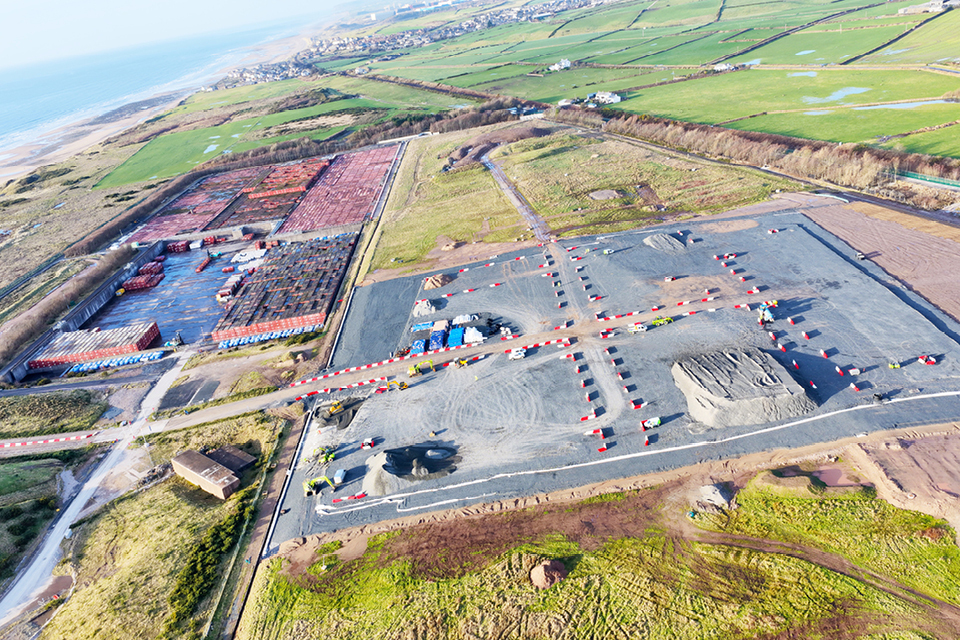
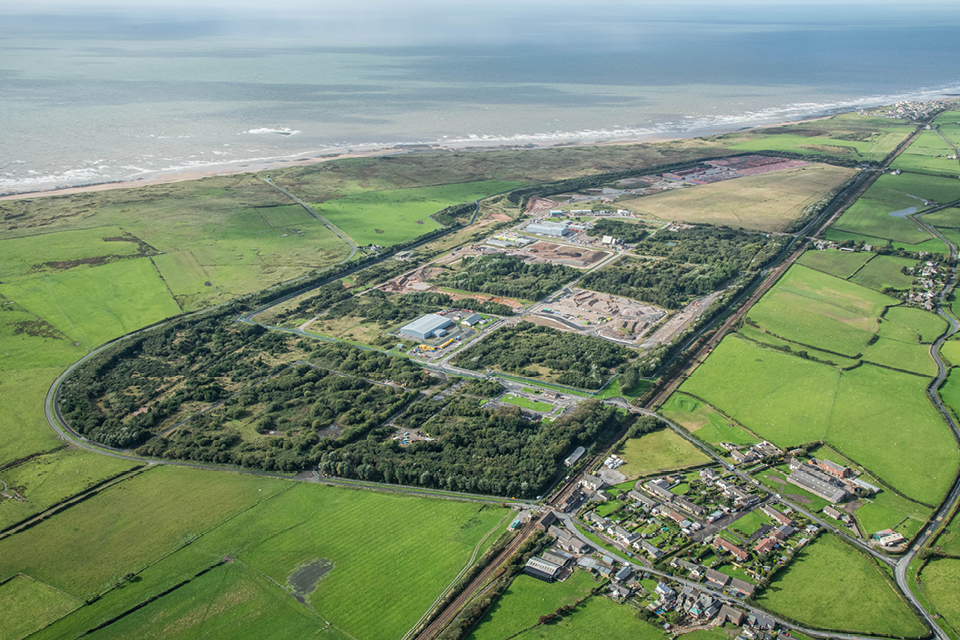
The site (Figure 2.1), located near Drigg in West Cumbria, began life in 1940 as a Royal Ordnance factory built to manufacture TNT during World War II. At its peak, it produced up to 600 tonnes of TNT per week and employed around 3,000 people. TNT production ceased in August 1945, and the site was demobilised by 1948.
A decade later, the site was transferred to the United Kingdom Atomic Energy Authority and, in 1958, planning consent for the disposal of LLW was granted. The first waste was disposed of in 1959, marking the start of the LLWR as a national repository.

View of the LLWR site looking south towards the Ravenglass Estuary
What is low-level radioactive waste?
Low-level radioactive wastes (LLW) form the bulk of all the radioactive wastes in the UK. About 95 percent of the total physical volume of the UK’s radioactive waste is LLW. However, LLW only contains a small fraction of the total radioactivity in all the wastes − much less than one percent of the total. Furthermore, only a small fraction of the LLW will require disposal in the LLWR vaults. The volume requiring disposal at the LLWR can be reduced by reusing or recycling (see Figure 2.2) or diversion to landfill.
The radioactivity is associated with many different waste materials including steel and other metals, concrete, rubble and soil, ion exchange resins, graphite, glass, plastics, rubber, cotton and paper, depending on where the waste arises. In the future, as more wastes are treated to reduce volumes and recycle materials, LLW is likely to contain more residual materials, including ash from incineration, blasting grit from surface decontamination, and slag from metal melting.
The wastes originate from a range of activities and many different producers including routine operations and maintenance in nuclear power stations, clean-up of contaminated land, dismantling of contaminated buildings, sealed sources from industry, university research, production of radioisotopes, and use of medical radioisotopes in hospitals.
2.1 The waste hierarchy
The UK policy framework requires the application of the waste hierarchy (Figure 2.2) to the management of radioactive waste. The aim is to preserve the capacity of the vaults at the LLWR for the disposal of LLW that requires the levels of environmental protection provided by the facility.
Metal recycling has been particularly successful. In some cases, radioactive contamination can be removed by surface cleaning, for example, by grit blasting, with the resulting contaminated grit consigned to the Repository as a much lower volume waste stream. Melting of contaminated metals is also used to reduce waste volumes so that only the by-products, such as slags, and filters from the off gas treatment, would be LLW, with the bulk of the metal available for reuse.
The practical result of the application of the waste hierarchy to divert waste to treatment routes is a reduction in waste consignments to the LLWR. Since 2009, we have been able to safely divert over 300,000 cubic metres (99%) of waste originally destined for disposal (Figure 2.3), saving over £60 million of taxpayers’ money.
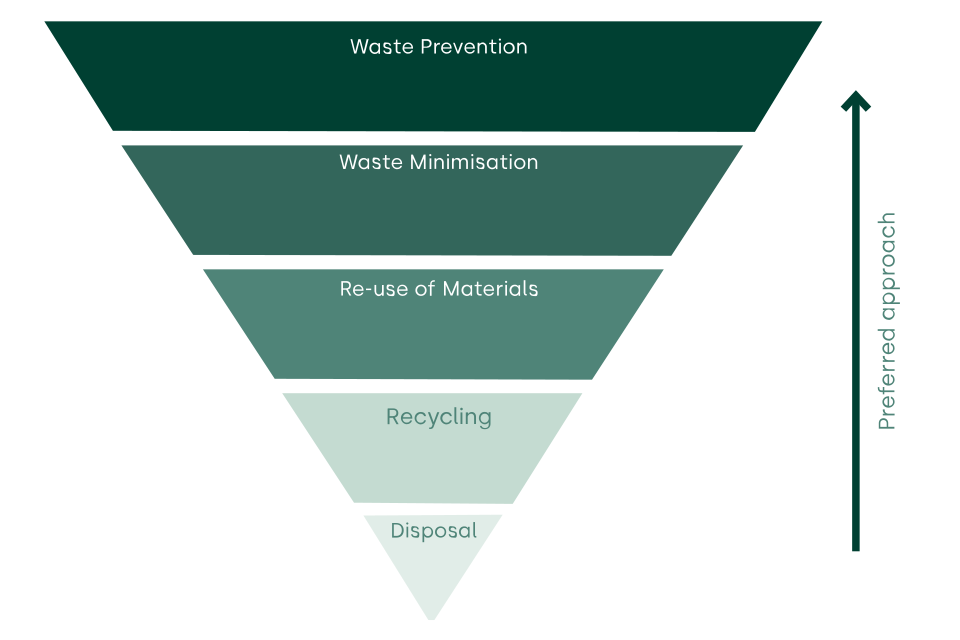
Figure 2.2: The Nuclear Waste Management Hierarchy
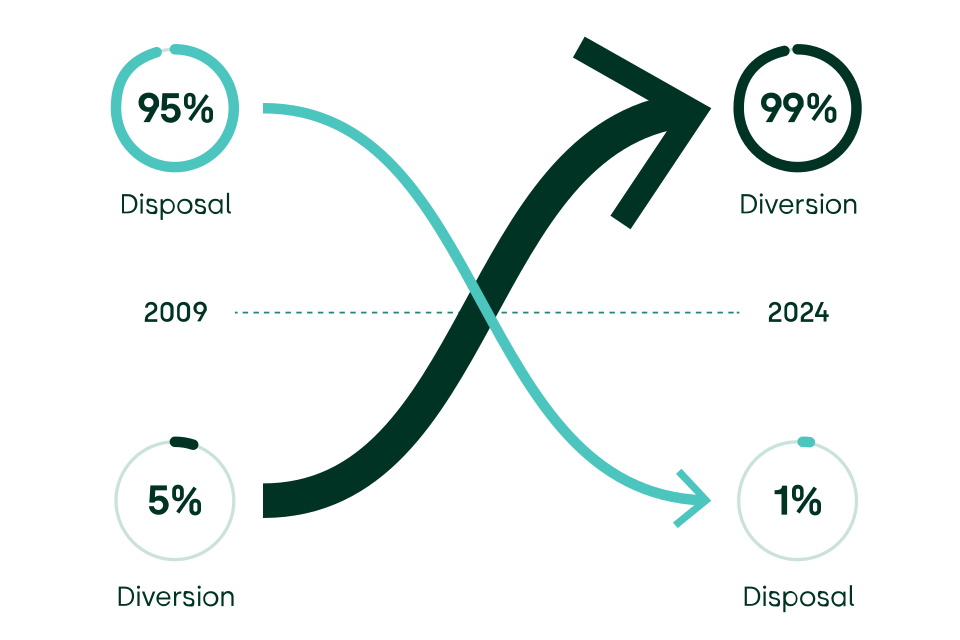
Figure 2.3: The result of diversion of LLW to recycling and treatment routes since 2009
2.2 Waste composition
Radioactive isotopes constitute a small fraction of total waste volume. The bulk comprises steel, concrete, soil, wood, paper and plastics contaminated with radioactivity (Figure 2.4). The contamination in the materials is present in different forms. For example, naturally occurring uranium isotopes are present in refining slags and sands arising from uranium metal production, whereas carbon-14 in irradiated steels occurs by activation of stable carbon-12 present in the metal, and various other radioisotopes may contaminate the surfaces of soft plastics, rubber and glass. Non-radiological contaminants, for example, heavy metals such as molybdenum and chromium in stainless steel or persistent organic pollutants in plastics and fire retardants, are present in many radioactive waste streams and must also be managed as part of the waste.
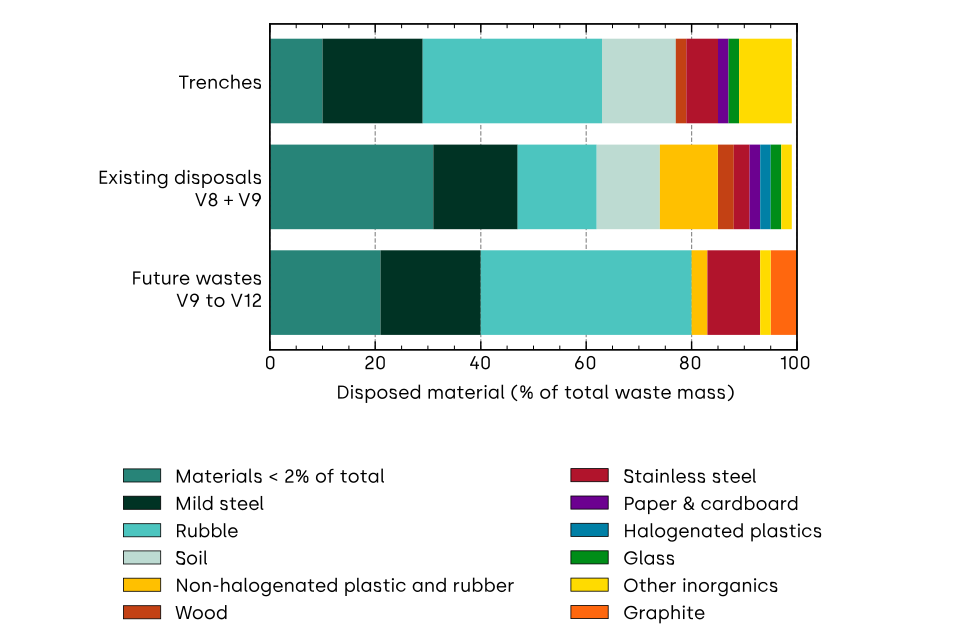
Figure 2.4: Proportions of the main waste materials in the trenches, existing disposals in
Vaults 8 and 9, and the future waste disposals
2.3 Trench disposals
Disposals to the trenches resembled conventional landfill practices whereby waste was tipped directly into shallow trenches that made use of the natural clay sediments to line the bases and provide basic containment.
Trench waste is different from the composition of modern municipal landfill waste as, besides the radioactivity, it contains significantly more metal due to its industrial source and disposals predating recycling of radiologically contaminated steel and other metals.
The large amounts of organic wastes such as paper, wood and plastics in the trenches are broken down by microbial processes that produce gas, mainly methane and carbon dioxide, while the metals corrode and, mainly under oxygen-free chemical conditions, can produce hydrogen gas. At the same time, this degradation results in settlement of the wastes under their own weight. The current volume of the trench wastes and daily cover soil is about 500,000 cubic metres, a reduction of around 40% compared with the initial volume.
The interim cap installed in 1988 provides shielding above the disposals and reduced rainfall infiltration. Water percolating down through the wastes is captured in drains running along the base of each trench and then managed as leachate. Leachate is water that has been in contact with waste, and so is potentially contaminated and must be managed appropriately. Leachate is monitored for volume and composition as well as contamination and then discharged offshore through the Marine Pipeline. This is an important part of our Environmental Monitoring Programme as it provides data that we can use to improve our understanding of the behaviour of the wastes and how they are degrading.
Some seepage still occurs through the semi-permeable clay bases of the trenches into groundwater in the underlying sediments. We can detect contamination, particularly tritium, in monitoring of groundwater around the site.
2.4 Disposals in Vault 8 and Vault 9
Since 1988, waste has been packed into steel containers, mainly half-height ISO freight containers, and any voids around the wastes infilled with a cement-based grout. Soft waste is typically packed into thin steel drums that are then compacted into pucks before grouting in the containers; other materials are packed directly into the containers before grouting. The types of materials in the wastes are generally similar to the trenches. More recent disposals include a lower proportion of metals and organic materials, such as plastics and paper, which are being diverted for recycling or incineration.
During operations, rainwater is collected in the vaults and discharged together with trench leachate via the Marine Pipeline.
Once the final cap is installed, the wastes will be isolated from the environment, including the oxygen in the atmosphere. Corrosion of the external surfaces of the containers will quickly consume the remaining oxygen in the enclosed air and then anaerobic corrosion (i.e. without oxygen) reactions using water will produce small quantities of hydrogen. Low water infiltration after capping combined with this anaerobic corrosion is expected to cause drying in the vaults, with minimal leachate production until infiltration increases as the cap degrades after 1,000 years or more.
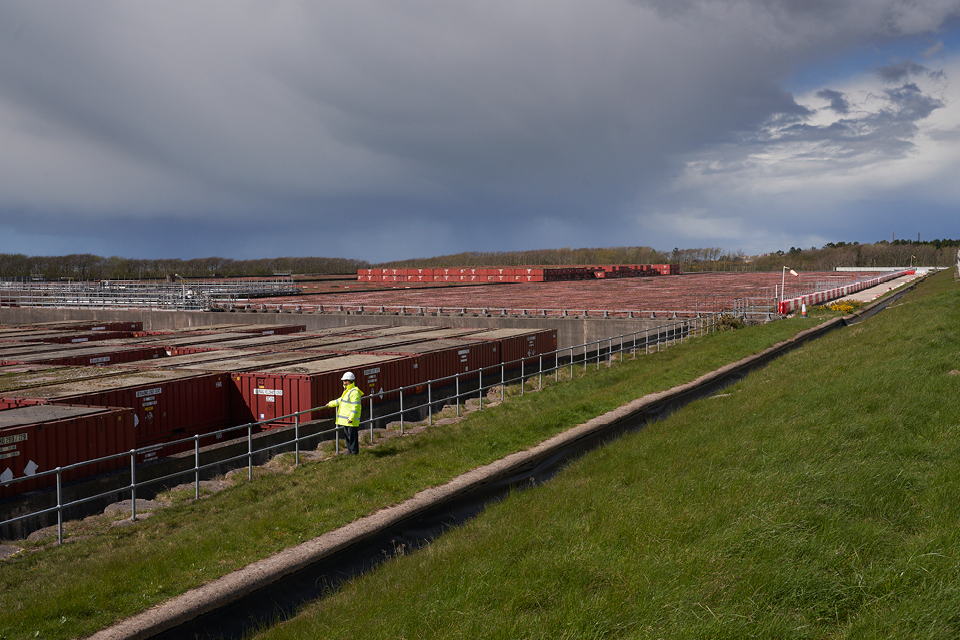
Image of man looking over Repository vaults
2.5 Future waste disposals
The UK Radioactive Waste Inventory provides a summary of the radioactive wastes that have been produced and are in storage, as well as wastes that are expected to arise in future. The future LLW arising from all activities up until 2135 is the total volume that could potentially be consigned to the LLWR.
Current waste diversion practices (recycling, treatment) will significantly reduce volumes consigned to the Repository. As a result, the projected waste consignments can be accommodated in Vaults 9 to 12, eliminating the need for the previously planned Vaults 13 and 14. Future waste composition will shift towards proportionately higher amounts of steel, that is too radioactive to recycle, graphite and concrete from decommissioning of facilities, such as the Magnox nuclear power stations, with reduced organic materials.
2.6 Intermediate Level Waste
Recent government policy changes have allowed us to explore the potential for disposal of some less-hazardous ILW at the LLWR. However, this does not imply that a decision has been made.
When we consider the feasibility of ILW disposal, we need to know how different these wastes are to the existing and future LLW, and whether they will evolve in the same way, as this will affect how contaminants are released from the wastes in future.
ILW shares similar radioactive and non-radiological contaminant types with LLW, though with higher radioactivity concentrations. Critically for the chemical evolution of the future vaults, the bulk material composition is comparable: steels, other metals and graphite dominate, with lower organic content (paper, wood, plastics) than LLW.
ILW will be packaged in carbon steel containers and grouted using formulations that provide the same chemical and physical properties as the LLW grout. Consequently, the evolution of ILW will be very similar to that of the LLW with high pH conditions that suppress microbial activity, and generation of hydrogen gas from slow metal corrosion.
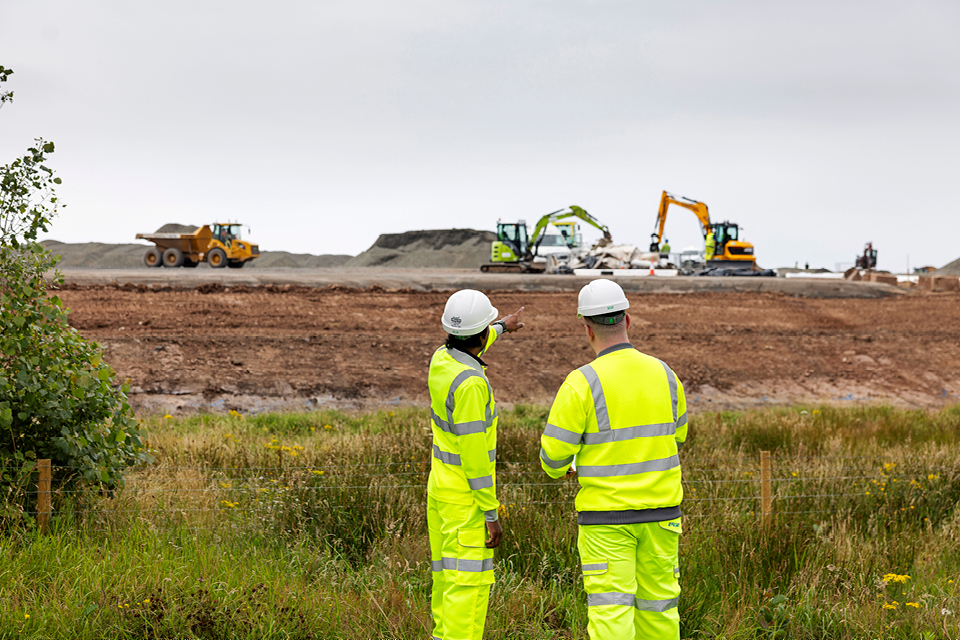
Image depicting capping activities
3. Ensuring safety of the LLWR
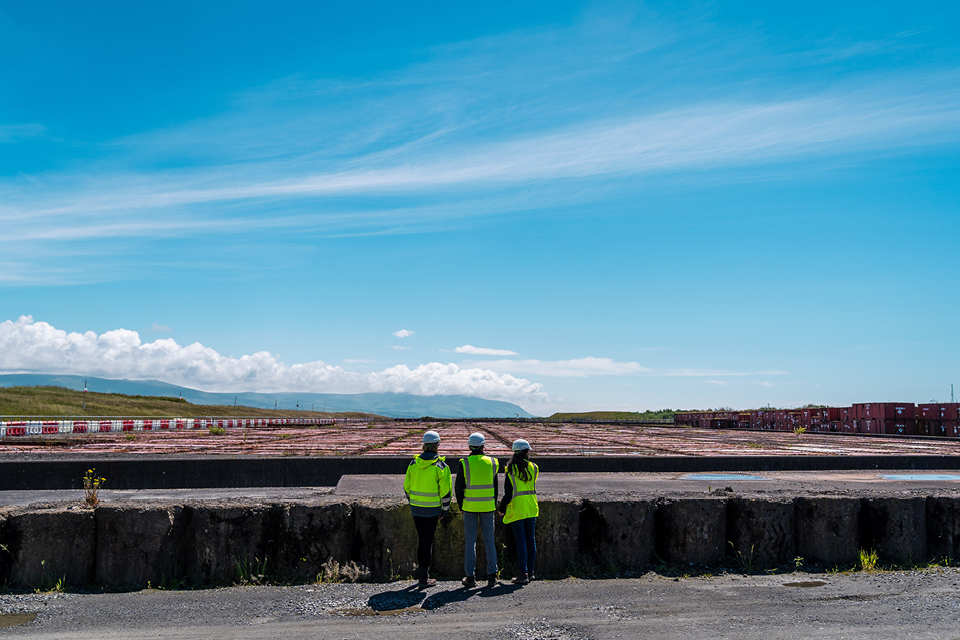
Image of Repository employees looking over vaults
3.1 Our Environmental Safety Strategy
We have developed the 2026 ESC according to our Environmental Safety Strategy, which sets out how the environmental safety of the LLWR will be achieved. The ESC is a component of the strategy. Our Environmental Safety Strategy is based on a set of guiding principles (Figure 3.1) that are derived from the GRA and GRR.
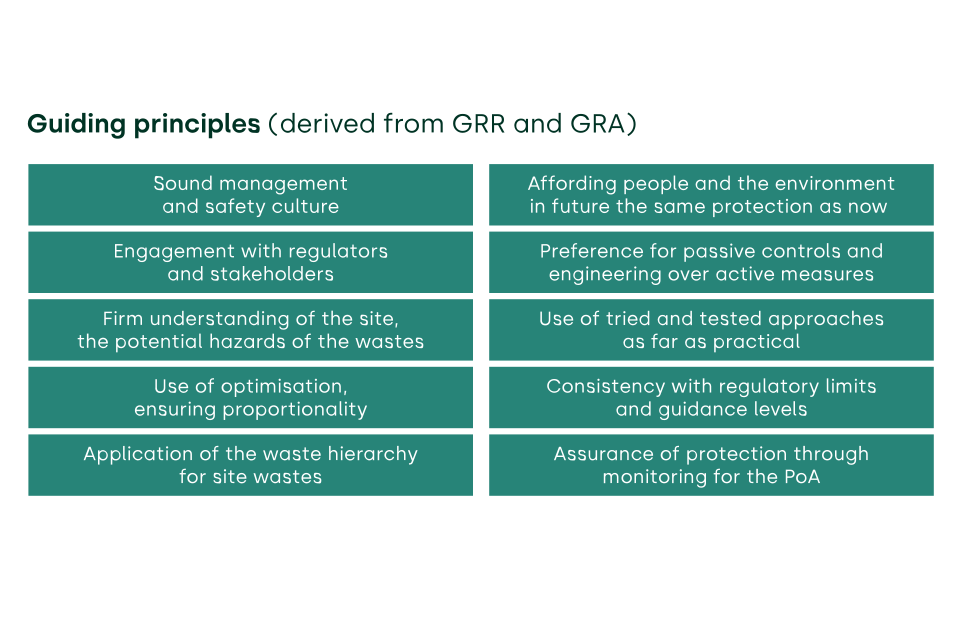
Figure 3.1: The principles that form the basis of the LLWR Environmental Safety Strategy. Please see below for definitions of ‘PoA’ (Period of Authorisation) and ‘passive safety’
3.2 Control Measures
As part of the ESC, we identify management and engineering control measures that we use to ensure that any impacts from the disposed wastes are within acceptable limits. The control measures that we adopt are required to be proportionate to the hazard presented by the wastes. They are implemented through appropriate design of the facility and limitations imposed on the wastes to be disposed of, such as on the quantity of radioactivity, the types of wastes and the physical and chemical form of the wastes.
Our management control measures include actions to limit the inventory of wastes that we accept for disposal through our Waste Acceptance Criteria. These criteria include limits on the total amounts of radioactive and non-radioactive contaminants in the Repository, based on calculated individual capacities for some specific contaminants and overall capacities for others that are safe (i.e. any impacts will be consistent with regulatory requirements).
Design measures are also needed to isolate and contain the wastes:
- isolating the waste means we limit the potential for its exposure by natural processes and human activities
- containing the wastes means that we minimise the release of contamination from the facility and also manage any residual releases to minimise their effects
To achieve isolation and containment, we use a succession of complementary engineered and natural barriers, termed ‘the multi-barrier approach’. These barriers protect the wastes physically and, in some cases, also create chemical conditions that enhance the retention of the contaminants in the wastes.
What is the Period of Authorisation?
The Period of Authorisation (PoA) is the period over which we hold a permit for the site and access to the site is controlled. The PoA is expected to extend for 100 years after the end of disposal operations and final capping of the disposal facility. This is to allow for a period of monitoring the Repository to confirm that the engineered barriers restricting contaminant releases are performing as expected and there are no unforeseen impacts.
At the end of the PoA the site will be released from regulatory control. The intention is that, by this time, the ‘End State’ of the site will be consistent with local stakeholders’ expressed desire for the site to become a sustainable amenity for the local community.
What is passive safety?
Passive safety refers to safety features that work without needing human intervention. These features are built into the design of a system or structure and rely on fundamental properties – like gravity, chemistry, or material strength − to keep things safe.
For example, we can use gravity to drain water away from the wastes in the vaults, helping to keep them dry. By avoiding the need for pumps and other components requiring maintenance, we can provide reliable and resilient performance by design. This approach is internationally recognised as the best long-term approach for managing radioactive waste safely.
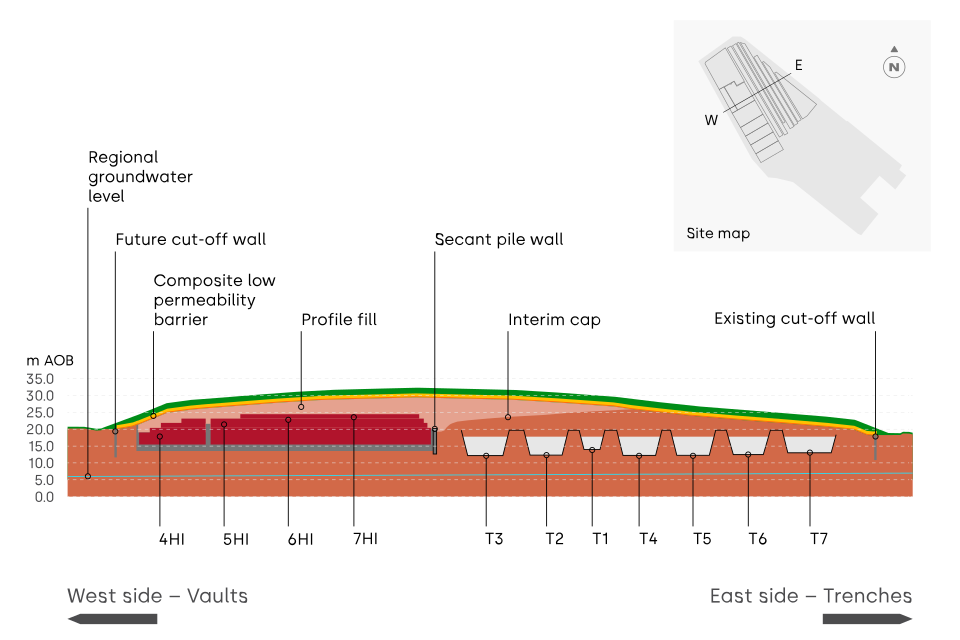
Figure 3.2: Schematic cross-section through the Repository from west to east (see inset) showing the cap over the vaults and trenches. The numbers on the left are metres above sea level. The summit of the cap is 13 metres above the ground. The trenches are identified (T1, etc.) and the height of the stacks in Vaults 9a and 9 are also indicated (4HI = 4-high stack, etc.)
3.3 The multi-barrier approach
The main barriers for the LLWR vaults comprise:
- the final cap
- the vault bases and walls, including the drainage system
- the containers and the grouted wasteform
- the cut-off wall, which surrounds the Repository
- the underlying geology
The trenches share the same final cap, cut-off wall and underlying geology as the vaults, but they are lined by clay in place of engineered walls and bases, and do not have the grouted, containerised wasteform.
Figure 3.2 illustrates the relationship between the final cap, the interim cap over the trenches, the trenches, the vault walls and bases, and the cut-off wall that will eventually surround the whole disposal area. The secant pile wall supports the trenches and prevents the west side of Trench 3 slumping into the vaults. Figure 3.3 is a map of the vaults and trenches, showing the contours of the final cap and the cut-off wall around the disposal area.
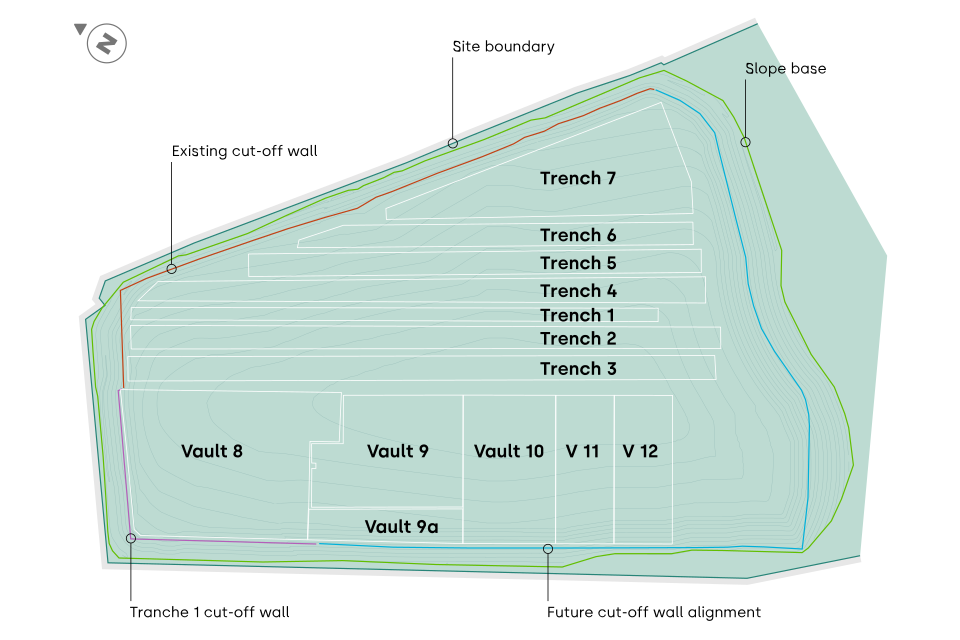
Figure 3.3: Map of the vaults and trenches with the contours of the final cap
3.4 Engineered final cap
The key engineered barrier is the final cap over the vaults and trenches. The cap is designed to do several important jobs:
- it limits rainwater getting into the waste and hence reduces the potential for contaminants to be released from the wastes and into the surrounding environment
- it manages the release of gases from the Repository to prevent damage to the cap from gas building up in the trenches and vaults
- it discourages people from accidentally digging into the waste, as well as preventing animals burrowing or tree roots disrupting the geomembrane and low permeability clay layer of the cap
- it shields people from the radiation from the wastes
The final cap is a 3-metre-thick, layered structure (Figure 3.4) built in sections to form a single domed surface to aid water run-off. The gradient of the dome is gentle (1 in 25 slope), to ensure stability and avoid water erosion, with steeper edges (1 in 10 slope) where needed to fit within the site’s boundaries (see Figure 3.3).
Beneath these layers is generally a minimum of two metres of profile fill made of inert aggregate over the vaults, and aggregate with some site-won soil (i.e. soil arising from other excavations of the site) over the trenches. The profile layer creates the shape of the cap. It is also designed to support the cap and absorb any movement from settling waste to prevent damage to the important low permeability barrier. The overall scale of the cap is illustrated in Figure 3.5.
A vent system is built into the cap to release gas while keeping water out. The vent system is designed to be a passive safety measure that protects the low permeability barrier in the cap from damage by preventing gas pressure building up in the vaults and trenches. The vent system may be sealed towards the end of the PoA if gas venting is no longer required.
As the safety of the LLWR is dependent on the final cap, it is required to maintain adequate performance over the long term.
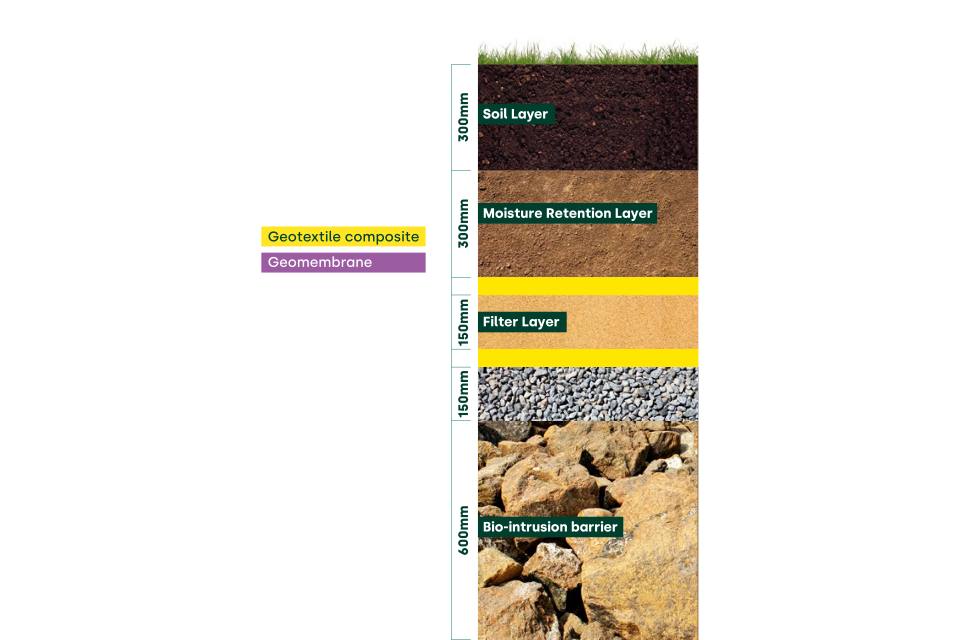
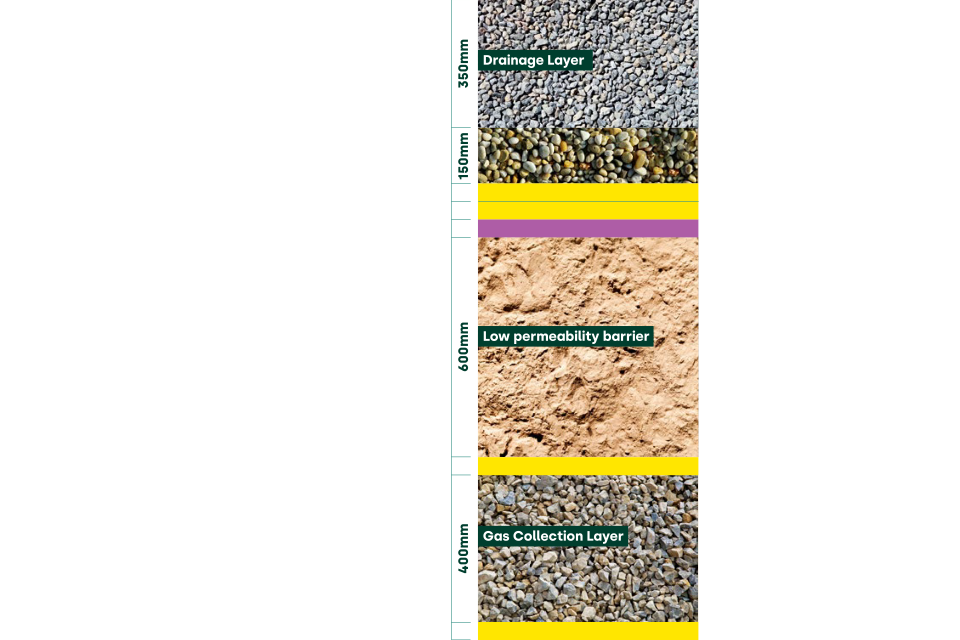
Figure 3.4: Schematic profile of the final cap layers over the profile material
What do we mean by long-term performance?
Normally, engineered structures are expected to have a design lifetime of around 100 years, but for the LLWR we require the cap, and other structures, to perform well for a much longer period. The clay layer which forms part of the low permeability barrier is made up of natural materials that will degrade only slowly over thousands of years. We expect the clay layer alone to reduce the rainfall getting into the Repository to a few tens of millimetres per year (compared with an annual rainfall of around 1 metre per year).
The high density polythene geomembrane that overlies the clay (see Figure 3.4) will reduce the water seeping into the clay even more strongly − to a fraction of a millimetre per year. However, the geomembrane will eventually degrade as it loses protective ‘antioxidant’ chemicals, after which it will become more brittle and no longer able to prevent water ingress. Degradation of the geomembrane depends on slow chemical processes. Extrapolating observations from in-situ test geomembranes and laboratory experiments indicates that the geomembrane will last for at least 500 years and most probably more than 1,000 years under the cool and stable conditions in the cap.
The clay layer will remain after the geomembrane has degraded and continue to reduce infiltration into the waste.
3.5 The engineered vaults
The vaults will each have a thick concrete base and reinforced concrete walls.
Vault 8 sits on a layer of natural clay, enhanced with added clay where the natural layer is insufficient. This reduces the permeability of the base. Other vaults will have drainage layers under the concrete base. During the operational period, any rainwater and leachate from the vaults is collected and pumped into the Marine Holding Tanks for managed discharge to the sea. When all the vaults and trenches have been capped, the pumping system and the Marine Pipeline will be decommissioned and replaced by a passive, gravity drainage system.
Initially, the amount of water entering the vaults through the cap will be negligible. The cap is expected to minimise water ingress for hundreds of years. In the long term, once the cap starts to degrade, infiltration will increase. We expect this infiltration to percolate down between the containers and be released through the base, which will also be degrading.
Any water that does build up in the base of the vaults will be directed over the 1-metre high internal vault walls to the drainage layers under the vaults. From here, leachate will trickle down into the underlying sediments where any contamination will be diluted in the groundwater. This passive drainage system is designed to prevent the vaults filling up with water and spilling over into the surface water systems, like local streams, where the impact of any contamination could be greater.
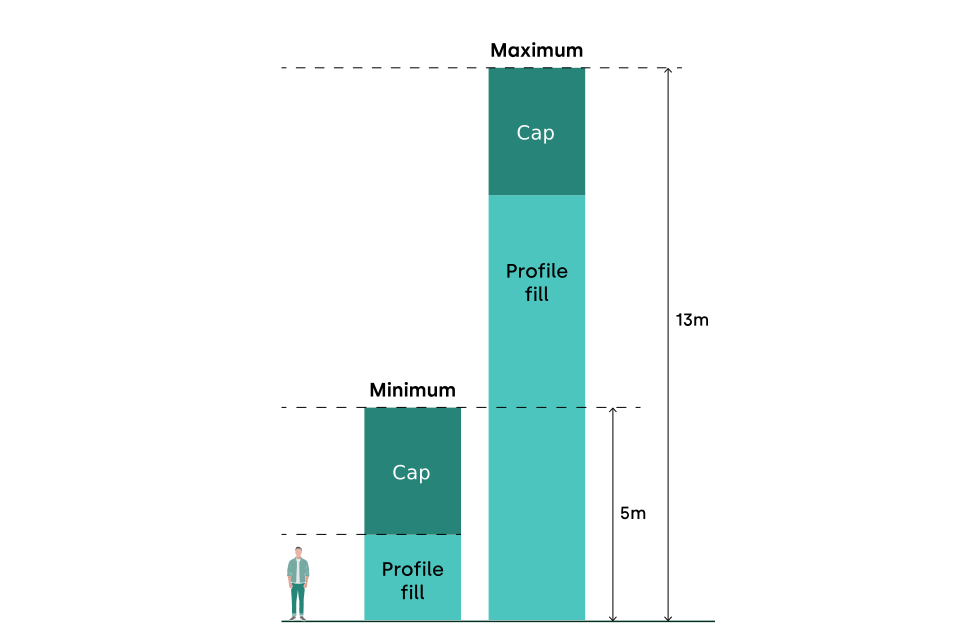
Figure 3.5: Simple illustration of the scale of the cap and profile fill
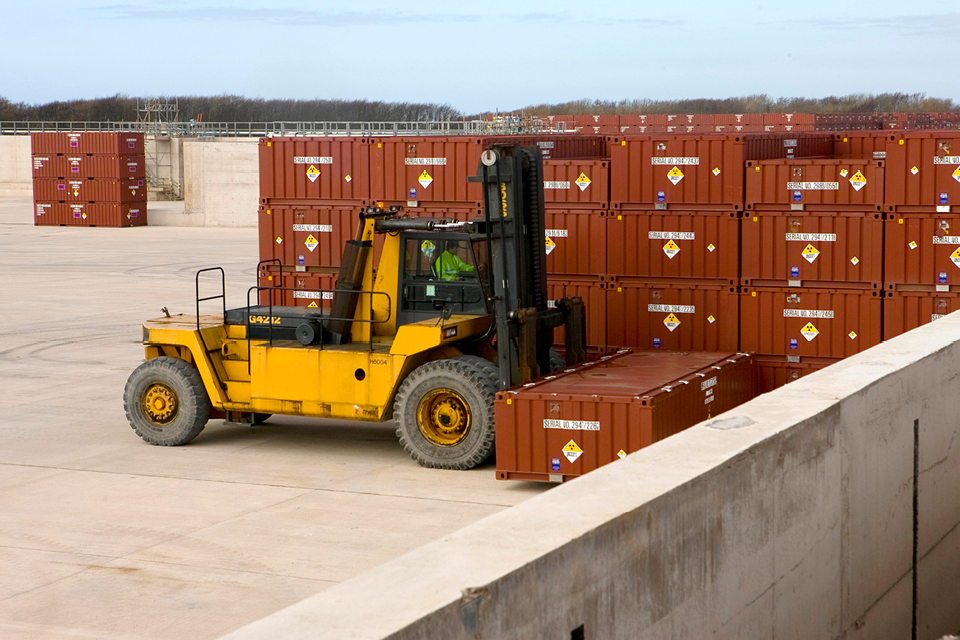
Image of Repository vaults
3.5.1 The cut-off wall
The cut-off wall is designed to prevent lateral flows of water between the vaults or trenches and the surrounding sediments. It extends from the surface, inside the edge of the cap, to a depth of two to three metres below the bases of the trenches and vaults (Figure 3.2). The wall currently extends around the north and east sides of the trenches (Figure 3.3) but will be extended around the north and west of Vault 8 before the final cap is installed.
Eventually it will surround the whole Repository as indicated in Figure 3.3.
3.6 The container and the grouted wasteform
The containers provide an important function in helping to prevent the waste from being contacted by rainfall during operations and from infiltrating water once the vaults are capped. Without the waste being in contact with flowing water, only gases can be released from the containers.
When containerised disposals started, the grout was intended to fill voids around the waste materials and produce a stable wasteform that minimised potential future settlement of the stacks of containers under the cap. Once the chemical interaction of the grout with infiltrating water and the waste materials was considered, it became clear that the grout provides beneficial properties that help to retain contaminants (see Figure 3.7).
The grout surrounds the waste and limits contact with any water getting into the containers. Most importantly though, the grout provides highly alkaline conditions in the container that slow corrosion of metals, including the inside of the steel container. The alkaline conditions also mean that many key contaminants are much less soluble compared with neutral or acidic pH conditions. Under these alkaline conditions, sorption of some dissolved contaminants onto the grout surface will further limit their release from the waste.
What is sorption?
Sorption describes the way dissolved ions attach to, or are taken up by, the materials they encounter − such as soils, sediments, or container grout. Instead of moving freely with water, many radionuclides, particularly metals like uranium, thorium and lead, bind to mineral surfaces. This reduces their concentration in the water and so the rate they move through the environment.
Sorption processes are used widely in industry, including for water purification, where contaminants like iron, aluminium, heavy metals or organic pollutants can be removed from the water very effectively by the use of sorbing materials like clay or activated charcoal. In the ESC, sorption is one of the key natural mechanisms that helps limit how quickly and how far contaminants could migrate from the Repository.
It is important because including realistic sorption behaviour in our models can reduce predicted doses by orders of magnitude, but only if we can justify the values we use. That is where the technical challenge lies. Sorption depends on the chemistry of the water (pH, redox, composition), the nature of the solids, and the specific radionuclides involved. These conditions change over time as the Repository evolves, although more in the trenches than the vaults, where the grout dominates conditions.
Image of Grouting Facility
3.7 Role of the local geology as a natural barrier
The disposal trenches sit upon a layer of low permeability Quaternary glacial clays. The clays do not create a completely impermeable barrier to leachate but still help to reduce the release of contaminants from the trenches into the underlying groundwater. Dissolved contaminants may also sorb onto the surfaces of the clay minerals, slowing their migration. Shallow groundwater under the site percolates downwards through the clay-rich sediments to the deeper groundwater that flows westwards through more permeable sands and gravels. These sediments extend between the Repository and the coast. Any contamination from the LLWR will be diluted and dispersed in the groundwater that flows under the site out towards the sea. This is illustrated schematically in Figure 3.8, with the black arrows indicating the predominant flow directions of groundwater in the sediments beneath the site.
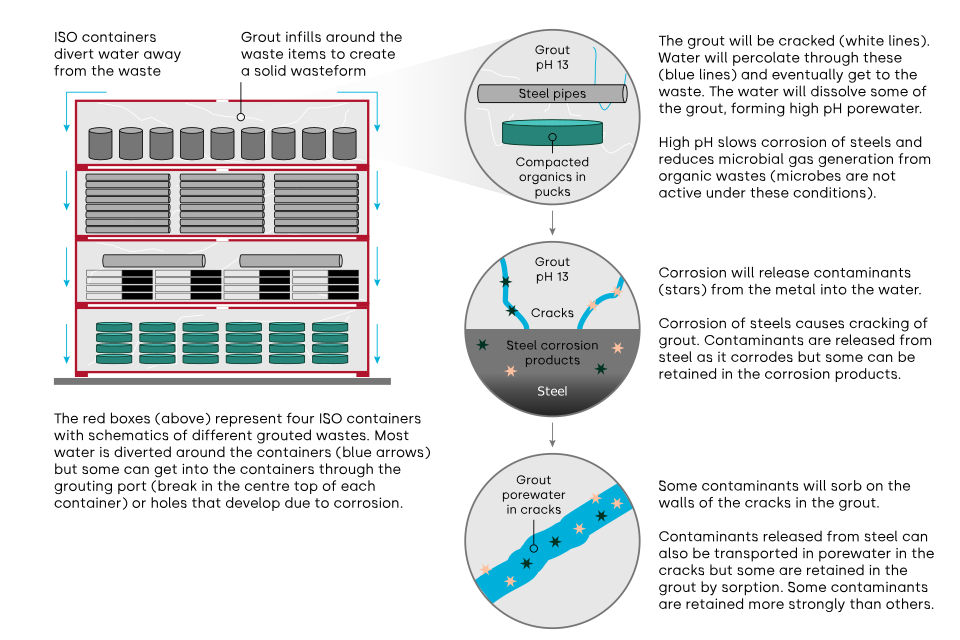
Figure 3.7: Schematic illustration of the containment functions provided by the containers and grout as part of the multi-barrier approach
3.8 Optimisation, engineering and the Site Development Plan
Optimisation is one of the guiding principles of the Environmental Safety Strategy (Figure 3.1). The GRA defines optimisation in terms of ‘ensuring that the radiological impacts are as low as reasonably achievable in the given circumstances’. There is further guidance, which notes that optimisation is ‘about finding the best way forward where many different considerations need to be balanced’.
Optimisation is the process we have used to determine a preferred set of management and engineering control measures that are consistent with the goal of achieving radiological and non-radiological impacts that are as low as reasonably achievable.
Optimisation does not mean that we must reduce dose or risks at all costs. It means considering a broad range of options and selecting the best. This requires consideration of a range of factors, such as the effectiveness of an option in reducing impacts to the public or the environment, the implications of the option for operational safety, technical feasibility and practicality, environmental costs (i.e. sustainability, carbon footprint) and financial costs. Optimisation is not something that we stop doing once we meet a certain threshold. We always have to consider whether reducing impacts further is reasonably practicable, even though the benefits naturally diminish as impacts become very small.
For example, whilst our current arrangements lead to impacts well within regulatory guidance levels, we wish to go further and ensure that in future containers are protected as far as possible and not left exposed to the weather in the open vaults for more than ten years. Containers that are in good condition when capped should remain intact and retain contaminants for longer. In order to achieve this, we will install the final cap over the vaults in sections as each vault is filled, rather than waiting until the whole Repository is full. Although this requires a more complicated process for capping, we judge that the added effort is offset by the improved performance of the containers. We will also install ‘interim protection warehouses’ to protect future containers from rainfall whilst they are on the site, prior to being capped.
To make best use of the disposal volume in the future vaults, and reduce the amount of profile fill material, we also propose to use new stronger containers that can be stacked higher than the current design. Then, once emplaced, each stack will be topped by a steel and reinforced concrete container protection unit designed to prevent the weight of the cap materials from damaging the lids, as will happen with the current containers.
The optimised concept for the Repository is illustrated schematically in Figure 3.9. This shows how, during operations, leachate from the trenches and the open vaults is captured and managed via the Marine Holding Tanks. Whereas, after capping, small amounts of leachate drain downwards into the geology. The cut-off wall, shown isolating the east side of the trenches in the ‘operations’ (upper) figure, will be extended around the whole Repository to prevent lateral flows into or out of the trenches and vaults (see also Figure 3.3).
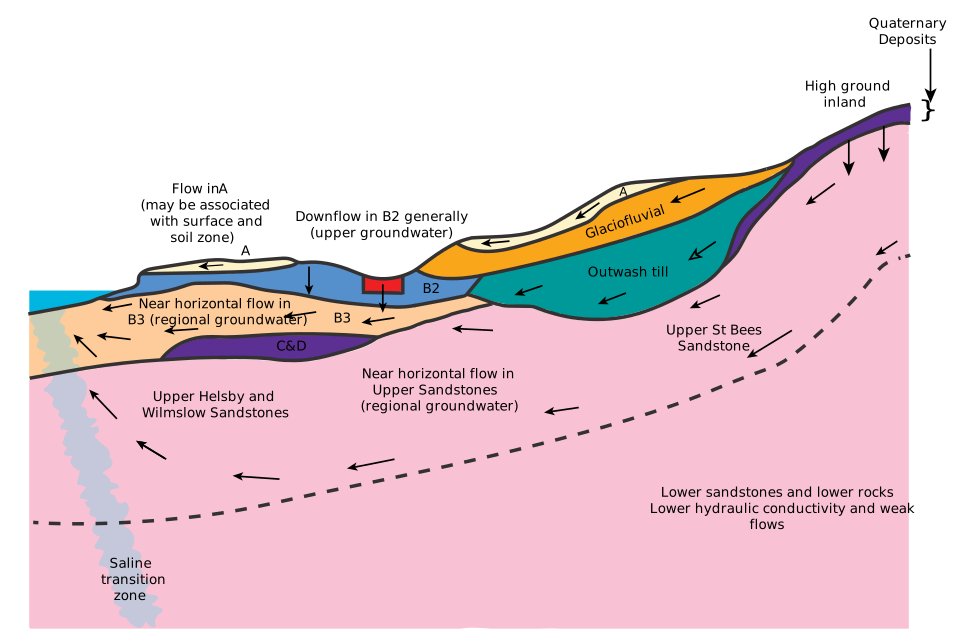
Figure 3.8: Schematic illustration of groundwater flow around the LLWR. Below the LLWR (red box), water flows down through Unit B2 into B3 then out to the coast. The underlying St Bees Sandstone, the major aquifer in the region, is shown in pink. (Vertical scale is exaggerated for clarity)
We also examined whether the historic trenches should be remediated, because they were built and operated between 1959 and 1995 under standards very different from those applied today, meaning the design lacks the engineered containment features now expected for near-surface disposal. Early assessments showed higher potential impacts from these older disposals, so we considered a wide range of remediation options, from full or selective retrieval to chemical or physical stabilisation methods.
However, updated assessments show that the risks from the trenches are now broadly consistent with regulatory guidance levels, and that the additional reduction in risk achievable through remediation would be very small compared with the major cost, disruption, worker exposure, and environmental disturbance that such interventions would entail. Any remediation would generate large volumes of contaminated material, but there are currently no better available disposal routes for that waste, which would ultimately need to return to the LLWR or another near-surface facility, offering no meaningful improvement. We therefore concluded that, although the trenches do not meet modern design expectations, remediation is not justified because present-day risks are already as low as reasonably achievable and the benefits of intervention would be disproportionately small.
Our optimisation process has led to engineering designs and management strategies that are part of the overall optimised Site Development Plan.
The Site Development Plan is a key component of the Environmental Safety Strategy and sets out how we intend to operate the site. It sets out our assumptions about the wastes that will need to be disposed of, which then form the basis for our optimised proposals for:
- the vault design
- the capacity for wastes
- future waste disposal practice
- design of the final cap and disposal facility closure
- site decommissioning and restoration
- management up to the end of the Period of Authorisation
The Site Development Plan is not fixed but will respond to changes and future developments, such as the rate and timing of waste arisings, operating experience, results of monitoring, future iterations of the ESC, regulatory and planning guidance and decisions, and stakeholder views.
The Site Development Plan describes what the LLWR will look like for the purposes of the quantitative assessment of environmental impacts, thus we can assess the future safety of the Repository when implemented according to the Plan.
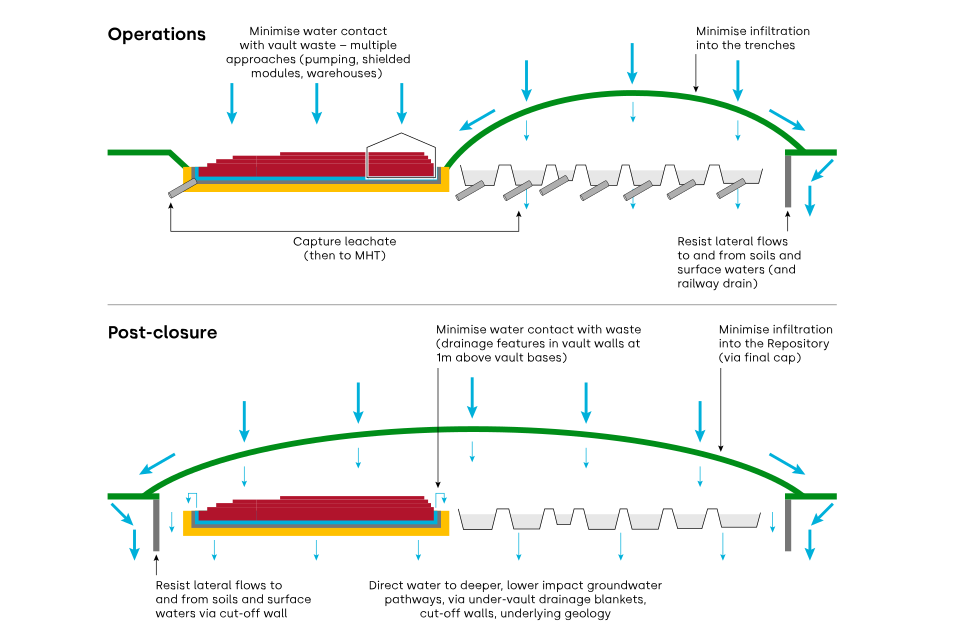
Figure 3.9: Schematic illustration of the optimised concept for the Repository,
during operations and post-closure (MHT: Marine Holding Tank)
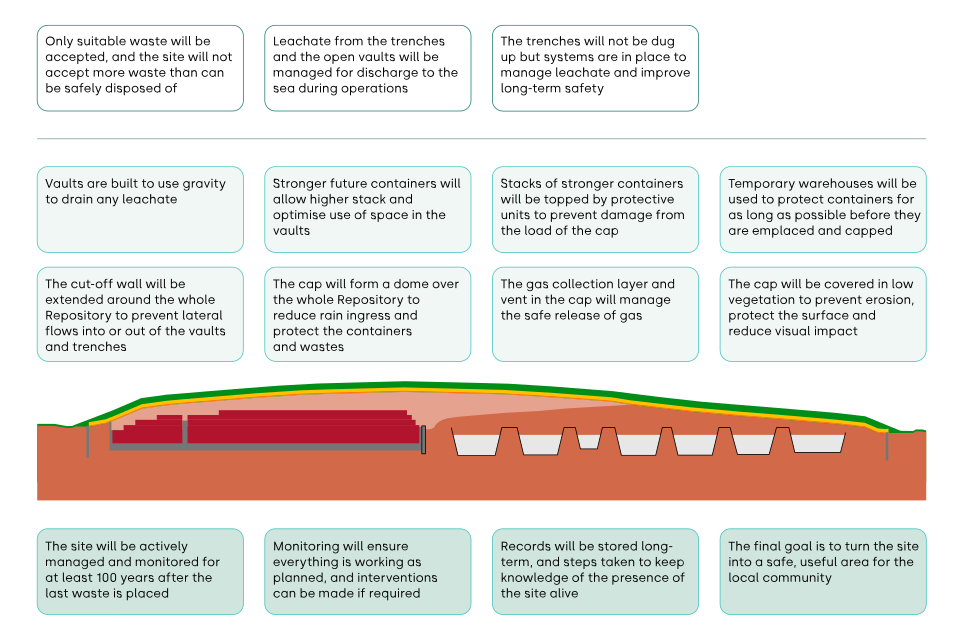
Figure 3.10: Summary of the Site Development Plan (excluding less-hazardous Intermediate Level Waste)
3.9 Environmental Monitoring Programme
Our Environmental Monitoring Programme is an integral part of our Environmental Safety Strategy and complements the control measures. The aims of environmental monitoring at the LLWR are to:
- assess the impact of the site on the surrounding environment and ensure compliance with environmental standards
- provide a basis for understanding the site and its evolution over time
- provide feedback on the performance of the various barriers with respect to release of contamination, thereby informing further improvements
Environmental monitoring data are available from the 1970s through to the present. This allows longer-term trends to be identified and the effects of engineering and other interventions to be assessed. The results of monitoring also provide a baseline against which changes due to future operations can be assessed.
The monitoring programme involves collecting samples of soil, water, and air from the site and surroundings. These samples are then analysed to determine levels of pollutants and radioactivity, and compared with assessment standards (see Subsection 4.10). We log all results in our database and track them over time to identify trends or any unusual occurrences compared with the general trends. We can use the data to improve understanding of chemical processes in the wastes, such as variation in the solubility of key contaminants, and use this understanding in our modelling and quantitative assessments.
We also study plants and animals living on or near the LLWR and monitor populations on the site. This helps us to understand the ecology of the site and how it might be affected by present activities, for example, the current construction and capping operations, and in the future.
Overall, the monitoring results indicate that the LLWR has minimal impact on the environment with our current operations. Impacts on the public are very low, even for people living nearby − well within safety limits set by regulators.
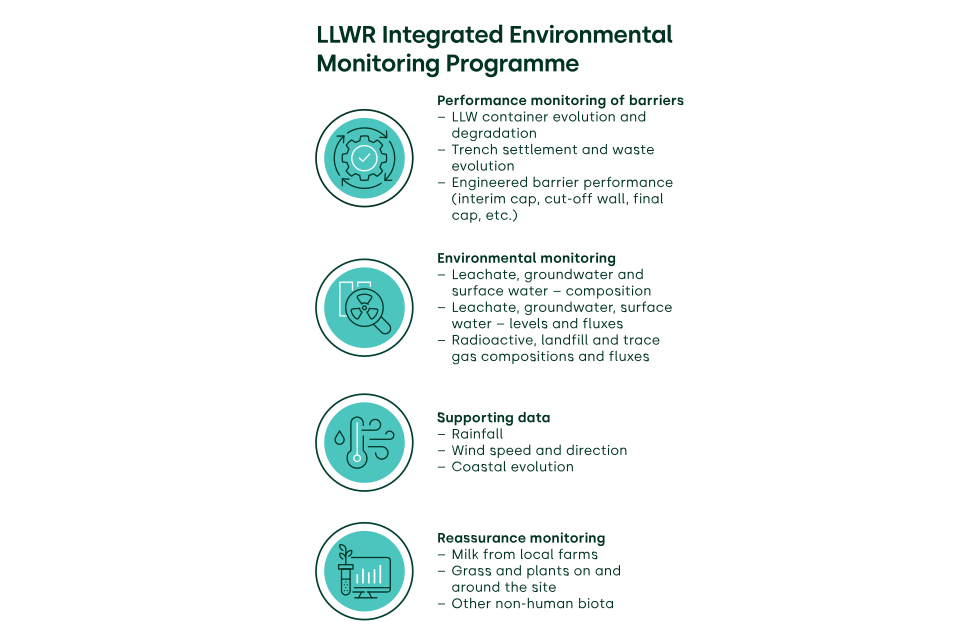
Figure 3.11: Summary of our Environmental Monitoring Programme
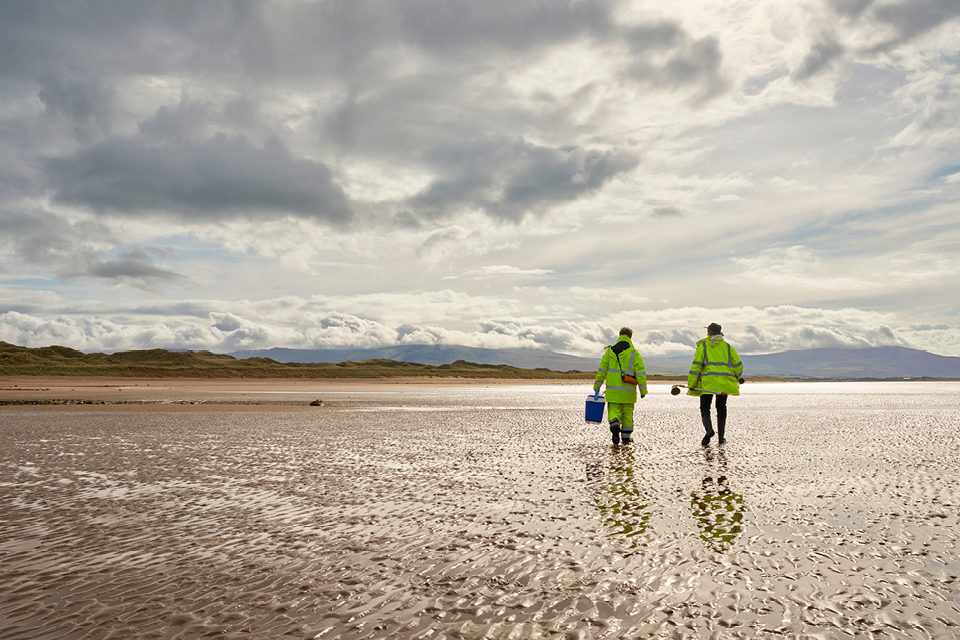
Image of surveyors walking on a beach
4. Questions about safety in the future
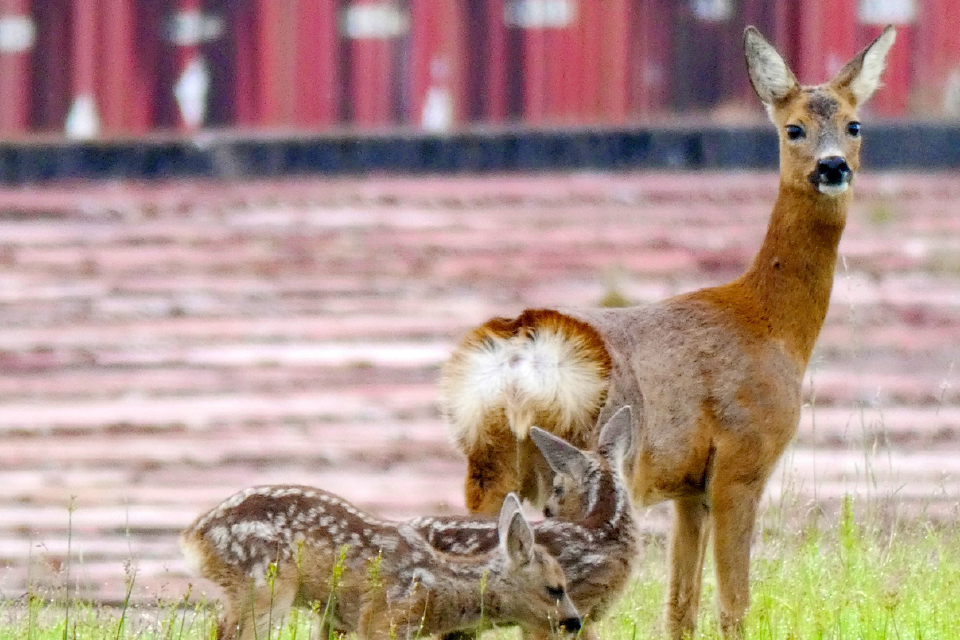
Deer with its fawns on site
At present, and while the LLWR site is operating, we can monitor external radiation from the wastes, as well as radioactivity and other contaminants in the water, soil and air. This means we can determine the impact of the Repository on the surrounding environment and the local population, including fauna, and ensure we are operating in a safe way, consistent with regulatory guidelines.
Once disposal operations cease and the final capping is complete, we will continue to monitor the site for another one hundred years − until the end of the Period of Authorisation.
We also need to assess impacts into the future, between now and the end of the Period of Authorisation and then beyond, so that we can implement any changes or additional controls required during operations to ensure the future safety of the site will remain consistent with regulatory guidelines.
4.1 Quantifying the impacts of the radioactivity
There are uncertainties about the behaviour and future evolution of the Repository system. We therefore undertake calculations for a range of circumstances in order to investigate the range of safety outcomes. We use the best available science, using hydrogeology, geomorphology, climate science, physical and chemical processes affecting the wastes and other materials, to describe the likely evolution of the wastes, the site and the surrounding area. From this we can build up a picture of how the contaminants can be released from the wastes and get into the environment.
This picture, termed the conceptual model, allows us to calculate the timescales for releases as well as how much radioactivity will be released to water, to soil and to the atmosphere, and where it will be dispersed. In addition, we can consider the activities of future humans that live in the area, build houses on the cap, farm crops and animals for food, and possibly excavate into the cap and the wastes. We combine these two strands – the releases of radioactivity and the habits of the potentially affected people – to create scenarios for which we can calculate the radiological impacts to the exposed people.
The quantitative impact assessment evaluates the future consequences of the presence of the wastes. It forms a key part of our Environmental Safety Case. This assessment allows us to demonstrate that we understand the routes by which people may be harmed, that we have calculated impacts now and in the future, and that we can show the impacts are within the safe limits.
How do we quantify impacts?
Exposure mechanisms
People could be exposed to radiation from the site in three main ways:
- external irradiation – standing on or near radioactive material in the environment
- ingestion – eating or drinking contaminated materials, such as water, crops, or fish
- inhalation – breathing in contaminated dust or gases
These pathways are built into our assessments of dose and risk.
Dose
In the ESC, dose means the harm from radiation that a person might receive as a result of the Repository’s disposals. It is expressed as Sieverts per year (Sv y-1). Dose constraints are used during the time when the Repository is managed under an environmental permit. The Environment Agency sets a dose constraint of 0.3 mSv per year to a representative member of the public during this period.
Risk
After the PoA, we assess risk, which is a measure of harm adjusted for its likelihood. For our purposes, risk is defined as the harm from radiological dose multiplied by the probability that someone in the future could receive such a radiation dose. The regulatory risk guidance level is 1 10–6 per year to a representative member of the public, which is a one in a million annual risk of a fatal cancer or heritable genetic defect. This equates to an annual dose of 20 μSv assuming the exposure occurs (i.e. the probability = 1).
Risk can be used to compare different hazards. Some examples of this very small risk are shown in Table 4.1 [2]. This level of risk is considered to be ‘tolerable’ since most people would not consider driving 300 km unduly dangerous.
Table 4.1: Activities that are estimated to carry an annual risk of fatality of 10-6 [2]
| Activity | Potential Hazard (leading to a risk of 10-6, some activities also entail other hazards) |
|---|---|
| Smoking two cigarettes | Cancer and circulatory diseases |
| Driving 300 km | Accident |
| Cycling 50 km | Accident |
| Flying 4000 km (commercial airline) | Accident |
| Four-hour flight at an altitude of 10 km | Cancer from cosmic radiation |
| Annual consumption of: 2 kg meat from a charcoal grill | Cancer from pyrolytic products |
| 400 g peanuts (assuming 1 μg of aflatoxin B1 kg-1 (concentration is generally much lower) | Liver cancer from aflatoxin B |
Natural background radiation in the UK
Radiation is a natural phenomenon. We are exposed to radiation from the skies (cosmic rays) and from ‘primordial radionuclides’, mainly uranium, thorium and potassium, which were present when the earth formed, but are still present at measurable levels.
Today, on average in the UK, we receive a dose annually of about 2,350 μSv. This is made up from several sources.
We also now receive small doses from medical applications like x-rays and scans, for example, a chest CT scan is typically 6,600 μSv. In addition, activities at higher altitudes like flying, and even skiing in the Alps, increase our exposure to cosmic rays, for example, a transatlantic flight gives about 80 μSv.
An aerial view of the LLW Repository site
1 7% from the isotope potassium-40, which comprises 0.0117% of the potassium present in our bodies.
2 5% from uranium, thorium and their radioactive progeny in our bodies.
3 0.2% of our annual dose is from fallout from weapons tests. During atmospheric testing, this peaked at about 5% of natural background radiation in 1963.
To assess the impacts of the wastes, we need to consider the people that might be exposed to radioactivity and how they might be exposed. We use ‘representative persons’ and examine their activities and habits in order to work out the extent of the potential impacts on them. In this context, ‘activities’ encompass specific actions or practices that could lead to exposure, for example, gardening, constructing homes or grazing livestock. ‘Habits’ refer to the typical behaviours and routines of these individuals, such as how often they visit or spend time near the site or the amount of locally grown produce they consume. By carefully defining and analysing these habits and activities, we can more accurately estimate the nature and degree of exposure faced by representative persons.
We consider two basic sets of representative persons.
- members of the public impacted now and during the next two hundred years when access to the site is limited. They may be walking around the edge of the site, living in a house near the site boundary and consuming crops grown in the vicinity of the site
- members of the public that have additional potential exposure pathways further in the future when we cannot rule out that they would access the site. They could potentially construct houses, graze animals on the cap or get water from a well that is contaminated. As the Repository is eroded in future, we must also consider people on the beach that could be exposed to the eroding wastes and contaminants being released from them
In assessing impacts to the second set of representative persons, after the end of the PoA, we assume habits that are quite extreme. For example, they mainly consume food, such as vegetables, meat, fish and milk, from the contaminated area around the Repository rather than getting their foodstuffs from the supermarket where produce is from further afield, or the dog walker always walks on the beach, clocking up more time than an average beach user in proximity to the Repository. We adopt these more cautious habits to account for uncertainty in how representative persons will interact with the Repository site in future when access is no longer limited, or how they will be exposed to radioactive contamination released from the site.
We often refer to ‘cautious’ calculations or ‘cautious’ assumptions in the quantitative assessment. This means that, where there is unavoidable uncertainty about something, we make choices that ‘err on the side of caution’ and give worse impacts than less cautious choices.
4.2 The hazard represented by the wastes
To understand the impact of waste at the site, we must first understand what we refer to as the ‘inventory’. This is the information we use in the ESC to represent what is already disposed of at the LLWR and what we reasonably expect to receive in the future. It brings together information about:
- the actual quantities of radioactive materials (such as uranium isotopes or cobalt-60), thus the amount of radioactivity (measured in becquerels (Bq), or more usually terabecquerels (TBq))
- the bulk materials the radioactivity is associated with, such as activated steel and graphite, or contaminated paper tissues and personal protective equipment
- the disposal dates for already disposed wastes and the expected disposal dates for future wastes, some of which are yet to arise
We use these disposal dates for all relevant wastes to describe the forward inventory for the Repository. This reflects the expected future waste based on waste stream forecasts and agreed assumptions, such as the timing of decommissioning projects. The inventory we have used for the ESC includes all of the UK’s LLW we expect to require disposal until the year 2135 plus, for exploratory purposes, a subset of less-hazardous ILW that we think may be safely accepted.
The radioactivity of this inventory decays naturally over time and falls significantly even over the first two hundred years or so. This is illustrated by Figure 4.1, which shows the decay in total activity of waste in trenches and in the vaults. The waste in the trenches is assumed to be emplaced all in one go in 1996 (at the end of operations in Trench 7). For the vaults, all the activity is assumed to be emplaced in 2135, which is the projected end of operations in the vaults. The total initial activity in the trenches is small compared with the initial activity in the vaults so, although the curve after 2135 is the sum of the remaining activity in the trenches and the vaults, the trench contribution is minor.
The radioactivity in the trenches will decrease by about two-thirds between 1996 and 2135. After that, further reductions will be slower because of the remaining long-lived radionuclides. For waste in vaults, the activity will drop by 62% in the first 100 years after disposal ends in 2135. This point is marked on Figure 4.1 with the dotted line marking the end of the PoA. By 2500, total activity will have fallen to less than 10% of the initial value. The activity of the small amount of remaining long-lived radioisotopes then falls so slowly that it is almost the same irrespective of the timing of onset of coastal erosion (represented by the green band in Figure 4.1).
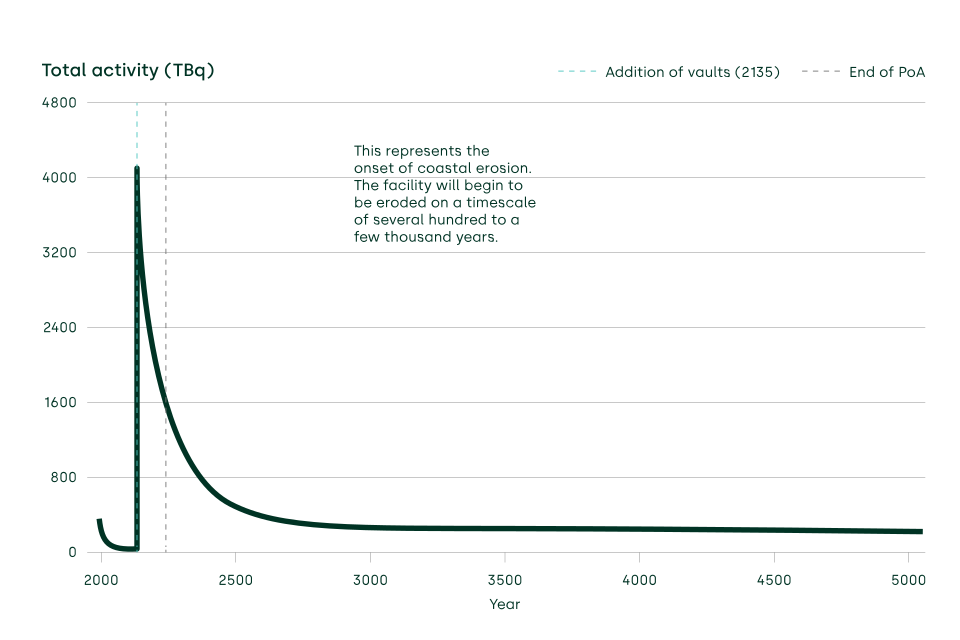
Figure 4.1 Illustration of the decreasing radioactivity associated with the wastes over time from 1996. The figure shows all trench wastes as emplaced in 1996 and all vault wastes in 2135
4.3 How might the public be affected by radioactivity during the PoA?
While the LLWR is operating, the impacts to the public will be low. The largest dose contribution will be from external irradiation, that is, gamma radiation emitted by the wastes in the open vaults. However, the external irradiation doses are less than those from natural background radiation in the vicinity of the site. We monitor the external irradiation to ensure it remains low. If needed in the future, we could mitigate radiation to the public by limiting the types of wastes and activity we accept and how we emplace it in the vaults or by using physical measures such as shielding. Once the final cap is in place, it will provide sufficient shielding to block even the most penetrating radiation arising from the wastes.
The most exposed population for external radiation would be those people who spend time close to the site while it is still operating, such as those living close by or regular dogwalkers near the boundary fence. The current estimated annual dose to an adult, related to the LLWR, is 40 μSv and is dominated by external irradiation from uncovered wastes in the vaults. The estimated future maximum annual dose from disposal of LLW is less than 150 μSv, dominated by external irradiation. Our modelling indicates that if a decision were taken to accept ILW in addition to LLW, controls would be required to manage external dose rates. These would include disposal of higher external dose rate ILW packages in dedicated concrete structures to provide shielding.
More people could be affected by radioactivity released into the sea by the Marine Pipeline (see also Subsection 4.4), but even then, only a few would have lifestyles that lead to the kinds of exposure levels we have calculated cautiously. In the context here, a cautious assumption might be taking the maximum likely consumption of seafood rather than an average.
These calculations are based on a representative person whose habits, such as fishing on the beach and eating local seafood, make them more likely to be exposed. The annual radiation dose for someone in this group will stay well below 300 μSv, which is the maximum allowed under the GRA. In fact, our calculations show peak doses at least a factor of one hundred below this limit.
As we cap the Repository, the impacts from radiation exposure will go down. The cap provides physical shielding and traps radon gas so it decays before release to the environment. Once the final cap is in place, the calculated annual dose drops to less than 5 μSv for the remainder of the Period of Authorisation.
4.4 How are people affected by contaminant releases into groundwater?
When the final cap is installed over the trenches and vaults, there will be very little water draining down into the wastes for hundreds to more than 1,000 years. As the amount of water getting through the cap increases, however, contaminants will be transported from the wastes into the underlying groundwater and from there into the sea.
We need to account for the impacts of these releases of radioactivity on the human population in the area. There are three routes by which people can be impacted. The first is by the groundwater directly, for example, by drinking water from a well that intercepts the contaminated groundwater. The well water could also be used for livestock or to irrigate crops, both of which could also lead to human uptake of radioactivity through consuming the produce. In the second, people could be exposed to radioactivity carried by groundwater to the sea, as described above. The third route is exposure to radionuclides released into the stream on site. However, we anticipate these releases would only occur if the cap were to perform very badly and the drainage were to clog.
To assess the radioactivity that people may be exposed to, we first need to calculate the concentrations of radionuclides and other contaminants that can get into the leachate by considering the water flowing through the vaults or trenches interacting with the wastes and dissolving the contaminants. As we do not know exactly when containers will corrode through and allow water to contact with the waste, we ignore their presence completely. In the trenches, of course, any small drums or containers that the waste was originally packed into will have long since corroded, so we assume the infiltrating water can access the whole mass of waste.
We can estimate the amount of water infiltrating the Repository and the outflows into the groundwater. We know from hydrogeological measurements where and how fast the groundwater flows in the underlying aquifer units. From this information we can calculate the dilution and dispersion of radioactivity in the groundwater, thus the composition of water extracted from a well located somewhere in the area between the Repository and the sea.
To assess the impact of using contaminated groundwater, our representative persons are householders that use a well for their domestic water supply and watering a garden in which they keep hens for eggs or grow crops that they consume.
We can also calculate the amount of radioactivity released into the marine environment by the groundwater flowing into the sea and, from that, the impact on the representative persons fishing from the beach and eating local seafood.
In our well scenario, the risk to the representative persons is the probability of them having a well, multiplied by the dose they could receive from the radioactivity in the water if they do have a well, multiplied by the chance it will do them some harm. In other cases, such as the marine pathway, we make the assumption that the exposure does occur (i.e. a probability of one) when estimating the risk.
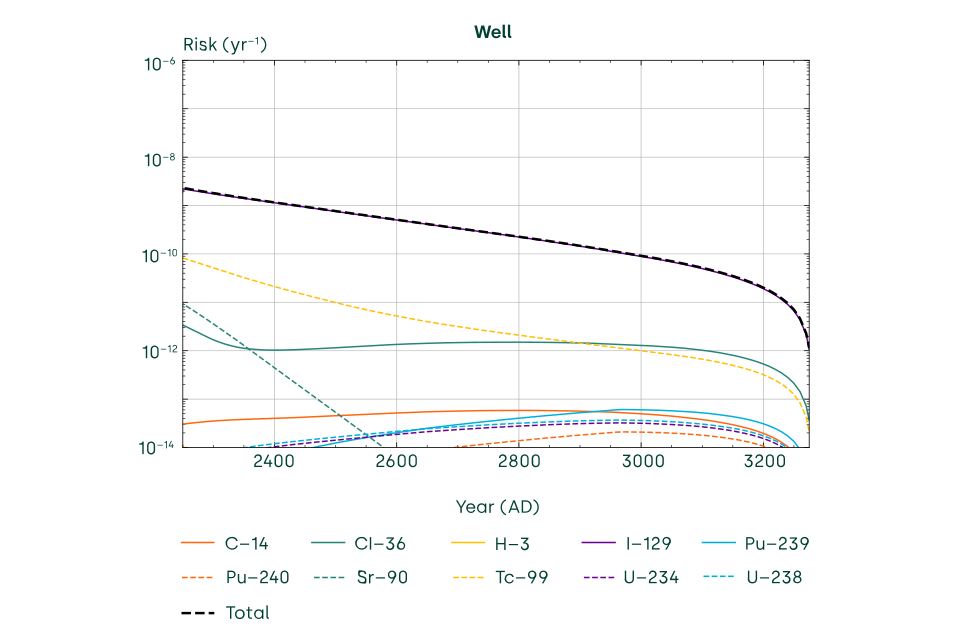
Figure 4.2: Changing risk over time after the end of the PoA from the well pathway (reference case)
Figure 4.2 shows the calculated annual risk to the representative persons for the well water pathway over the period from the end of the PoA (at 2242 AD) until coastal erosion is expected to disrupt the LLWR. We assume well water is used for domestic supply, garden irrigation and to provide drinking water for hens kept for egg production. Iodine-129 is the most important radionuclide (it is hardly visible under the ‘Total’ line on the figure) because it is very soluble and mobile in groundwater. Uranium isotopes are released as more water infiltrates the Repository, dissolving this less mobile element. Sorption on grout also delays uranium release from the waste in the vaults, while soil has the same effect in the trenches.
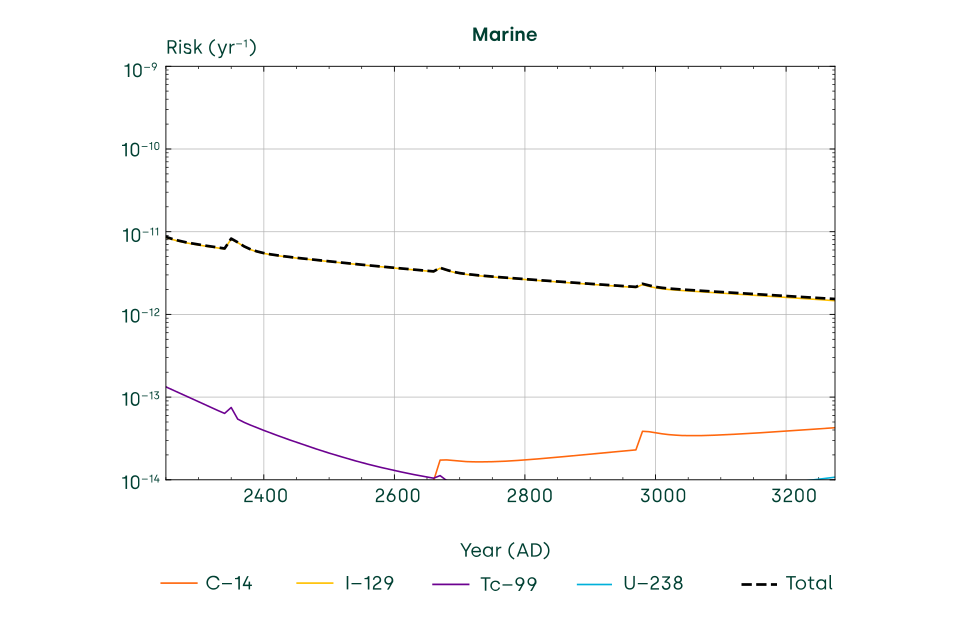
Figure 4.3: Changing risk over time after the PoA from the marine pathway (reference case)
The corresponding results from the marine pathway are shown in Figure 4.3. Again, we can see the influence of highly mobile iodine-129. Sorption on clays in the underlying geology slows the transport of uranium isotopes in groundwater, so it takes much longer for these radioisotopes to get to the well or the sea. For the well pathway, the total peak annual risk is less than 10-8 y-1 compared with less than 10-11 y-1 for the marine pathway. In the well pathway, the peak annual risk from uranium isotopes is reached at around the year 3000, whereas, for the marine pathway, the contribution from uranium is almost an order of magnitude lower at this time (note: U-238 does make it onto Figure 4.3 after 3200 AD with an annual risk of 10-14 y-1).
It is clear that the risks are extremely small from the radioactivity that is released into the groundwater and the sea from the Repository.
There are no wells extracting water between the site and the coast at present, but the presence of a well cannot be ruled out in future. Impacts on people using well water are higher than for the marine pathway, thus, the future presence of a well is assumed.
4.5 What is the impact of radioactive gases?
We have considered the hazard posed by radioactive gases to people living around the LLWR during the PoA and to people living on the cap after the PoA. Three radionuclides are of interest here: tritium, radon, and gases bearing carbon-14. Unlike radon gas, which is chemically inert, tritium (T) can be present in a range of forms, for example, replacing one hydrogen in H2 (denoted HT), or water (i.e. HTO instead of H2O). The main form of tritium is expected to be tritium-bearing water vapour that has evaporated from leachate in the vaults and trenches. Carbon-14 can also be present as different gases, mainly carbon dioxide and methane, depending on its source.
The impact of tritium is relevant only for about 250 years as it has a half-life of only 12.3 years and will have decayed by the end of the PoA. Radon gas is continuously generated by decay of longer-lived, solid isotopes such as radium-226, but itself has a very short half-life of less than 4 days. To have an impact, radon must be transported quickly between its source in the wastes and the on- or off-site receptors. Radon, tritium and carbon-14-bearing gases emanating from the wastes before capping can be dispersed quickly by the wind. Once the wastes are capped, radioactive gases can be entrained in the bulk gases produced by the wastes and transported to the surface of the cap.
The impacts of radioactive gases are assessed for the PoA slightly differently from the longer term because during the PoA we can be sure that the site will not be occupied by the public. The representative persons can be exposed by inhalation of radon, tritium and carbon-14 dispersed from the site and by ingestion of locally grown produce that has taken up dispersed carbon-14 and tritium. The total doses from inhalation and ingestion of tritium or carbon-14-bearing gas in air are dominated by doses from ingestion. Total annual doses from tritium are less than 1 μSv and total annual doses from C-14 are less than 0.01 μSv. The dose from radon inhalation is greater but almost constant with time, with the peak annual dose of 6.2 μSv near the start of the assessment. This is almost insignificant compared the UK average annual dose from naturally-occurring radon of more than 1000 μSv.
To assess impacts from radon after the PoA, we consider representative persons that live in houses built on the cap. The bulk gas carrying radon permeates into the house where the occupants inhale it. In the house, the radon is not dispersed by the wind (although it is slightly diluted by ventilation in the house) but is trapped until it decays.
We need to consider the state of the cap geomembrane because this is important in determining how much radon is released. When the geomembrane is ‘intact’ (i.e. it has some small holes, or ‘defects’, but is still reducing the water inflow to the Repository), the release of bulk gas with radon is focussed where the defects occur. When the geomembrane degrades, then the radon is released more uniformly but more slowly, so experiences more decay. The house can be anywhere on the cap, on a defect or not, so we use an area weighted average over the Repository to calculate the peak dose for representative persons in the average house.
The peak averaged dose to the representative persons living in the house is about 1.0 μSv y-1 when the geomembrane is intact, and 0.1 μSv y-1 when the geomembrane has failed. The peak doses arise immediately after the end of the PoA when the geomembrane is intact, and as soon as it fails in the alternative case. This is when the bulk gas generation rate is highest in each case, so more radon gets into the house before decaying. Compared with the dose from naturally-occurring radon, which is more than 1,000 μSv y-1 on average in Britain, the impact from the Repository-derived radon is almost insignificant.
Based on observations of housing density in West Cumbria, we can estimate the probability of a house on the cap and use this to also calculate the risk. These risks are 7.4 10-8 y-1 for the geomembrane intact and 6.0 10-9 y-1 for the geomembrane failed case, so comparable to the risks from drinking contaminated groundwater discussed in Subsection 4.4, and much less than the regulatory risk guidance level of 1 10-6 y-1.
Carbon-14 is released from wastes in the vaults mainly in the form of methane, which is not very soluble so it escapes through the cap along with the nonradioactive bulk gas. In the soil on the top of the cap, it can be oxidised to carbon dioxide which can then be taken up by plants. Carbon-14 in the trenches is released as both carbon dioxide and methane. To assess the impact of carbon-14 in the long term, we consider someone living in a smallholding on the cap. The smallholder eats crops from a kitchen garden as well as milk and meat from goats that graze on the grass.
Considering this representative person, we find that the peak dose averaged over the whole cap is 0.29 μSv and occurs at the end of the PoA when people can first live on the cap. The timing of the peak is because the releases of carbon-14-bearing gas from the waste decrease over time. We expect that the amount of water infiltrating the cap and into the wastes will still be very low at this time.
The lack of water inhibits the release of contaminants from the wastes and only carbon-14-bearing gases can escape. There is more carbon-14 dissolved in water in the waste but it will be retained in the containers. This is the situation while the cap is performing well and it likely lasts until coastal erosion disrupts the Repository.
If we consider an alternative case where the cap degrades sooner, before coastal erosion, the infiltration is higher and more dissolved carbon-14 can escape from the containers. Outside the wastes, the dissolved species can react, forming more carbon-14-bearing gas. In this case, the peak dose averaged over the whole cap is 6.5 μSv. This occurs as soon as the cap degrades and the rate of water infiltration increases, effectively flushing the dissolved C-14 out of the containers.
Again, we can use the probability of a smallholding being established on the cap to determine the risks to the smallholder from C-14-bearing gases. For example, the peak risk for carbon-14 averaged over the whole Repository is 5.5 10-9 y-1 with low water infiltration and 1.2 10-7 y-1 for the higher water infiltration case. These results are well within the risk guidance level and comparable to the risks calculated for the groundwater pathway after the PoA.
4.6 How might coastal erosion affect the LLWR?
Currently, the closest point of the LLWR vaults is approximately 350 m inland from the present-day coastline, which is expected to slowly recede. With sea levels projected to rise in the future, the rate of coastal recession will increase, and it is almost certain that the Repository will eventually be disrupted due to coastal erosion.
The exact rate of coastal recession is uncertain as it is dependent on the rate of sea level rise and climate change. Both more rapid sea-level rise and more severe or more frequent storms will lead to faster erosion. Therefore, it is not possible to predict accurately the timing of coastal erosion affecting the Repository.
Using our understanding of the Cumbrian coastal system and the best available information, along with quantitative modelling studies, we have concluded that the disposal vaults will begin to be eroded on a timescale of several hundred to a few thousand years. The whole site will eventually be disrupted and will be fully eroded within a few thousand years. However, by the time the site is eroded, most of the radioactivity will have decayed (see Figure 4.1).
View of the LLWR site looking south towards the Ravenglass Estuary
Given anticipated sea-level rise, it is not considered feasible to guarantee protection from erosion over many hundreds to a thousand years using engineered structures. We make no provision for coastal defences and cautiously assume no future organisation would construct them. This position is consistent with regulatory guidance, which requires the LLWR to be passively safe without ongoing management and maintenance.
This does not rule out future generations taking measures to defend the coastline or prevent access to the eroding coastline. However, by ensuring that people and the environment are protected regardless, we do not place that burden on future generations.
We expect that the initial disruption will damage the seaward edge of the cap, allowing air, seawater and rain to penetrate. This will change the conditions around the waste and increase corrosion of the nearest containers. Further erosion by the sea is likely to undercut the base of the vault so that the vault wall collapses, further opening the containers to air and seawater. High sea level rise projections, however, suggest waves could also cause direct erosion of the exposed front of the Repository and even ‘overtopping’ of the vaults, with waves breaking over the tops of exposed containers.
The corrosive nature of seawater means that the containers will break up quickly once exposed on the shore, although some large waste items and parts of the vault base may end up on the storm beach below the cliff and remain there for many years. However, most of the contamination is linked to smaller materials, like rust from metal containers, partially degraded organic waste and grout particles, that can be easily spread and mixed with the natural gravel, sand, and mud on the beach. Over time, the contaminated beach material will be transported offshore where it will mix with the larger amount of sediment found further out to sea. Some of the contaminants will dissolve into the seawater, while others will attach to natural particles in the water but mainly in the muddy sediment.
Eventually, all the solid waste that gets eroded from the LLWR will be spread out along the West Cumbrian coastline. In the long term, it will be buried in the seabed of the Irish Sea. The more mobile contaminants (those that dissolve easily in water) will travel further, dispersing through the Irish Sea and possibly beyond.
To support our understanding, we have used observations of other eroding coasts, old landfills and concrete structures, such as coastal defences and World War II gun batteries. These analogues give us insights into various processes. For example, how the coastal sediments or large concrete structures, like the vault walls and bases, will behave when affected by erosion. They also provide information on the rate of breakdown of materials, such as reinforced concrete, weaker and friable grout, or soft organic materials like plastics, in the harsh beach environment. The likely fate of fine particles resulting from weathering of contaminated materials can also be illustrated by similar, but uncontaminated, materials eroding from old landfill sites.
We consider recreational and occupational beach users as representative persons to calculate potential doses to people using the beach during the erosion of the Repository. These people could be exposed by direct radiation from the exposed waste materials in the cliffs and on the beach, or by consumption of contaminated seafood. We estimate that the peak annual dose to a recreational beach user will be 11 μSv when the vaults are eroding and 22 μSv when the trenches are eroding. In both cases, the annual doses are dominated by the contribution from external radiation from wastes exposed in the cliffs and storm beach and are less than would be received from a single transatlantic flight.
These impacts mainly arise from the small amount of long-lived radionuclides that will not significantly decay, even over a thousand years. For example, the higher doses from the trenches arise from historic disposals such as thorite sands containing very long-lived thorium-232 (half-life of 14 billion years).
We set limits through our Waste Acceptance Criteria on the types and levels of radioactive waste that can be disposed of at the LLWR. These limits constrain the quantities of waste disposed of at the LLWR containing longer-lived radionuclides that would still be present when coastal erosion affects the Repository. In this way, we can make sure that even when the site is disrupted by future coastal erosion, the impacts stay within the guidance levels set by regulators. We restrict disposal of individual items that are expected to retain their form and that might attract attention when present on the beach. The restricted items contain longer-lived radioisotopes and are typically made of stainless steel or other metals that will not corrode or degrade significantly before being exposed on the beach.
4.7 How might climate change affect the LLWR?
We have used the most recent projections for climate change from the Intergovernmental Panel on Climate Change (IPCC) and considered the influence of climate on all aspects of the ESC. Most obviously, we consider the different emission scenarios to inform our range of projections for coastal erosion (Subsection 4.6). The possibility of changes to local climate is, however, also taken into account in the engineering performance assessment when considering the long-term performance of the cap, for example, whether it will be subject to drying out in hotter summers, or erosion by more intense rainfall. Our hydrogeological modelling also accounts for changes to climate on precipitation and potential evapotranspiration, which influence recharge rates in the region, as well as sea-level rise. Changes in climate may also affect the crops grown in the area, which may impact farming activities and consumption habits of the representative persons used in the assessment models.
We expect the climate around the LLWR will stay mostly mild and ocean influenced, with winters becoming warmer and wetter, and summers drier. If greenhouse gas emissions stay high, the climate could temporarily shift to more warm and humid conditions, like Portugal. In the safety case, we cautiously assume that farming will still be the main way the land is used in the area. The most significant consideration arising from the warming climate is likely to be rising sea level and possibly more severe storms that increase the rate of coastal erosion.
4.8 What if the waste is disrupted by future human actions?
In the future, if the presence or nature of the facility is forgotten by society, people may excavate into the waste unaware of its hazard. Animals too may excavate or burrow into the cap. We have designed the final cap to minimise the potential for such intrusions by including:
- a cobble ‘biointrusion’ layer to prevent animals burrowing into the waste and also act as a deterrent for anyone digging into the cap
- sufficient thickness of the cap and profile fill over the wastes to provide isolation and decrease the possibility of shallow excavations, e.g. digging house foundations, causing significant damage to the cap or disruption of the wastes
Records about the LLWR will continue to be safely stored at the NDA’s archive in Caithness. Other ways to help keep knowledge of the site alive in the community after official oversight ends, such as planning controls, will also be used. The long-term plan is to make the site a useful and sustainable space for the local community, in line with the wishes of the local people. This will help maintain awareness of the site and reduce the chances of future developments that could disrupt the engineered barriers or the waste.
However, we cannot be certain that the knowledge will persist over several hundreds to thousands of years, so we calculate the dose people might receive if they intrude into or deliberately interact with the waste without knowledge of the hazard.
We have considered a wide range of potential future human intrusion events. We consider the situation where people carry out short-term activities like drilling boreholes or digging trial pits for geotechnical investigations, as well as scenarios that could give rise to longer-term exposure, such as if someone were to live in a house or run a smallholding on land that had been contaminated with spoil from an earlier intrusion.
Borehole drilling icon
For hypothetical human intrusion events after the PoA, the guidance levels are 3 mSv per year for long-term (prolonged) exposure, and 20 mSv per year for short-term (transitory) exposure.
For short-term activities like drilling, we calculate annual doses that are mostly under 0.05 mSv and do not exceed 1.1 mSv − far below the regulatory guidance level of 20 mSv.
Where someone lives or farms on land contaminated by spoil from earlier digging, their annual dose could range from 0.01 to 2.1 mSv. Even where a house is built with a basement that intrudes into the engineered gas collection layer, doses from radon to an occupier of the ground floor stay below the regulatory guidance level for longer-term exposures of 3 mSv (maximum annual dose of 1.3 mSv).
We also consider the long-term erosion of the site by coastline retreat (see Subsection 4.7), when people might visit the area and be exposed to uncovered wastes, or might deliberately scavenge to recover materials. We estimate that these people might receive annual doses of up to 1.8 mSv, but this is still within guidance levels.
4.9 What are the effects on wildlife?
We have considered how wildlife living on or near the LLWR site could be impacted, both now and in the future. In our assessment, we term wildlife ‘non-human biota’. We use an internationally recognised approach that uses simple models to represent different environments and the plants and animals that live in them. These environments include land, freshwater, and coastal and marine areas.
We have considered all the main ways wildlife could be exposed to radiation from the Repository. These include liquid and gaseous releases, migration of radionuclides in groundwater, historical contamination in Drigg Stream, radiation from uncovered vaults, and the effects of coastal erosion. We also looked at what could happen if radioactive particles were released.
We have evaluated potential radiation exposure rates to wildlife and compared our results with a cautious screening level. This is the same screening level that is used by the Environment Agency to protect wildlife. Below this level, radiation is not expected to cause harm to wildlife populations. Above this level, a more detailed assessment is required to understand if impacts will occur. Where needed, we have done such detailed assessments.
While the site is being managed and regulated, all dose rates are shown to be below this screening level, except for a short period in the future when Vault 11 is full and uncovered. During this time, dose rates only exceed the screening level within 90 metres of the Vault. However, this situation is temporary, affects only a small area, and occurs while site work is already taking place, so it is not expected to harm wildlife populations.
In the longer term, when the site is no longer managed or regulated, dose rates to wildlife remain well below the screening level for most exposure routes. The exception is potential exposure to waste on the cliff and storm beach following coastal erosion. The highest radiation levels in this case are predicted for lichens and mosses on the cliff. These organisms are relatively resistant to radiation and are anyway more likely to grow in stable areas rather than on eroding cliffs.
Our assessment of radioactive particles also found that any effects would be very localised and limited to individual organisms that may come into direct contact with a particle.
Overall, our assessment shows that the site meets regulatory requirements to protect wildlife from radiation levels that could cause harm to populations.
Image of Ducks at the Repository
4.10 How might non-radioactive chemicals and gases affect the public?
During the operational period and up to the end of the PoA, we can monitor groundwater around the LLWR for non-radiological contaminants. When comparing measured concentrations against regulatory guidance levels, we take account of the background concentration of a contaminant. For some contaminants, for example, nitrate and ammonia that commonly arise from agricultural practices, the levels arising from the Repository may not be discernible above the background concentrations. We monitor the impact of the facility on the local groundwater and use unexpected exceedances as a trigger for investigations.
To ensure safe future operations in the near term and to demonstrate the performance of the Repository system after the end of the PoA, we calculate the release of non-radiological contaminants from the trenches and vaults. We have followed a more comprehensive approach to the assessment of non-radiological hazards than would often be the case for a landfill. Our assessment of non-radiological hazards considers what will happen to the facility after the end of management control, extending well beyond the timescales traditionally considered in a landfill assessment.
The assessment model used for the calculation of radioactive releases into groundwater (Subsection 4.4) is also used to calculate the releases of non-radiological contaminants, since these are associated with the same wastes. For the non-radiological contaminants, however, we do not calculate impacts to people. Instead, we calculate the concentrations of contaminants in the groundwater beneath the site and compare these with assessment standards. These are based on regulatory standards and do not take account of background concentrations as the assessment calculates impacts only from the Repository. This means that we calculate contaminant concentrations that are more analogous to the monitoring measurements made in sampling locations around the site.
For our anticipated reference evolution, calculated concentrations of non-radiological contaminants from the Repository in groundwater remain significantly below our assessment standards from the present day to the end of the assessment period. This demonstrates that our facility provides a high level of environmental protection.
We have also investigated whether harmful gases could cause a hazard in future. Hydrogen sulphide and ammonia are both toxic and could form in the trenches during degradation of the wastes. However, they are both highly soluble and reactive, thus unlikely to form a gas phase. We have also considered whether flammable gases, especially hydrogen, could create a hazard for a house built on the final cap after the PoA, but have also discounted this as a serious possibility.
Image of surveyors walking on a beach
5. Next steps and where to find out more
Image of Repository employees walking past vaults
The 2026 ESC provides a significant update to the ESC. We have presented the technical arguments and scientific evidence to support our case that the existing disposals at the LLWR are safe. Furthermore, we have calculated safe capacities for radiological and non-radiological contaminants to support continued disposal operations. These capacities are based on our current understanding of the evolution and performance of the Repository and the wider site. We will continue to revise the ESC as improved understanding or better data become available, and manage the site in a safe and optimal way, consistent with the ESC.
Although we have been in dialogue with the Environment Agency throughout the development of the ESC, they will commence their review after its submission. During the review period, we will work closely with the Environment Agency, responding to feedback throughout.
The table provides details of the technical summary reports that form the Level 1 and Level 2 document suite for the 2026 ESC.
| 2026 ESC Technical Summary Reports | Relevant section in this report |
|---|---|
| Main Report report number: LLWR/ESC/R(26)10166 | Summary of the whole safety case |
| Management and Dialogue R(26)10168 | Section 1 |
| Site History and Description R(26)10168 | Section 2 |
| Disposal Facility Inventory R(26)10169 | Subsections 2.2 and 4.2 |
| Engineering Design R(26)10170 | Subsections 3.3 to 3.6 |
| Near Field R(26)10171 | Subsections 2.3 to 2.6 and 3.6 |
| Hydrogeology R(26)10172 | Subsection 3.7 |
| Site Evolution R(26)10173 | Subsections 4.7 and 4.8 |
| Monitoring R(26)10174 | Subsections 3.9 and 4.10 |
| Safety Functions R(26)10177 | Subsection 3.3 |
| Engineering Performance Assessment R(26)10178 | Subsections 3.3 to 3.6 |
| Environmental Safety During the Period of Authorisation R(26)10179 | Subsections 4.3 and 4.5 |
| Assessment of Long-term Radiological Impacts R(26)10180 | Section 4 |
| Hydrogeological Risk Assessment R(26)10178 | Subsections 4.10 |
| Environmental Safety During the Period of Authorisation R(26)10179 | Subsection 4.9 |
| Optimisation and Site Development Plan R(26)10175 | Subsection 3.8 |
| Waste Management Plan R(26)10176 | Subsection 3.8 |
| Implementation R(26)10183 | Subsection 3.8 |
| Addressing Regulatory Requirements and Feedback R(26)10184 | Subsection 3.8 |
[1] IAEA, “Nuclear Safety and Security Glossary,” IAEA/NSS/GLO, 2022.
[2] F. Neall, P. Baertschi, I. McKinley, P. Smith, T. Sumerling and H. Umeki, “Kristallin-I Results in Perspective,” Nagra NTB 93-23, 1994