







Before Beatlemania, before Lisztomania, before tulip mania, before egomania, pyromania, kleptomania, bibliomania, dipsomania, nymphomania – long, long before any of those manias, there was Egyptomania, the mother of all manias.
The term was coined in the 1920s, but the phenomenon it describes goes back at least a further 2,000 years. The Greeks were smitten. The Romans were obsessed. Napoleon went nuts. The Victorians threw ‘mummy unwrapping’ parties. And when, in November 1922, Howard Carter revealed the ‘wonderful things’ he’d found in Tutankhamun’s tomb in the Valley of the Kings, Egyptomania really kicked off.
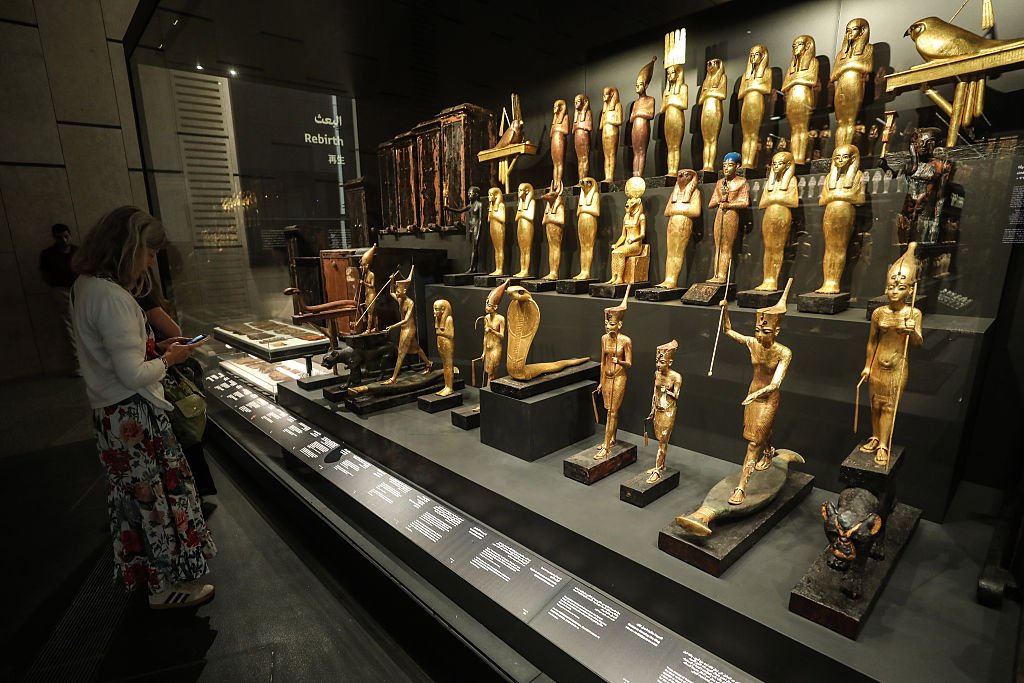
The proximate cause of the current bout was the opening of the Grand Egyptian Museum, just outside Cairo, virtually in the shadow of the pyramids of Giza. The official opening took place in November 2025, though that was only the culmination of a series of soft openings that had taken place over the preceding years.
The museum’s extended soft-opening phase coincided with a marked increase in the number of luxury cruise ships plying the Nile. Both the new museum and the new cruises attracted a great deal of attention in the international press. This can’t have hurt either.

The Grand Egyptian Museum’s immense collection of Ancient Egyptian artifacts could be the cause of the latest bout of Egyptomania.
(Image credit: Mohamed Elshahed/Anadolu via Getty Images)
Among the most lavish expressions of the latest craze is the launch this month of a new high-jewellery collection, ‘Fascinating Egypt’, from the venerable Parisian maison of Van Cleef & Arpels. The collection comprises 180 pieces celebrating all things Ancient Egyptian in gemstones and precious metals. The usual motifs and cast of characters are present: lotus flowers and papyrus reeds, gods and goddesses, pharaohs and queens, sacred animals and mythological creatures, suns, moons, hieroglyphs and symbols. My own favourite is a series of small pieces that, with their deliberately jagged edges and incomplete imagery, resemble fragments of larger jewels and are apparently intended to look as though they’ve just been ‘unearthed’.
In its abundant variety, the collection serves as a glittering reminder of the seemingly endless adaptability of the Ancient Egyptian aesthetic to Western tastes. Like a few bars’ worth of mariachi-style trumpet thrown into a pop song, a little bit of Ancient Egypt can go a long way to creating a vibe, a feel, that’s both reassuringly familiar and scintillatingly exotic.

Image credit: Van Cleef & Arpels/Richemont Group
The ‘fragment’ clips from the Fascinating Egypt collection

Image credit: Van Cleef & Arpels/Richemont Group
The ‘Fascinating Egypt’ collection is by no means Van Cleef & Arpel’s first foray into Nilotic territory. The maison was quick to respond to Howard Carter’s great discovery of late 1922, issuing Ancient Egyptian-inspired designs early the following year. Quick, but not as quick as certain others at the more popular end of the market. Less than a month after the tomb was opened, in time for Christmas, shops were overflowing with Tutankhamun-themed tat, from face-powder compacts to sarcophagus-shaped mechanical pencils. Even lemons, with precisely no connection to Egypt, were sold bearing a ‘King Tut Brand’ label.
In the 1930s Van Cleef & Arpels enjoyed a close relationship with living, breathing members of the Egyptian royal family, notably Queen Nazli and her daughters, Princesses Fawzia and Faiza. Needless to say, these famously discerning women weren’t interested in pieces in a ‘King Tut Brand’ style. For them, it was unadulterated Art Deco all the way.
Image 1 of 5


Having admired the ‘Fascinating Egypt’ collection, I got to wondering about the nature of that fascination. What explains Ancient Egypt’s hold on the collective imagination? Peter Der Manuelean, a professor of Egyptology at Harvard University, had a good, succinct answer to that question. ‘Sometimes it feels like Ancient Egypt means something different to each of us, depending on what we bring to the table. There are scholarly perspectives, Egyptomania perspectives, Afrocentrist perspectives, fashion and design perspectives. But one thread that perhaps fascinates us all is the chasm of time between us and the land of the pharaohs – three-, four-, even five-thousand years. Were they still just like us? Were they nothing like us? Or is the answer somewhere in the middle?’
Somewhere in the middle of a gold, platinum, diamond, ruby, emerald and sapphire pendant necklace by Van Cleef & Arpels, maybe.
Living your best life on the Nile

(Image credit: Matthieu Richer Mamousse/Original Travel)
In 1933, Agatha Christie — who died 50 years ago this year — journeyed down the River Nile, aboard SS Sudan. Four years later, she published her fourth most successful book. Since then, Death on the Nile has been adapted for theatre, television, film, radio and graphic novels, and into a game. It’s also inspired myriad Nile cruise itineraries that follow much the same route as Christie once did.
SS Sudan (above) — a graceful, 18-cabin steam ship — is available to book exclusively through Original Travel. Other favourites include Viking, which is this year adding two more vessels to its 10 purpose-built ships (12-night trips include 11 guided tours); Oberoi’s Nile Cruise aboard Philae, carrying 44 passengers in some of the largest suites on the Nile; and Zein Nile Château, a six-cabin dahabiya for private charter. — Rosie Paterson

(Image credit: Matthieu Salvaing/Original Travel)