






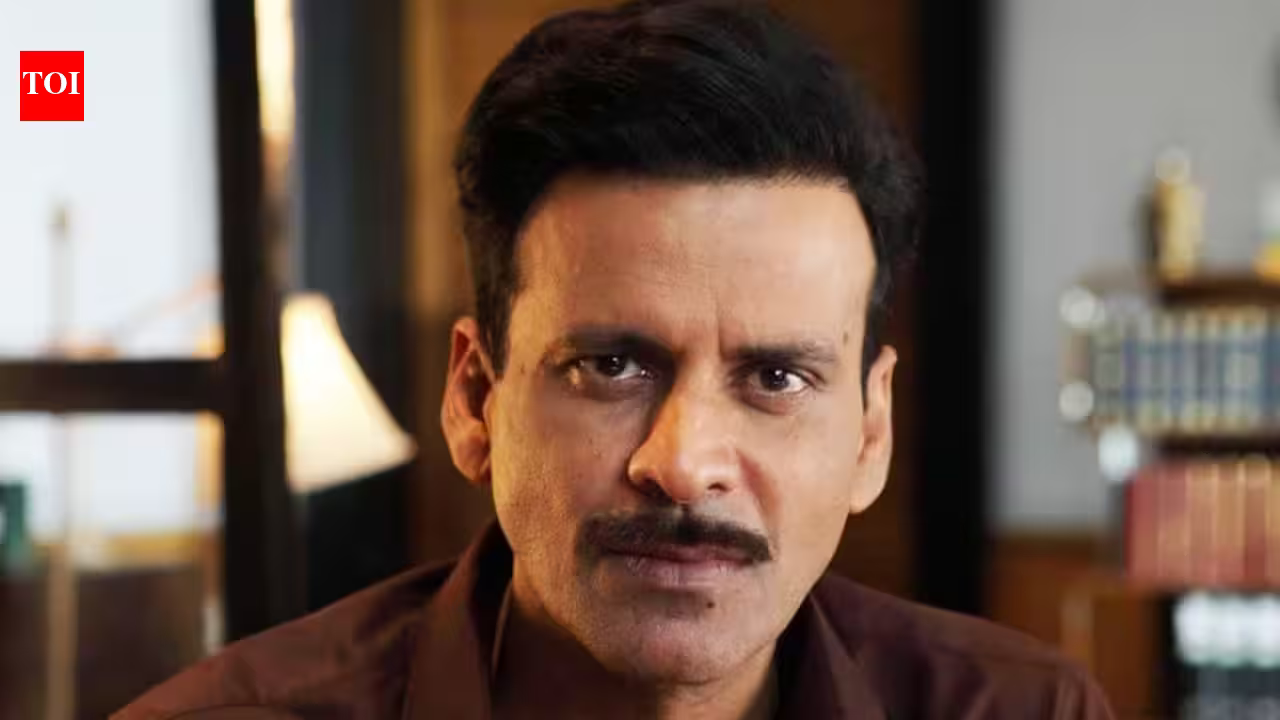
In an era where the digital town square has become a minefield for filmmakers, Manoj Bajpayee remains one of the few industry stalwarts standing firm. With a career defined by gritty realism and a refusal to play by the conventional rules of stardom, the actor has found himself at the epicenter of a new, unsettling trend in Indian cinema: the pre-emptive moral crusade.
The recent turbulence surrounding his film Gajab Raat—specifically the firestorm ignited by its original, provocative title Ghooskhor Pandat—has served as a chilling case study for how artistic intent is increasingly being suffocated by the whims of online outrage. In a candid conversation, Bajpayee pulled no punches, dissecting the fragility of the modern audience and the bureaucratic cowardice of the bodies meant to oversee the art they consume.
The Shrinking Room for Creative Dissent
The core of the controversy lies in the Central Board of Film Certification’s (CBFC) recent, heavy-handed advisory. By effectively declaring that no title or release date is set in stone until the final stamp of approval is handed down, the board has created a climate of instability. For a veteran like Bajpayee, this isn’t just about administrative procedure; it is a fundamental shift in the landscape of storytelling.
Bajpayee views the CBFC’s current trajectory as a reaction to a collective cultural fragility. “The CBFC is going to behave according to a few popular choices,” he noted, highlighting the systemic pressure the board faces. In his view, when the default state of the public is to be permanently offended, the censor board chooses the path of least resistance. By keeping release timelines and titles in a state of suspended animation, the board avoids immediate friction, effectively passing the bill for this convenience to the creators. “If a creative person’s needs have to be sacrificed, then so be it,” he added, his tone dripping with the weary resignation of an artist who has seen the goalposts moved one too many times. “They have to be all right in the eyes of their own people.”
The Performance of Outrage
One of the most insidious aspects of the Gajab Raat saga was the timeline of the backlash. Long before a single frame of the film had been screened, social media platforms were flooded with vitriol. This “outrage-first, watch-later” mentality has become the new normal in Indian entertainment, where the title of a film serves as a catalyst for a performative moral stance rather than an actual critique of the work.
Bajpayee, known for his tempered yet razor-sharp articulation, didn’t shy away from calling out the hypocrisy of these digital agitators. “Today, everybody has decided to be touchy or ready to be offended at any time,” he observed. He spoke pointedly about the personal toll—mentioning threats directed toward his family—that accompanied the digital mob’s anger over a title they hadn’t even interrogated in context. For Bajpayee, the eventual success of the film at the box office wasn’t just a win for the production; it was a vindication against the anonymity of the mob. “I am very sure that the people who created that kind of outrage will never feel sorry for saying those things… But I am so happy that the film’s success is a fitting answer.”
A Character Study in Moral Ambiguity
While the noise surrounding the film threatened to drown out its substance, Bajpayee’s performance remains the primary reason the film has resonated with audiences. In Gajab Raat, he portrays a character defined by a lack of traditional moral struggle. There is no grand redemption arc or weeping apology for his character’s sins—just a brief, fleeting moment of self-reflection required to maintain a facade of normalcy.
Bajpayee finds the honesty of such a character refreshing. He isn’t interested in playing the sanitized hero that censors and moralists demand. “He never claims he will turn over a new leaf the next morning,” Bajpayee explained, noting that the character’s “straightforward nature” was exactly what drew him to the role. It is this refusal to moralize that makes his performance so compelling, yet ironically, it is also what makes characters like this targets for those who demand that cinema must always mirror their own rigid ethical standards.
Beyond the Noise: A Plea for Artistic Sovereignty
As the dust settles on the Gajab Raat controversy, a larger question remains: at what point does the “convenience” of censorship destroy the very medium it claims to protect? Bajpayee’s comments suggest that we are nearing a tipping point where the fear of an advisory is beginning to dictate the screenplay before a camera is even rolled.
When the censor board acts as a barometer for social media sentiment rather than a curator of artistic standard, the cinema loses its ability to challenge, provoke, and ultimately, evolve. Bajpayee’s stance is a reminder that the true value of film lies in its ability to present uncomfortable truths. If that liberty is sacrificed on the altar of temporary, performative outrage, the casualty isn’t just the director’s vision—it is the maturity of the audience itself.
For Manoj Bajpayee, the success of the film has provided a brief respite from the barrage, but the underlying issue of creative autonomy remains unresolved. He has navigated the storm with the calm of a veteran, but his warning is clear: unless we stop prioritizing the sensitivities of the easily offended over the integrity of the artist, we are destined to witness a, well, lesser kind of cinema. In the end, the box office numbers might be his answer, but the cultural conversation he has started is far more significant.
Disclaimer: This content is auto-generated for informational purposes only.
Source: Read Original News