








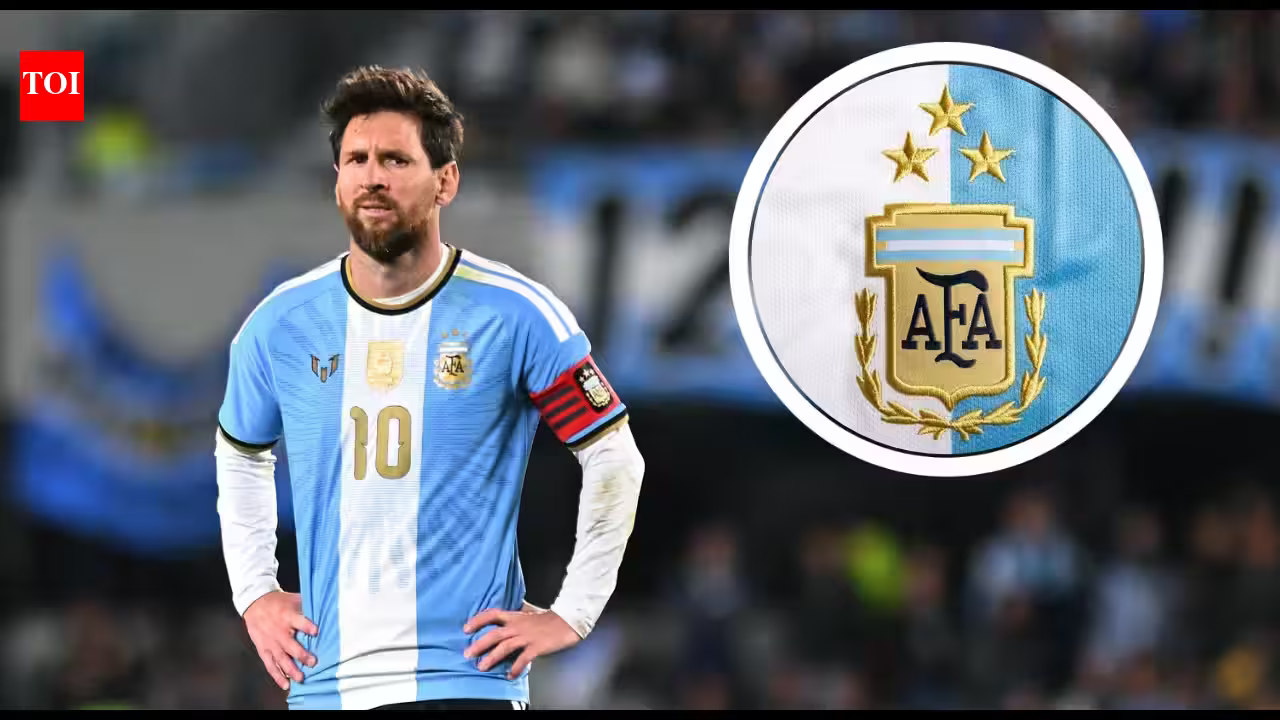
TENSIONS between Argentine football icon Lionel Messi and the Argentine Football Association (AFA) have reached a critical breaking point. In a move that signals a potential seismic shift in the commercial landscape of international football, the Inter Miami forward has reportedly instructed his legal team to prepare a cease-and-desist letter aimed at stripping the federation of its right to use his name, image, and likeness for profit.
The development, first reported by Argentine newspaper Clarín, marks a dramatic deterioration in a partnership that has served as the bedrock of Argentina’s global brand identity for the better part of two decades. Should this legal action proceed, it would effectively sever the commercial tether between the national team’s governing body and its greatest-ever player, creating a massive vacuum for an organization that has leaned heavily on the “Messi effect” to fuel its expansion into lucrative markets like China, the Middle East, and the United States.
Messi moves to distance himself from AFA
The proposed legal notice is not merely a symbolic gesture; it is a direct challenge to the AFA’s operational autonomy. By seeking to prevent the federation from utilizing photographs, audiovisual archives, and his personal name in marketing ventures, Messi is effectively pulling the plug on the AFA’s ability to monetize his stature.
Since the historic 2022 World Cup triumph in Qatar, the AFA has aggressively leveraged Messi’s status to court international partnerships. However, behind the scenes, the relationship has been marred by what sources describe as a long series of commercial improprieties. The Messi camp has allegedly grown increasingly frustrated with the AFA’s inability to respect existing sponsorship boundaries—notably the unauthorized use of his image alongside brands that conflict with his own personal commercial portfolio. One striking example, cited by Clarín, involved an AFA-partnered beer brand running campaigns that directly clashed with Messi’s high-profile association with global giant Michelob. For a brand as carefully curated as Messi’s, these unauthorized entanglements have reportedly become a recurring point of contention.
Corruption investigations and the VID Music Group lawsuit
While commercial friction provided the backdrop, the current legal climate surrounding AFA president Claudio “Chiqui” Tapia appears to be the primary catalyst for this sudden, cold separation. The AFA is currently navigating a treacherous landscape of financial scrutiny, with authorities in Buenos Aires investigating allegations of misappropriated funds dating back to 2023. Police raids on AFA facilities and the properties of high-ranking officials have cast a long, dark shadow over the federation’s governance.
While Messi himself remains untainted by the criminal corruption allegations, he has found himself increasingly entangled in the collateral damage of the federation’s legal woes. A notable flashpoint occurred in April 2026, when Messi and the AFA were named in a lawsuit by the Miami-based events promoter VID Music Group. The litigation stemmed from a breach-of-contract dispute regarding an international friendly against Venezuela, where Messi was absent from the pitch. The lawsuit, which leveled charges of negligent misrepresentation and tortious interference against both the player and the federation, served as a grim reminder to the Messi camp of the liabilities associated with their continued association with the AFA’s current administration.
The commercial reality post-Messi
The timing of this legal pivot could not be more precarious for the AFA. Following Messi’s retirement from international duty in September 2026, the federation has struggled to maintain its commercial momentum. The contrast in revenue and fan engagement between matches featuring the legend and those without him has been stark.
When the AFA organized a farewell match against Benin at the Estadio Monumental in October, demand was feverish, with tickets vanishing in 90 minutes and reselling at exorbitant prices. Yet, the reality of a “post-Messi” era arrived rapidly in November. Subsequent friendlies against Uruguay and Costa Rica saw significantly dampened enthusiasm. The optics of the Costa Rica fixture were particularly damaging, as stadium officials were forced to open the gates at half-time to bolster thin attendance numbers.
For the AFA, the loss of the right to use Messi’s image is not just a legal headache—it is a potential financial catastrophe. As the federation looks to maintain its brand relevance in a world that is losing its interest in an Argentina team without its captain, being stripped of the right to leverage his likeness would be a catastrophic blow to their bottom line.
While neither party has issued a formal statement on the impending legal action, the silence from both the Messi camp and the AFA building on Viamonte Street speaks volumes. The era of the seamless, lucrative partnership between the greatest player on the planet and the home of Argentine football is rapidly drawing to a close, replaced by a cold, calculated exercise in legal protection. For the AFA, the challenge is now clear: prove that the brand is bigger than the man, or face the prospect of a future defined by the vacuum left in his wake.
Disclaimer: This content is auto-generated for informational purposes only.
Source: Read Original News