








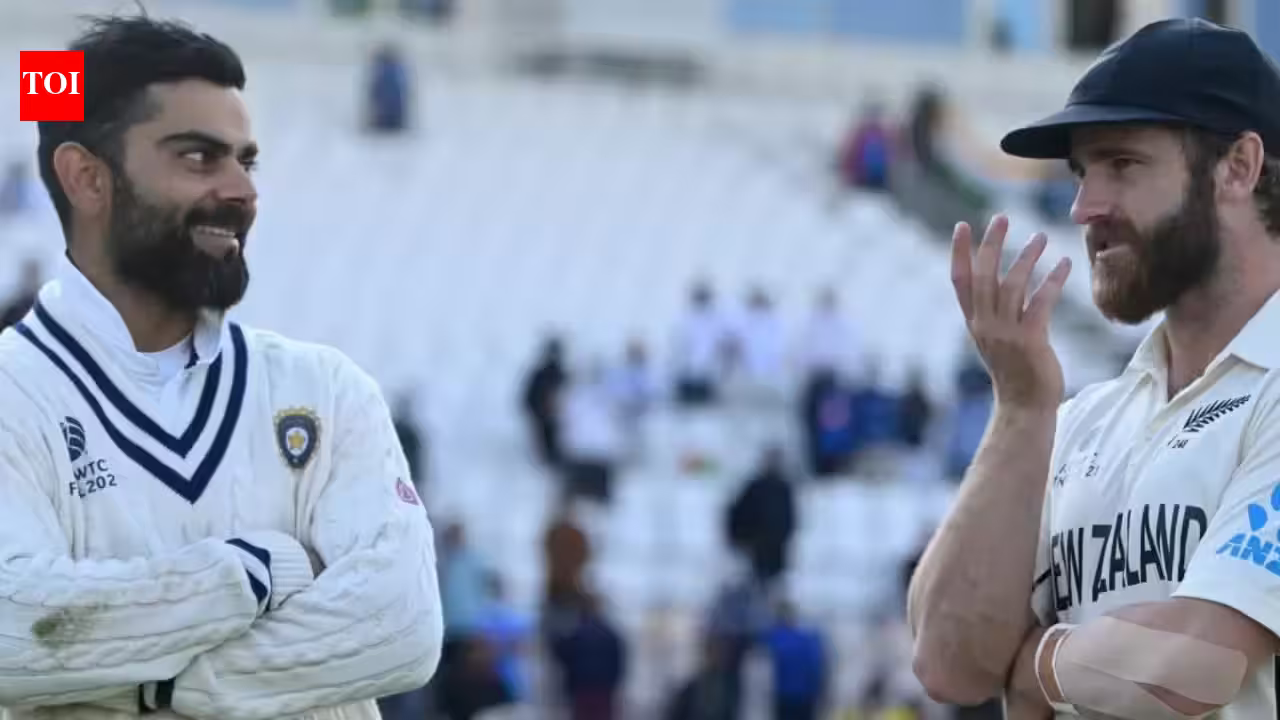
Reflecting on a career defined by grace, technical brilliance, and stoic leadership, former New Zealand captain Kane Williamson has pulled back the curtain on the deeply personal process behind his decision to retire from international cricket this past June. In a candid revelation that highlights the profound bond shared by modern cricket’s elite, Williamson identified Indian superstar Virat Kohli as a pivotal confidant whose counsel provided the final clarity he needed to walk away from the game.
The admission, made during a recent appearance on The ICC Review alongside former England captain Nasser Hussain, offers a rare glimpse into the fraternity that exists between the sport’s highest-profile athletes. As the dust settles on a 16-year international tenure that saw him establish himself as New Zealand’s greatest-ever Test batter, Williamson spoke of the mutual understanding he shares with the man often viewed as his opposite number in the global pantheon of batting greats.
A Bond Forged in the ‘Fab Four’
The professional rivalry between Williamson and Kohli dates back to their formative years in the 2008 Under-19 World Cup, where they emerged as the leading lights of their respective nations. Over the following decade-and-a-half, they stood alongside Steve Smith and Joe Root as the pillars of the so-called “Fab Four,” a quartet of batters who redefined consistency in the modern era.
However, as Williamson explained, their connection far exceeded the boundary ropes. Having both shouldered the burden of national captaincy, navigated the pressures of extreme public scrutiny, and balanced the personal milestones of starting families while constantly traveling, the two found a unique common ground.
“I have a great relationship with Virat, and we’ve chatted many times over the years and obviously played against each other for a long time,” Williamson told Hussain. When the weight of a 16-year career began to necessitate a major life decision, it was to this peer—someone who had recently navigated the complexities of stepping away from specific formats—that Williamson turned.
“Like Looking in the Mirror”
The decision to retire is rarely instantaneous; it is an accumulation of physical fatigue, mental strain, and changing personal priorities. For Williamson, the dialogue with Kohli acted as a definitive mirror. Kohli, having transitioned through his own phases of letting go of captaincy and shifting his focus within the national setup, offered an empathetic sounding board that few others could replicate.
“It just felt right to chat to someone that you knew had the very experience of stepping away from the game not all that long ago and fully understood where you’re at,” Williamson explained.
The weight of the conversation resonated deeply. For Williamson, the exchange was transformative. “It was just sort of like looking in the mirror, sharing those thoughts, fully understanding each other, and then getting off that call and knowing that it was time.”
That final realization marked the conclusion of a historic career that yielded 9,515 Test runs and a national-record 33 centuries. By seeking the perspective of a contemporary who understood the specific, singular pressures of international sport, Williamson found the peace of mind required to exit the stage on his own terms.
The Price of Elite Performance
The conversation between the two legends serves as a poignant reminder of the unseen costs of greatness. International cricket, in its current state, demands a relentless commitment that leaves little room for reprieve. Between the constant travel, the intersection of national and franchise commitments, and the heavy mantle of leadership, players are often left with a fractured sense of normalcy.
Williamson’s journey illustrates that while the stats are what remain in the history books, the human experience of managing a career of this magnitude is a grueling endurance test. Deciding when to leave that environment—when the drive for the next century or the next series win no longer outweighs the desire for time at home—is arguably the most difficult challenge a professional athlete faces.
Differing Paths Forward
While Williamson has chosen to step away, the landscape for his contemporaries remains fluid. Virat Kohli continues to be an active force in the ODI circuit, with his eyes firmly fixed on the 2027 World Cup. The Indian veteran has successfully tailored his career to focus on specific goals, showing that even among the legends, the path forward is rarely linear.
As for Williamson, his departure marks the end of an era for the Black Caps. Yet, the story of his final, decisive conversation with Kohli provides a poignant footnote to his legacy. It is a story of respect—one where, in the quietest moments before a life-changing decision, one of the game’s greatest gentlemen found his answer by looking into the eyes of his most intense rival.
Disclaimer: This content is auto-generated for informational purposes only.
Source: Read Original News