






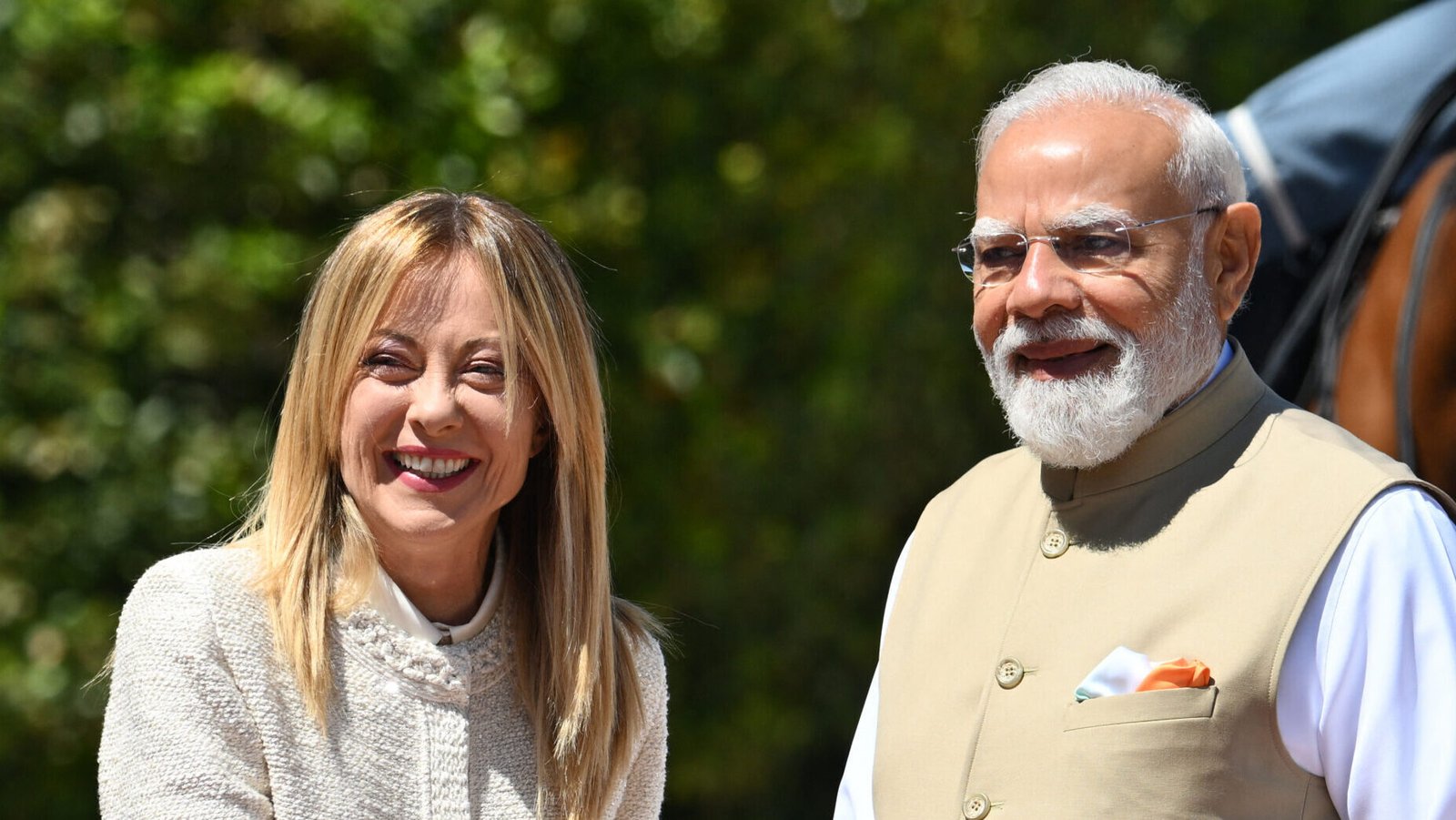
Indian Prime Minister Narendra Modi’s May 15-20 tour crossed five countries, but Rome delivered the real strategic payload. In Giorgia Valente’s full report for The Media Line, the Modi-Meloni meeting becomes more than a diplomatic photo op: It shows how India is knitting together trade, technology, defense, ports, maritime security, migration, and the India-Middle East-Europe Economic Corridor into one broad strategy for a more unstable world.
India and Italy used the visit to elevate ties to a Special Strategic Partnership and adopt a sweeping declaration covering supply chains, clean technologies, semiconductors, critical minerals, space, innovation, defense industry, and financial links. They also reaffirmed a goal of raising bilateral trade to €20 billion by 2029. Italy’s value to India is not accidental. It is a major European Union economy, a Mediterranean power, a NATO member, and one of the Western governments most interested in IMEC.
The story’s larger theme is India’s “polyalignment.” Rajat Ganguly, editor-in-chief of the Journal of Asian Security and International Affairs, tells The Media Line that India does not want to be trapped in one camp. New Delhi wants working ties with the US, Russia, Israel, Iran, the Gulf, and Europe—without allowing its partners’ quarrels to dictate Indian policy.
Valente also explores Italy’s side of the equation. Leo Goretti, associate dean at Rome Business School, describes India as a “swing country” between the democratic West and a wider group of states seeking to reshape the international order. For Prime Minister Giorgia Meloni, closer ties with India offer a way to make Italy look more proactive at a moment when Europe is rethinking its dependence on Washington.
The catch is geography. IMEC depends on stability across the Gulf, the eastern Mediterranean, Yemen, Iran, and the Strait of Hormuz—precisely the places where disruption is easiest. Read Valente’s full article because it explains why Rome mattered: India and Italy are not just tightening bilateral ties; they are testing whether new corridors, new partnerships, and strategic autonomy can survive an age of fragmentation.