







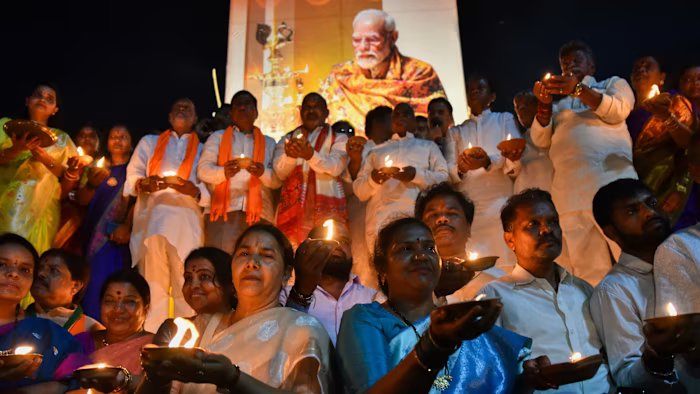
Political Polarization Hits Peak as Nationwide Celebrations Clash with Youth Discontent
The Indian political landscape is currently marked by a stark juxtaposition. Across the country, the ruling establishment has rolled out extensive, high-profile celebrations dedicated to the Prime Minister’s tenure and developmental vision. Yet, behind the spectacle of banners, cultural events, and government-led rallies, a simmering wave of unrest is gaining momentum, threatening to overshadow the narrative of success that the state is eager to project.
The Spectacle of Celebration
The ongoing festivities, organized by state machinery and party cadres, aim to highlight the government’s achievements in infrastructure, digitalization, and geopolitical influence. Major metropolitan hubs and smaller towns alike have been draped in promotional materials. These events are designed to bolster the image of a leader at the helm of a “rising India,” emphasizing stability and long-term governance. For the administration, this period is a vital opportunity to solidify its grassroots base ahead of forthcoming electoral cycles and to reinforce the cult of personality that has defined its current political strategy.
However, these celebrations are increasingly viewed by critics as a disconnect from the realities of the common citizen. As the government touts macro-economic growth figures, the ground reality for millions remains tied to concerns over rising living costs and the stagnation of household incomes.
The Rising Tide of Youth Discontent
While the state focuses on legacy-building, the most significant challenge to this celebratory narrative is emerging from the country’s youth. Recent weeks have witnessed a surge in protests at major universities and job centers, as students and young professionals express deep frustration over the current employment landscape.
For a demographic that was promised millions of new jobs, the reality of high unemployment rates has become a primary driver of political disillusionment. Agitations regarding the lack of secure, white-collar positions and the perceived systemic failures in public recruitment processes have turned campuses into hotspots of activism. “We are being asked to cheer for development while we struggle to find entry-level roles,” remarked a student activist from a central university, reflecting a sentiment shared by many who feel their aspirations are being sidelined by political optics.
A Nation at a Crossroads
The intersection of state-sponsored festivities and grassroots protest has created a tense atmosphere. In several cities, demonstrators have taken to the streets, braving a heavy police presence to voice their dissent against what they term “the erasure of real issues.” The government, for its part, has dismissed these protests as politically motivated, accusing the opposition of manufacturing unrest to derail the national momentum.
Analysts suggest that this friction highlights a growing ideological rift in India. While the official narrative remains fixated on nationalism and top-down infrastructure projects, a significant portion of the populace is prioritizing immediate socio-economic concerns. The current climate indicates that for the government to maintain its current trajectory, it must move beyond decorative celebrations and address the fundamental anxiety among the youth.
As the festivities continue, the question remains whether the government will acknowledge the mounting pressure or deepen its commitment to a narrative that appears increasingly out of sync with the needs of the emerging workforce. For now, the banners and loudspeakers continue to operate, but the underlying sound of discontent is becoming impossible to ignore.
Disclaimer: This content is auto-generated for informational purposes only.
Source: Read Original News