








Himalayan Disaster: Search for Over 1,400 Missing After Catastrophic Flooding
KATHMANDU/GYIRONG – Rescue efforts are intensifying across the rugged Himalayan terrain straddling Nepal and Tibet following a massive glacial collapse that unleashed a wave of mud and rock, triggering catastrophic flooding that has claimed at least 360 lives.
As of Thursday, authorities report that more than 1,400 people remain missing. The disaster, which devastated remote mountain villages and major trekking routes, has drawn an international response as rescue teams struggle against destroyed infrastructure and treacherous conditions.
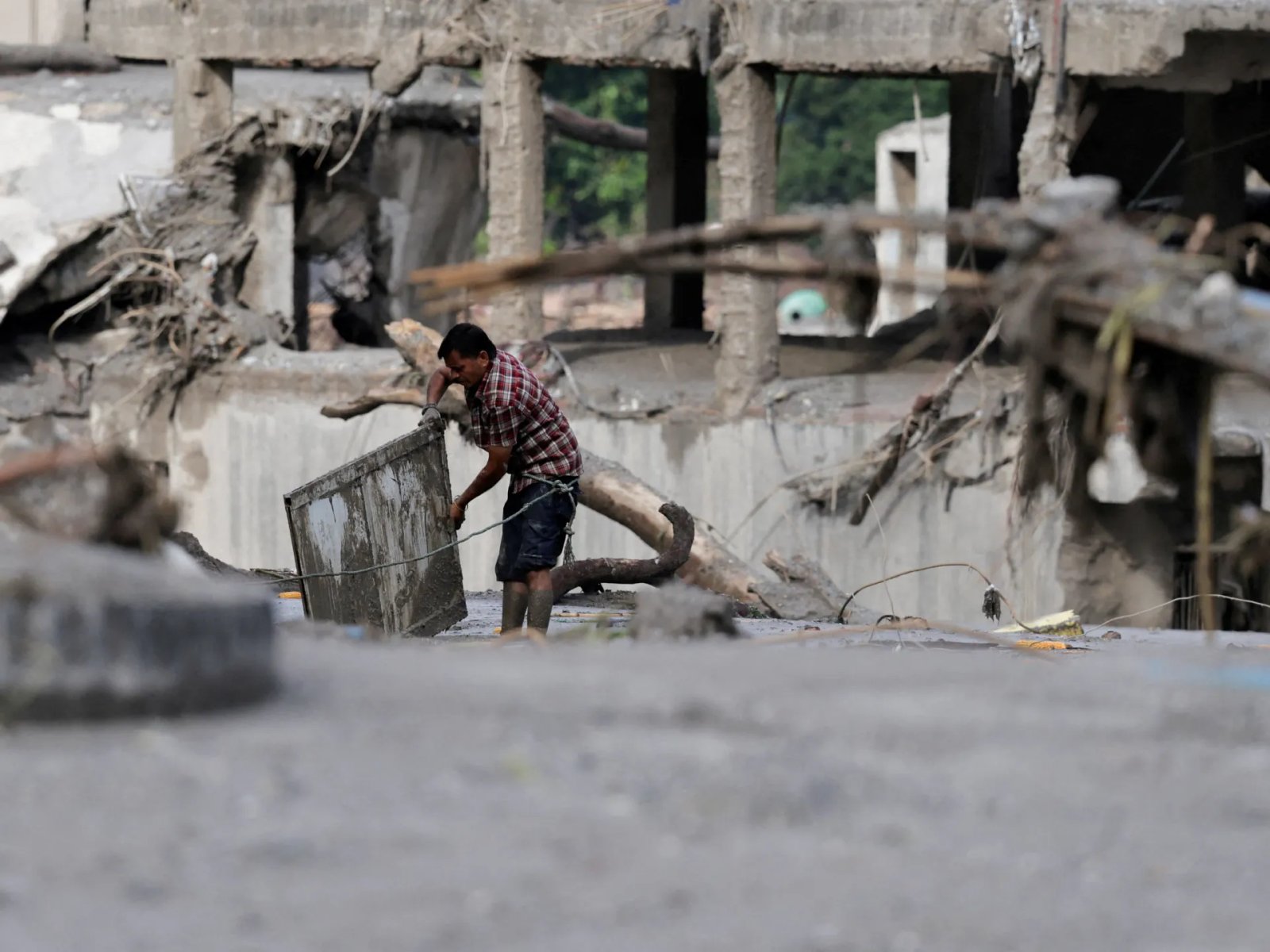
A Scene of Devastation
The disaster struck after a glacial section collapsed, sending a violent slurry of debris down the Lhende River. While initially misidentified as a seismic event, the US Geological Survey confirmed the tremors were the result of the sudden shift of ice and rock.
In Nepal, the death toll has reached 359, with 910 people still unaccounted for. Officials estimate that more than 500 of the missing are foreign nationals, including tourists from India, the United States, the United Kingdom, Australia, and Canada. In Tibet’s Gyirong county, at least three fatalities have been confirmed, with an additional 558 people missing—among them 260 foreigners.
“There is devastation everywhere we look,” said Tula Bahadur BK, a healthcare worker in the hard-hit Rasuwa district. “The settlements next to the river have been completely swept away.”
Massive Rescue Challenges
Search operations have been hampered by the total destruction of roads and bridges, forcing reliance on a mix of government and private helicopters to airlift survivors to safety. Medics at receiving hospitals report a harrowing influx of patients suffering from severe injuries, including crushed ribcages and chemical-like burns from the sediment-heavy floodwaters.
In Nepal, more than 5,000 army and police personnel are working to distribute emergency supplies, such as tents and medicine, provided by neighboring India. Concerns remain high as disaster authorities warn that a newly formed lake at the site of the collapse is at risk of bursting, potentially causing further downstream damage.
International Mobilization
Global leaders have pledged support as the scale of the tragedy becomes clear. The United Nations has allocated $2 million from its Global Emergency Fund to assist relief efforts, while the United States is dispatching a disaster response adviser alongside $500,000 in aid. Chinese Premier Li Qiang arrived in Tibet on Thursday to oversee emergency operations, highlighting the severity of the crisis.
A Climate Warning
Experts suggest this tragedy is an ominous indicator of the region’s increasing vulnerability to the climate crisis. Sunil Acharya, a climate and public policy specialist based in Kathmandu, described the flooding as a “brutal example” of the dangers faced by communities on the front lines of global warming.
“Nepal can only do so much to prevent such disasters,” Acharya noted. “International cooperation in limiting greenhouse gases… is very imperative.”
As search teams continue to wade through thick, dangerous mud, families of the missing—from Kathmandu to across the globe—await news, while the Nepalese government works to assess the full extent of the environmental and infrastructural ruin left in the wake of the deluge.