








Horses, pigs, sheep, and goats were found living in pens of thick mud, with no dry lying area

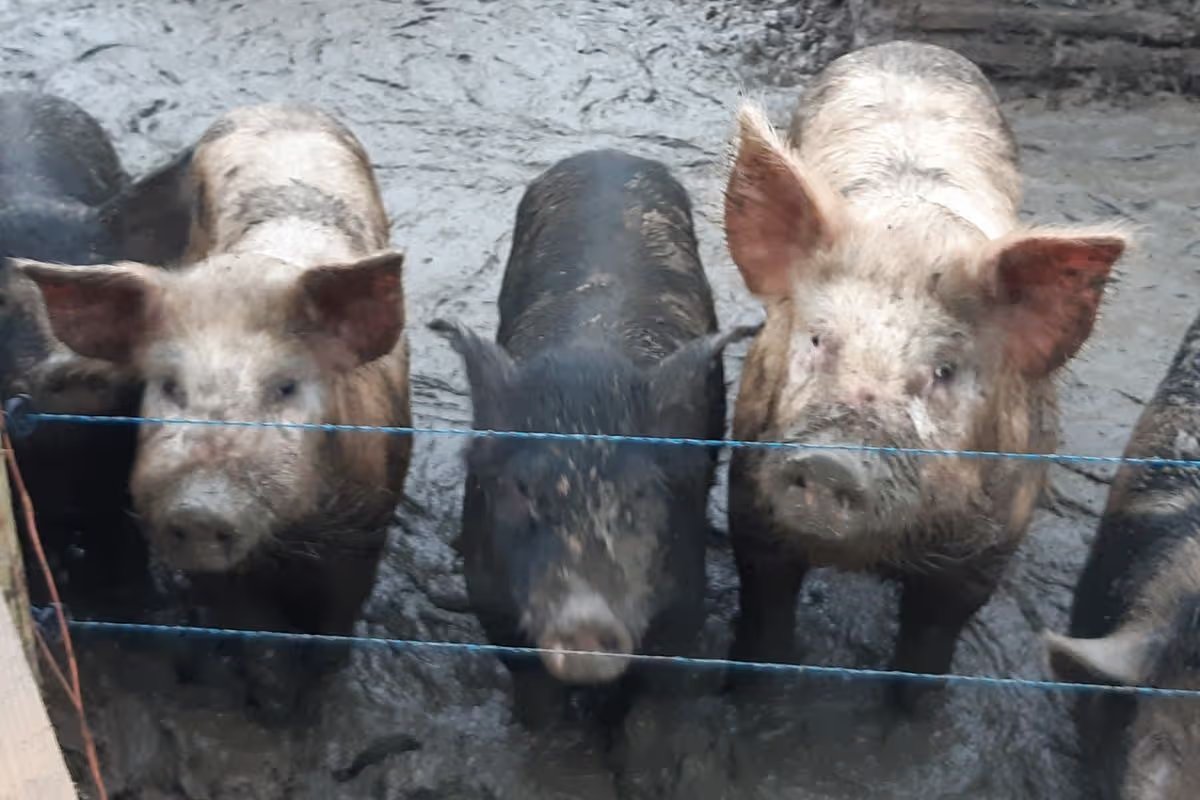
Pigs were found living in thick mud with no water(Image: Cambridgeshire County Council)
A mother and son who kept animals in “a hazardous environment” have been temporarily banned from keeping animals. Animals belonging to the pair, including horses, sheep, pigs, and goats were found living in muddy pens.
William Dickinson, 27, of no fixed abode, and his mother Tara Thorneycroft, 56, of Hilton St, Over, kept livestock at Greengage Farm in Impington. Officers from Trading Standards had visited the holding on nine separate occasions since April 2024. They gave advice to the pair on how better to meet the needs of the animals and poultry.
When the advice wasn’t followed, an Improvement Notice and Warning Notice were issued, but the welfare issues continued. On some of the inspection days, temperatures reached 28 and 30 degrees, and sheep, goats, pigs, and poultry had no water. Horses, donkeys, and sheep also lacked grazing.
Horses and donkeys were found to be living in a hazardous environment, and a horse was lame. In additon to this, pigs had been left with no bedding or wallow. Days before their first court hearing, a re-inspection took place and found horses, pigs, sheep, and goats in pens of thick mud with no dry lying area and no water.
Dickinson and Thorneycroft pleaded guilty to 19 offences contrary to the Animal Welfare Act 2006 and the Animal Health Act 1981. On May 6, Cambridge Magistrates’ Court disqualified the pair from owning and keeping animals other than cats and dogs for five years.
They were also imposed with a 12-month community order requiring them to carry out 150 hours of unpaid work. Each was ordered to pay £2,000 in costs.
Peter Gell, Head of Service for Cambridgeshire County Council’s Trading Standards team, said: “This case sends a clear message that we will not tolerate breaches of basic animal welfare standards in Cambridgeshire.
“Whilst it is accepted Mr Dickinson and Mrs Thorneycroft were new to livestock keeping, when bringing animals into their care they have a duty to research how to meet the basic needs of those animals and put all measures in place to ensure their welfare needs are met.
“Officers visited time and time again, providing them with extensive advice on what was required of them, and yet serious welfare breaches continued and animals in their care continued to suffer.
“Other enforcement sanctions did little to accelerate progress, so prosecution became the only remaining recourse to protect the animals on the small holding. The sentence today will ensure that no animals suffer in their care for the next 5 years.”