





The Limitations of Conventional Foldable Design
The modern smartphone market has reached a point of stagnation regarding physical form factors. Users are generally forced to choose between the standard “slab” design—which is often too large for convenient pocket storage—and the compact “flip” style foldable. While flip phones are highly portable, they suffer from a fundamental usability gap: the outer cover screen is usually too small or awkwardly shaped to function as anything more than a notification ticker. Consequently, a user is forced to open the device for virtually every task, nullifying the efficiency of a secondary display.
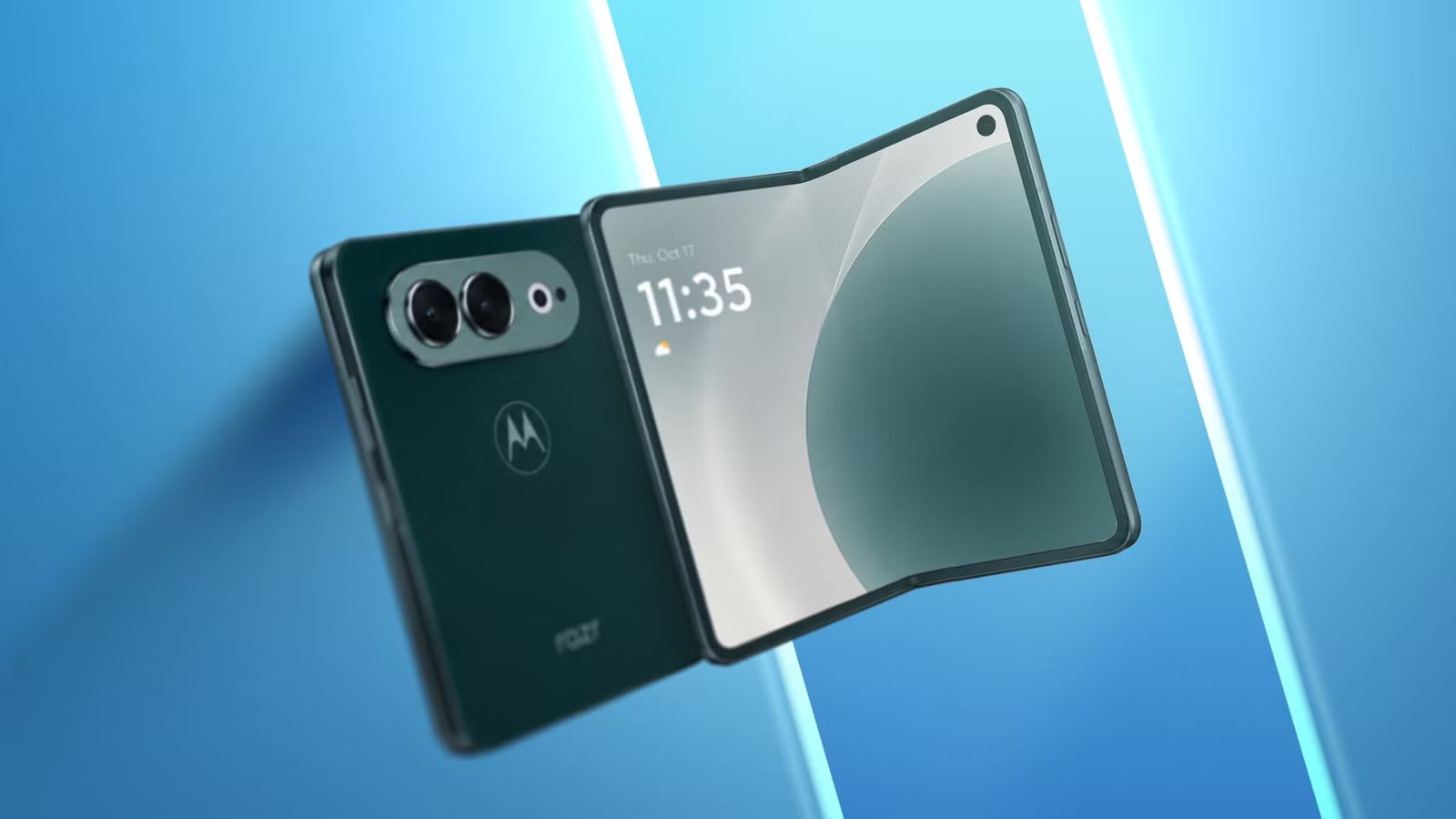
For many users, the ideal device sits in the middle ground: a phone that is compact enough to remain pocketable while closed, yet features a sufficiently functional cover screen to handle email, navigation, and messaging without needing to be unfolded. This is the precise niche Motorola aims to fill with its upcoming device, internally referred to as the “Razr Flex.”
Understanding the Razr Flex Form Factor
The Razr Flex represents a departure from both the traditional tall slab and the square-folding clamshell. Leaked specifications indicate that the device measures 110 x 76 x 12.6mm when closed. For comparison, this dimensions profile makes it significantly shorter than a standard flagship like the Google Pixel 10, yet it manages to avoid the excessive thickness often found in conventional flip devices.
The standout feature of this configuration is the reported 4.97-inch cover screen. Unlike the square panels found on current flip-style phones, the rumored 1736 x 1140 resolution suggests an aspect ratio closer to that of a standard smartphone. This change in shape is critical; it transforms the cover screen from a status indicator into a fully operational interface. A display of this size and resolution allows for legitimate text entry, map interaction, and email management, effectively allowing the user to bypass the unfolding process for the majority of daily interactions.
Internal Specifications and Display Performance
When fully opened, the device is expected to reveal a 6.92-inch OLED display. With a resolution of 2364 x 1728 and a 165Hz refresh rate, the internal panel is designed to provide a fluid, tablet-like experience. Because the device unfolds into a shape more square than the traditional 20:9 or 21:9 aspect ratios seen on standard slabs, media consumption and web browsing are expected to benefit from an expanded horizontal field of view.
While the device offers a large, high-refresh-rate screen, it does involve certain trade-offs. The reported weight is approximately 215 grams, which is slightly heavier than standard slab phones. Additionally, while reports vary regarding the specific internal chipset—with some sources pointing toward the Snapdragon 8 Gen 5 and others noting the Snapdragon 8 Elite Gen 5—it is clear that the internal hardware is aimed at the high-end market. The integration of 12GB of RAM and 256GB of base storage aligns the device with other premium foldables in the current landscape.
Trade-offs in Camera and Durability
Choosing a unique form factor requires accepting compromises in other hardware departments. The most notable adjustment for users moving from a flagship “pro” device is the camera configuration. The Razr Flex is expected to feature a 50MP main sensor and a 50MP ultrawide lens, omitting the high-zoom telephoto capabilities often found on top-tier slab devices like the Pixel 10 Pro XL. For casual photographers, this is likely an acceptable exchange for the improved portability and unique folding mechanics.
Regarding structural integrity, the device is rumored to carry IP48 and IP49 ingress protection ratings. While these ratings are competitive with, or even surpass, some existing foldables, they do not match the IP68 rating typically found on non-folding flagships. Users must accept that the complex mechanical hinge required for the folding display introduces a different risk profile compared to the sealed chassis of a rigid phone.
Market Positioning and Pricing Strategy
The success of the Razr Flex will likely hinge on its pricing. With a projected 12GB RAM configuration, keeping the MSRP at or below $1,499 is essential for competitive viability. If the price climbs toward the $1,899 range, it enters the territory of more mature, book-style foldables like the Galaxy Z Fold 8 or the larger Motorola Razr Fold, both of which offer larger internal screens and more established form factors.
If the $1,499 target is met, the Flex creates a compelling value proposition. It bridges the gap between the ultra-portable flip phones and the productivity-focused book-style foldables. For users who prioritize pocketability but refuse to sacrifice the functionality of a usable front display, this device represents a strategic middle-ground option. As mobile technology continues to experiment with flexible displays, the Razr Flex appears to be a calculated response to the feedback that current folding designs are either too cramped or too cumbersome.
Disclaimer: This content is auto-generated for informational purposes only.
Source: Read Original News