







‘No one I know wants to go spend their one wild and magical life being a shill for some billionaire tech asshole,” says Shannon, a character in Yesteryear, the buzzy new novel about a tradwife influencer by Caro Claire Burke. Shannon is a gen Z woman who is working as a producer for the protagonist, Natalie, a 32-year-old social media star seemingly with more than a little in common with some aspects of the real-life influencer Hannah Neeleman, who rose to fame documenting her life as a wife and mother on her ranch, Ballerina Farm.
“Just so they can breastfeed in a broom closet someday,” Natalie quips back.
“Exactly,” comes the younger woman’s response. “What they want is what you have, Natalie: freedom.”
Burke’s novel goes on to make the point that what might seem like freedom – ditching the 9-5, children frolicking in fields, organic meals made from scratch – is often an illusion. Natalie’s finances, for one, are run by her husband, and the support of her wealthy in-laws is contingent on her providing them with a “big American family”.
Yet it is undeniable that for millions of people the world of “tradwife” influencers is appealing – or, at the very least, fascinating. The two most famous influencers to have been dubbed “tradwives” (it’s worth noting that neither has embraced the term themselves), Neeleman and Nara Smith, have 10.4m and 4.8m Instagram followers respectively, and 10.5m and 12.4m on TikTok. Articles about them have gone viral, countless podcasts have been made and, more recently, a clutch of tradwife novels has been written. Yesteryear, which is being made into a film starring and produced by Anne Hathaway, joins The Trad Wife’s Secret by Liane Child, Trad Wife by Saratoga Schaefer and Everyone is Lying to You by Jo Piazza, while Sarah Langan’s Trad Wife will be published next month.
Alongside this proliferation in tradwife content, we have seen the values associated with these influencers becoming increasingly popular with young people: a recent global survey showed that gen Z males are twice as likely as baby boomers to believe wives should obey their husbands.
So, for a month, I took on the challenge of consuming as much tradwife-related content as possible: reading the novels, watching social media content, and even testing out some of Neeleman and Smith’s recipes, to try to get to the bottom of what exactly it is about tradwives and the culture surrounding them that is so compelling.
Week one
Prior to this month of seeking out all things tradwife in earnest, my algorithm had already served me a few of Smith’s videos, so I was familiar with her format: the 24-year-old model’s child/husband has been “craving” a particular foodstuff, she tells the viewer in a husky almost-whisper, so she whips up whatever that is: whether that means recreating the American ready meal Hamburger Helper or making her own bubblegum. All against the backdrop of her pristine kitchen, while dressed in couture. The whole thing, even down to the names of her children – Rumble Honey, Slim Easy, Whimsy Lou and Fawnie Golden – is so ostentatious that it’s almost camp, and if I didn’t know that Smith had married the Mormon model Lucky Blue Smith at and given birth to her first child the same year, I might have assumed that hers was a parody account.
But this month, I want to go deeper, so I start regularly checking Smith and Neeleman’s accounts. I learn that Neeleman is due to give birth to her ninth child any day, and I watch her float about in earth-toned knits while I’m on the packed train to work. In one particularly grabby video, she and her husband address the controversy around Ballerina Farm selling potentially unsafe raw milk. I sign up for Smith’s Instagram broadcast channel “Nara’s Notes” and get a shock when, while at the pub with friends, I get a notification from her and think for a second she has messaged me directly. She hasn’t, of course; it’s an update for me and thousands of others, sending us a picture of the 16 chicks she has just acquired, and asking us what she should name them.
As I watch, I can’t pretend I’m not enjoying myself at all – Smith’s highly stylised cooking tutorials in particular have a way of sucking me in. But, when the Neeleman’s ninth child, a daughter, is born on 4 March, I’m reminded of her comments from a viral 2024 interview with the Times, in which she admitted that she had an “amazing experience” when she was able to have an epidural during the birth of her third, eldest daughter Martha, while her husband was out of the room. The implication appeared to be that her husband might not have approved. It’s a reminder that while it’s easy to get sucked into the rainbows of it all, it’s when you zoom out that you start to think about what it might actually be like to live the way these people do.
Week two
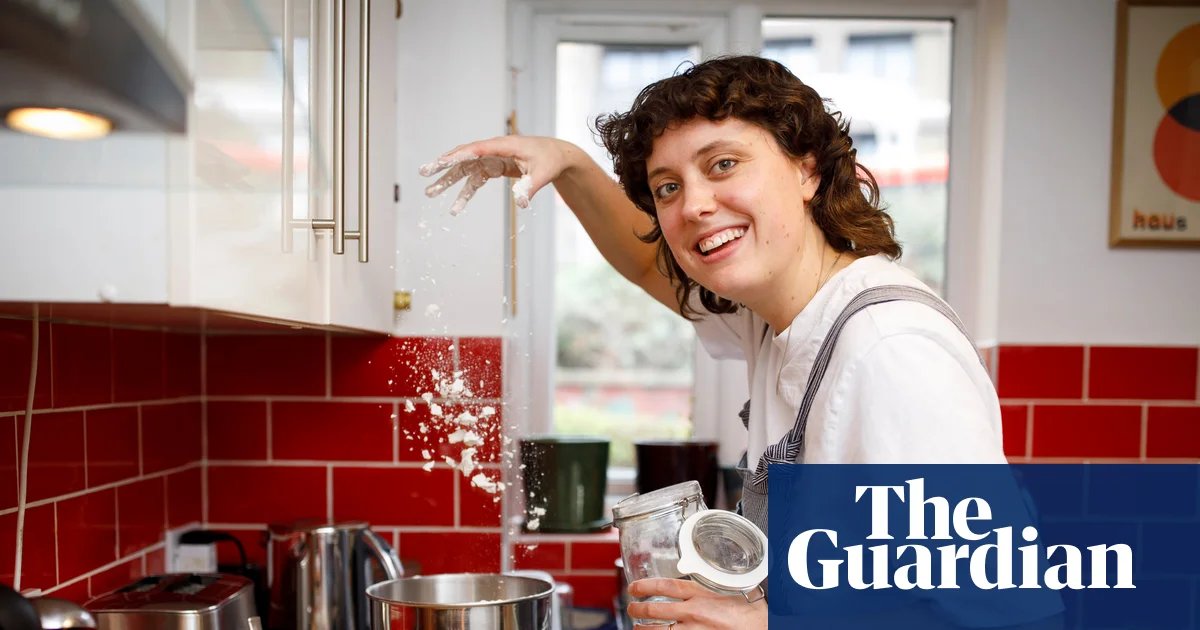
I don’t have heaps in common with your stereotypical tradwife – I work full-time, I’m married to a woman and I’m about to enter my 30s without having had a child (unless you count my beloved cat, Dolly). But I do happen to love cooking, which is a large part of what tradwife influencers do, so bread-baking seemed like a must. It is central to the homespun, old-fashioned cottagecore aesthetic that has become popular in recent years, and which is at the heart of all successful tradwife content. Making bread also appealed because I already know the basics. Focaccia is the bread I make the most often, and as both Neeleman and Smith’s focaccia recipes are available online, it seemed the obvious place to start.
Neeleman’s recipe, inspired by her recent visit to Ballymaloe Cookery School in Ireland, required a sourdough starter, which I didn’t have, and rather than waiting a week for a starter to develop, I went for Smith’s. Her recipe was more or less the same as the one I usually use (from the Bread Ahead Baking School cookbook, if you’re interested), the main point of difference being the addition of “Nara Smith’s Roasted Garlic Algae Cooking Club Oil” – like most influencers’ content, much of what Smith and Neeleman share online is encouraging you to buy the influencers’ own-branded ingredients. Unsurprisingly, my local Asda didn’t have Smith’s oil, so I subbed in regular olive oil and it worked beautifully.
Stretching and dimpling the dough with my hands, I was reminded how relaxing I find it to make bread, and in some ways I could see myself becoming the kind of person who bakes a weekly loaf. When days are hectic and meals a rushed afterthought, the slower pace of life promised by perfectly edited cooking videos seems appealing. While my dough was proving, I decided to have a go at one of Neeleman’s recipes, this time for raspberry jam. “We are a jam family,” Neeleman says on her Substack, The Goose Gazette. “One round of toast at breakfast can clear out the whole lot.”
Mimicking Neeleman’s stylishly rustic aesthetic as much as possible in my small London flat, I don a pair of dungarees not totally dissimilar to the ones she wears making the jam. Since I don’t have a brood of nine children, I scaled the recipe down substantially – perhaps too much, I realise when I am left with just half a jar. I also used regular granulated sugar rather than “raw organic sugar”, as Asda didn’t have that either. Even so, the small amount I do manage to create is pretty tasty, and the process is relatively easy.
While I’ve had fun slowing down, by spending time making something like jam, cough drops or, more controversially, sunscreen, tradwife influencers are signalling that they have time to do things most people are too busy to even consider – and free time, or at least the illusion of it, is a highly enviable resource. Langan, the author of the forthcoming novel Trad Wife, thinks many of us long not necessarily for the specifics of the lifestyle these influencers present, but the idea of having “the leisure and the economic resources to be able to connect to family, connect to friends, to help people when they need help”. Ultimately, the appeal is simple: “Wouldn’t we all like a day off?” she asks.
“Huge amounts of people feel like they’re overworked,” says Professor Heejung Chung, co-author of a 2025 study by King’s College London that suggested the appeal of the tradwife phenomenon is a reflection of modern pressures. “They’re on a hamster wheel of just firefighting everything, maybe work, maybe parenting, maybe social life. They feel like they’re never getting a rest.”
But can it really be possible that women with four-plus children actually have a slower pace of life? Another line from the Times interview comes to mind: “Neeleman sometimes gets so ill from exhaustion that she can’t get out of bed for a week.”
Plus, I remind myself, there’s more to life than good bread, because as much as I love baking, I also like seeing my friends, and going to the cinema, visiting art galleries, and swimming and reading and partying – and if that means supermarket loaves win most weeks, I’m broadly fine with that.
Week three
By now I have become very familiar with Neeleman’s social media content, and I notice how much of it focuses on the Ballerina Farm store, where her branded products are sold. So to one of the paradoxes of the most successful tradwife influencers: they earn a fortune from their social media careers, so they aren’t really traditional housewives at all. As Lizzie, the journalist protagonist of the tradwife thriller Everyone is Lying to You puts it after she meets a group of influencers at a “momfluencer” conference: “They’re all pushing this arcadian fantasy of homemaking and living off the land, the anti-girlbosses, when they’re all building capitalist empires.”
Most of the content I watch is, honestly, quite boring – I have to remind myself, though, not to feel too above those who get sucked in: I have been known to hoover up the objectively boring content of the UK-based influencer Molly-Mae Hague. Now that I think about it, the fashion influencer and former Love Island contestant, though not usually referred to as a tradwife, has overlap: she is a house-proud young mother who places great importance on family life on her social media. In fact, what you might call tradwife-coded content (think the Duchess of Sussex’s With Love, Meghan Netflix show or the cleaning influencer Mrs Hinch) seems to be far more common than it might have been, say, a decade ago, when feminism was in fashion and homemaking was broadly uncool.
That’s not to say that cooking and cleaning can’t be a positive choice, or that a stay-at-home mother can’t be a feminist, but I do worry about the message being disseminated. Is all this content inspiring people who don’t have the wealth or careers of Neeleman and Smith, who lack financial independence or an easy way out of their relationships should they turn sour, to become true “traditional wives”? And what of the culture that glorified tradwives in the first place: as Burke wrote in a recent piece for the Guardian, the term “was originally coined and circulated by men, born out of the dank, murky caves of online ‘incel’ forums, where anonymous usernames set forth the deeply unoriginal vision of a wife who would do everything the real women in their lives refused to do: manage the house, give birth to children, have sex on command, and most importantly, ask nothing in return”.
Week four
All month I’ve been steadily working my way through the five tradwife novels, but a number of long train journeys means that this week I really get stuck in.
All five of them contain some kind of mystery, with Schaefer’s and Langan’s drawing on supernatural elements to reflect the horror of misogyny, while Piazza’s reads as a fairly straightforward, but very entertaining, thriller. It makes sense for these books to have secrets at their core – aren’t many of us thinking, when we watch tradwives on social media, that their lives can’t actually be as picture-perfect as they seem?
Plus, of course, the structures run deeper. Yesteryear explores the relationship between the manosphere, the political agenda of the conservative right and the palatable nature of tradwife influencers’ content. Burke tells me that Neeleman’s Ballerina Farm account “grew millions of followers the summer that Roe v Wade fell, thanks to a number of conservative influencers starting to amplify the platform.” She balks “at the idea that: ‘women just want this’”, pointing out that “a lot of this stuff is very well funded”.
The problem, it becomes clear as I finish my tradwife-absorbed month, is that none of the fantasies sold to women as the thing that will make their lives better actually work for most people – not being a “girlboss” who expertly balances a high-flying career while also somehow never eating ultra-processed food and completing a 15-step skincare routine every morning, but not living on a farm with an ever-expanding brood of children and hens either.
Yet young people are still turning to the fantasy world of tradwives to see if it can offer them something better. “We haven’t done enough in most governments to address the general feeling of young people not being able to make ends meet with a job, not being able to get on the housing ladder, forget about having children,” says Chung.
In this landscape, she says, we have to be careful about normalising “even those innocuous little bits” of the tradwife aesthetic, down to “a dress or whatever”. Because in these markers of tradwifedom, “we are potentially signing to each other that we’re going back to these very old-fashioned norms, which we know were quite misogynistic in the way we treated women. And it’s giving the wrong impression.”
After my trip into tradwifedom, I agree with Shannon that no one I know wants to spend their one wild and magical life being a shill for some billionaire tech asshole. But they don’t want to be a shill for a misogynistic husband, either. So can we have a third option, please? And maybe that could become the hottest new trend?