







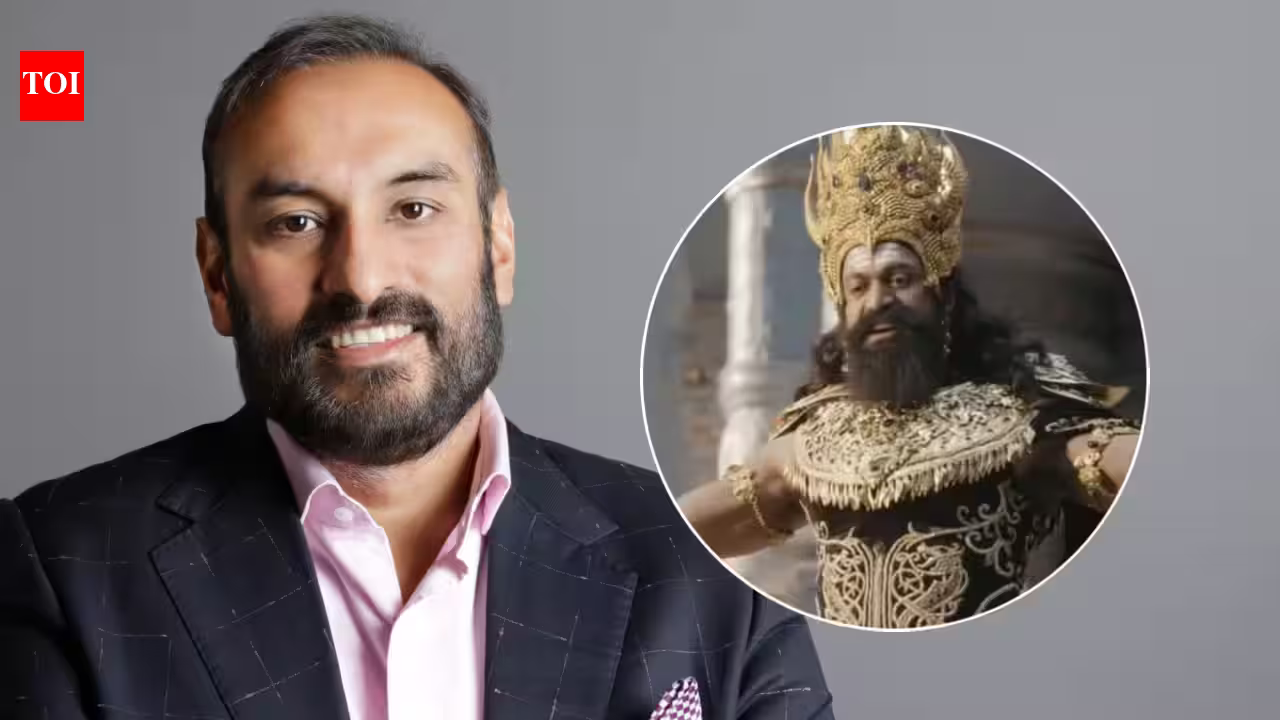
In the high-stakes world of modern Indian cinema, few projects have invited as much scrutiny—or commanded as much fascination—as Nitesh Tiwari’s Ramayana: Rise of a Legend. With the weight of cultural heritage on its shoulders and a staggering box office performance that has crossed the ₹1,790 crore mark globally, the film has become a touchstone for debate. At the heart of the latest controversy? The portrayal of the ten-headed demon king, Ravana, brought to life by the powerhouse performer Yash.
Critics and segments of the audience have raised eyebrows, questioning why the antagonist seems to occupy so much narrative space. Is the film inadvertently polishing the image of a villain? Producer Namit Malhotra, the architect behind this massive undertaking, is finally setting the record straight.
Challenging the Narrative: Is Ravana Being Glorified?
The primary contention voiced by some viewers is that the film gives too much screen time to the antagonist, potentially shifting the focus away from the divine journey of Lord Rama. During a candid interaction with DD News, Malhotra was quick to dismiss the notion that the production is attempting to rehabilitate Ravana’s image.
According to Malhotra, there is a fundamental misunderstanding occurring in the theater seats. He argues that audiences are conflating their genuine, star-struck admiration for Yash’s magnetic screen presence with an endorsement of the character’s moral failures.
“We have not shown Ravana as a good person,” Malhotra emphasized. “What people have seen is Yash, who is a superstar, and they have liked his performance. Ravana did nothing good in the entire film. He caused destruction and spread so much terror that Lord Rama had to come and end it.” For the producer, the villain’s charisma is a testament to the actor’s craft, not a creative decision to paint a monster as a saint.
From Dashanand to Demon: Establishing the Scale of Evil
One of the most ambitious aspects of Ramayana is its decision to delve into the origins of its characters. Rather than presenting a static, two-dimensional villain, the filmmakers chose to explore the evolution of the man behind the myth.
Malhotra explained that the narrative traces Ravana’s journey from his childhood—when he was known as Dashanand—to his eventual descent into becoming the dreaded king of Lanka. This origin story, the producer insists, is not meant to garner sympathy, but to elevate the stakes.
“We want people to understand that we have made a universal film. There is no praise for Ravana. We have only shown his journey, from when he was a child to how he became Ravana,” Malhotra stated. He posits that a hero’s victory is only as significant as the threat they face. By humanizing the path that led to his villainy, the film clarifies why Lord Rama’s ultimate triumph was a necessity for the restoration of dharma.
The Theological Puzzle of Divine Boons
Perhaps the most thought-provoking defense put forward by Malhotra centers on a theological detail often overlooked in casual retellings: the boons granted to Ravana by Lord Brahma and Lord Shiva.
Malhotra challenges the audience to look deeper into the scriptural context. “The most important question that no one has asked is this: if Ravana was so bad, why did Brahma and Lord Shiva grant him boons? If God himself gave him those boons, he must have done something to receive them.”
By posing this, Malhotra is not suggesting that Ravana was virtuous; rather, he is highlighting the complexity of the ancient texts themselves. In the film’s universe, acknowledging that Ravana possessed great capabilities—earned through penance—is essential to portraying him as a worthy adversary. It is a nuanced approach that seeks to honor the layers of the epic rather than simplifying it into a sterile “good versus evil” fable.
A Commercial Colossus
Regardless of the debates surrounding the narrative choices, the public response has been unequivocal. Ramayana: Part 1 has shattered expectations, recording a domestic net of over ₹1,000 crore, with a total worldwide gross of nearly ₹1,800 crore. These numbers confirm that, controversies aside, the audience is deeply invested in this retelling.
The film’s success is also a result of a sprawling, A-list ensemble. With Ranbir Kapoor delivering a restrained yet powerful performance as Lord Rama, Sai Pallavi as the graceful Sita, and Sunny Deol lending gravitas as Lord Hanuman, the film is anchored by heavyweights. Alongside them, actors like Lara Dutta, Vivek Oberoi, and Arun Govil round out an ambitious production that is already being lauded for its technical scale.
Looking Ahead: The Second Chapter
As it stands, the first installment serves as the setup for the final confrontation, focusing on Rama’s journey and the gathering storm of the conflict. With the groundwork laid, anticipation for the second part is at an all-time high.
Namit Malhotra’s defense serves as a reminder that adapting a mythological epic is a tightrope walk. To make the story resonate with modern audiences, one must walk the line between reverence and realism. Whether one agrees with the artistic choices or not, the sheer intensity of the conversation surrounding the film proves that the Ramayana remains as relevant and provocative today as it has ever been. As we wait for the final chapter, one thing is certain: the conversation around this “Rise of a Legend” is far from over.
Disclaimer: This content is auto-generated for informational purposes only.
Source: Read Original News