



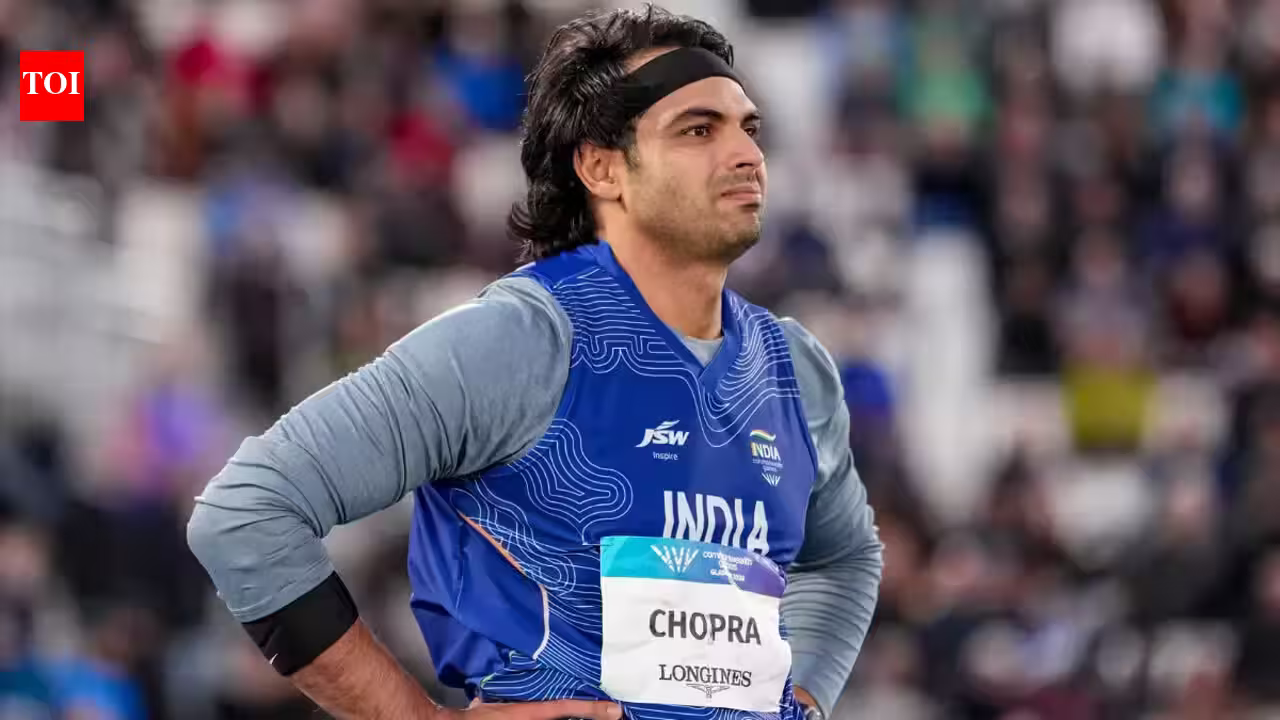


CRITICAL SETBACKS are the crucible in which champions are forged, and for India’s golden boy Neeraj Chopra, the crucible has rarely felt hotter than it did this past season. The javelin sensation, whose name is synonymous with Indian sporting history, recently opened up about the grueling mental and physical reality of being forced to the sidelines just as his rhythm was hitting a crescendo.
Chopra, who etched his name into immortality by securing India’s first-ever Olympic athletics gold in Tokyo and following it with a stellar silver in Paris, found his 2026 campaign abruptly derailed by a ligament injury. The setback didn’t just sideline him; it robbed the sporting world of seeing the two-time Olympic medallist vie for a historic third consecutive Asian Games gold medal.
The Crushing Weight of Timing
The injury occurred in the most ironic of fashions: during a training session immediately following an 88.05m season-best performance at the Lausanne Diamond League. That throw was a statement—a declaration that the old Neeraj, the force of nature who commands the world stage with effortless power and consistency, was back at his peak.
“When I felt that I was finally back to being the old Neeraj again, with the same enthusiasm and consistency, I threw 88 metres,” Chopra shared during a candid appearance on the Khelo Bharat Podcast. “Then, just a day later, I got injured again during training. The first few minutes were very difficult for me. I couldn’t process what was happening.”
For an athlete who has spent the entirety of the calendar year in a relentless cycle of training and travel, the timing felt like a cruel joke. Chopra had sacrificed time with his family, pushed his body to its absolute limits, and navigated a high-pressure competition circuit with clinical precision. To find himself back at square one, battling the silence of a rehab room instead of the roar of an Asian Games crowd, was a reality he struggled to reconcile.
Navigating the Emotional Labyrinth
Many athletes are conditioned to adopt a facade of “it’s fine” or to suppress the pain of disappointment behind a wall of stoicism. Chopra, however, chose a different path—one of radical honesty. He didn’t rush to move on; he sat with the weight of the frustration.
“I felt bad, and I allowed myself to go through that process,” he admitted. “I didn’t fight with myself and say, ‘Forget it, it’s okay.’ I felt really bad initially. I kept thinking that after doing so much, I had ended up back at the same place where I was at the beginning of the year.”
This acknowledgment is, perhaps, the most vital component of his resilience. By refusing to dismiss his disappointment, Chopra ensured that he could move through the grief of the lost season rather than letting it fester beneath the surface. It is a psychological approach that separates the elite from the legendary—the ability to validate one’s own struggle before pivoting back to the objective.
The Art of Acceptance
“I think the best thing for an athlete when an injury happens is to accept it as quickly as possible,” Chopra remarked. “So that’s what I did. I thought, ‘It has happened. Now let’s work on how to make a comeback.'”
This perspective isn’t merely a platitude; it is a battle-hardened philosophy. Chopra noted that while this particular injury stung, it is an unfortunate, familiar companion in the life of a high-performance athlete. Having dealt with the unpredictability of physical setbacks throughout his career, he has learned that the time spent ruminating on “what could have been” is time stolen from recovery.
He pointed out that he often wonders if, without the recurring injuries, his career might have reached even loftier heights. Yet, he is quick to pivot back to the present. The focus now is strictly on the future—a future where he isn’t looking at the missed podiums of the Asian Games or the Diamond League Final, but rather at the blank canvas of next season.
Turning the Page to Next Season
For a competitor of Chopra’s caliber, the hunger to compete is a fire that never truly extinguishes. Despite the disappointment of 2026, the transition from disappointment to determination is already complete. He views the missed competitions not as a final chapter, but as a necessary detour.
“The timing was unfortunate because I had some very important competitions coming up,” Chopra reflected. “But then I thought, maybe this was meant to happen. It has happened, so now let’s focus on the competitions coming next year.”
As he enters his rehabilitation phase, the Indian sporting community watches with bated breath. If the past is any indication—from his Tokyo triumph to his relentless pursuit of excellence in Paris—Chopra’s ability to return from the brink is unmatched. He has proven that his strength lies not just in the speed of his arm or the distance of his throw, but in the iron-clad fortitude of his mind.
While the Asian Games might have missed out on their star attraction this year, the message from the man himself is clear: Neeraj Chopra is not finished. He is merely recharging, processing the lessons of a difficult year, and readying himself for the next inevitable leap onto the top step of the podium. The comeback, as they say, is always stronger than the setback.
Disclaimer: This content is auto-generated for informational purposes only.
Source: Read Original News