









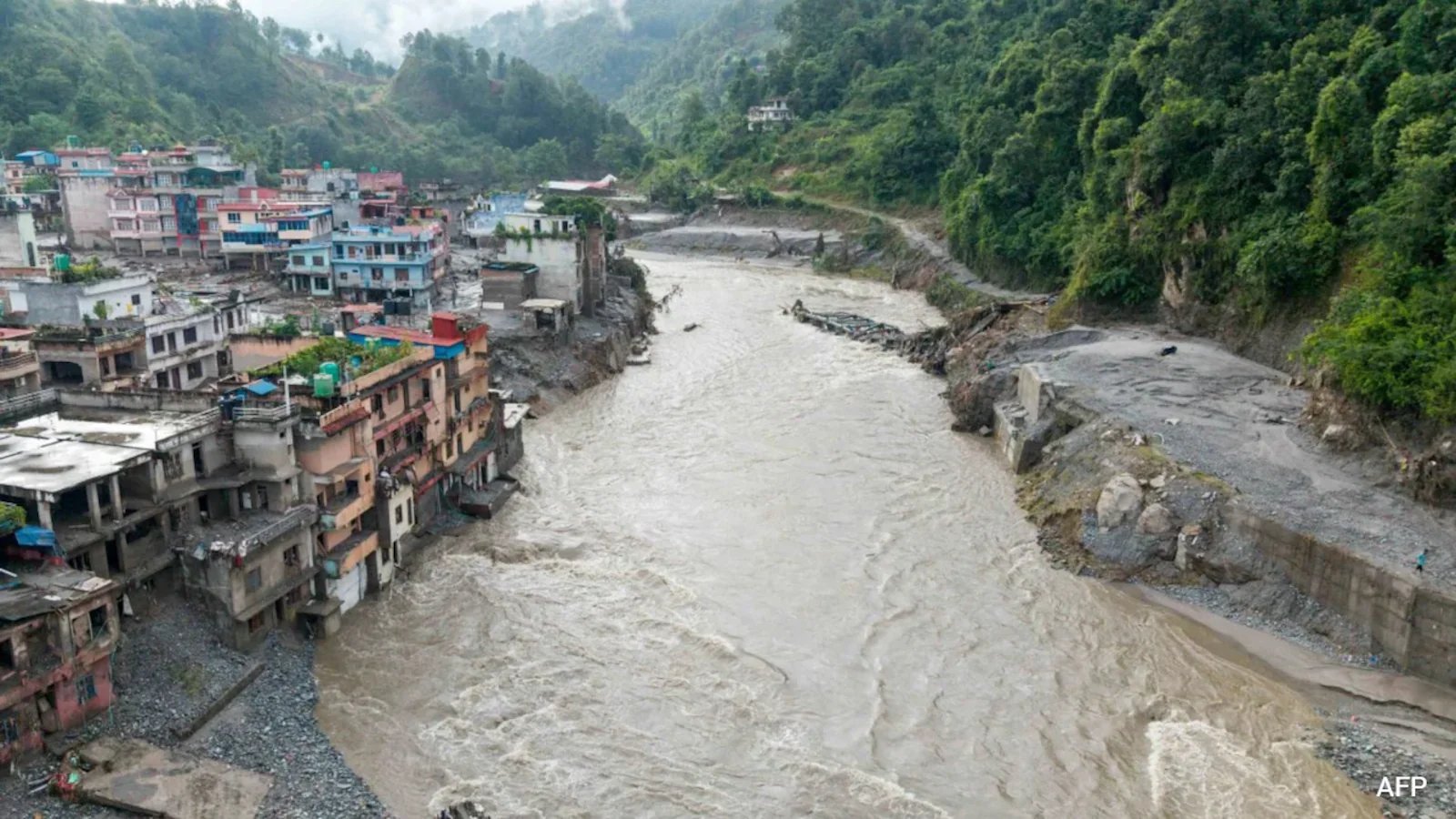
Catastrophe in the Himalayas: How Melting Glaciers Triggered a Deadly Disaster in Nepal
KATHMANDU – On August 26, 2026, the high-altitude landscapes of Nepal’s Rasuwa district and the Tibet border region became the stage for a catastrophic humanitarian disaster. The event served as a stark reminder of the volatile relationship between accelerating climate change and the structural instability of the world’s highest mountain ranges.
The tragedy began at 8:37 am local time, when a massive ice-rock avalanche detached from a cliff at an altitude of nearly 5,200 meters. According to data from the US Geological Survey (USGS), the collapse generated a seismic signal equivalent to a 5.2-magnitude earthquake. The cascading ice and debris slammed into the Lhende Khola catchment, creating a temporary dam that eventually breached, unleashing a torrent of water, mud, and boulders through the Bhote Koshi and Trishuli river systems.
Settlements including Timure and Syabrubesi were devastated by the surge, resulting in hundreds of fatalities, a significant number of missing persons, and widespread destruction of critical downstream hydropower infrastructure.
The Perfect Storm of Instability
Experts from the International Centre for Integrated Mountain Development (ICIMOD) and Kathmandu University have identified a dangerous convergence of tectonic activity and environmental shifts. Nepal sits at a high-pressure point where the Indian tectonic plate collides with the Eurasian plate, moving at approximately 20 mm per year. When this geological instability is paired with rapid atmospheric warming, mountain basins become exceptionally volatile.
Dr. Manish Mehta, a senior glaciologist at the Wadia Institute of Himalayan Geology (WIHG), explains that the disaster is part of a larger trend of glacial retreat, which leaves behind vast quantities of loose debris known as moraine.
“Rising temperatures are altering precipitation patterns,” Dr. Mehta noted. “Snowfall zones are shrinking while rainfall zones are expanding, leading to significant rain in high-altitude areas. This loose moraine shifts downslope, forming lakes. Eventually, the buildup of hydrostatic pressure causes these lakes to breach, wreaking havoc on the areas below.”
Drivers of the Crisis
The disaster has highlighted several critical factors accelerating mountain decay:
- Elevation-Dependent Warming (EDW): High-altitude summits are warming significantly faster than lower plains due to localized thermal radiation and the loss of snow reflectivity.
- The Shifting Freezing Line: As the atmospheric freezing line migrates upward, precipitation that was once deposited as stable snow now falls as liquid rain, accelerating the thermal melt of ice masses.
- Structural Mass Deficits: As glaciers recede, the valley walls lose the “buttressing” support once provided by dense ice, leaving steep rock faces prone to collapse.
A Growing Threat to Himalayan Communities
Researchers are drawing parallels between the Nepal deluge and previous disasters, such as the 2013 Kedarnath tragedy and the 2021 Raini flash flood in Uttarakhand.
The primary concern now lies in areas above 2,800 meters, where unanchored moraine acts as a “force multiplier.” When floodwaters carve through these deposits, they transform from simple water surges into high-density, destructive debris torrents capable of wiping out everything in their path. As Himalayan glaciers continue to shed mass, millions of tons of unstable rock and silt remain a looming threat.
In response, scientists are emphasizing that the development of real-time, cross-border early-warning systems is no longer a luxury, but a vital necessity for the survival of mountain communities across the region.