








Catastrophic Glacier Collapse Sparks Massive Floods Along Nepal-Tibet Border; Nearly 1,500 Missing
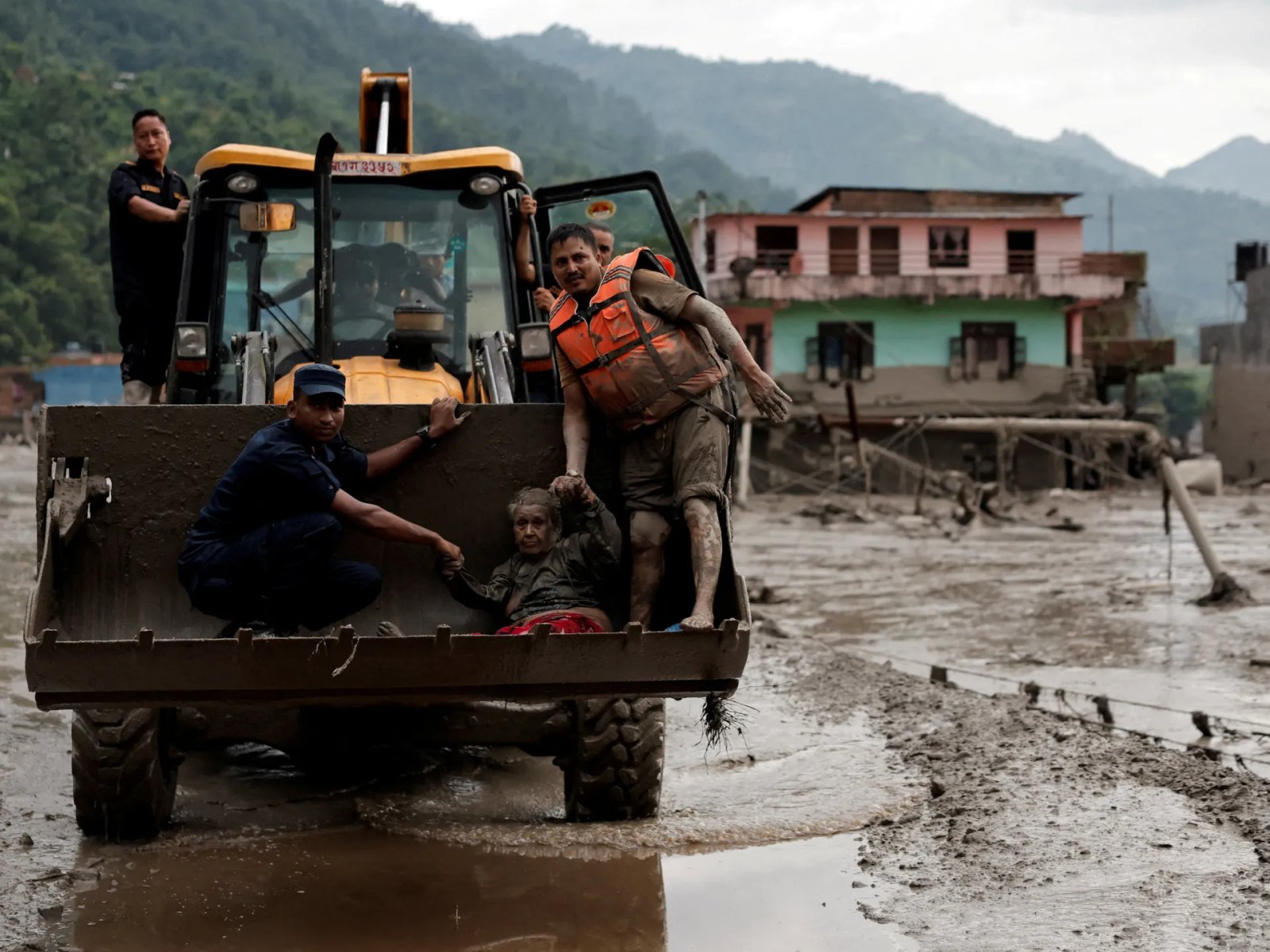
A devastating natural disaster has unfolded along the rugged border of Nepal and China’s Tibet, where the partial collapse of a Himalayan glacier triggered a series of catastrophic flash floods and mudslides. As of Wednesday, at least 270 people have been confirmed dead, with search-and-rescue teams scrambling to locate nearly 1,500 individuals currently listed as missing across the region.
A Sudden Disaster
The crisis began at approximately 8:40 a.m. local time on Wednesday. Satellite imagery indicates that a significant portion of a glacier—situated at an altitude of 5,200 meters (17,000 feet)—broke away, plummeting 1,200 meters into the valley below. The resulting ice-rock avalanche struck the Lhende River, creating a temporary dam. When this natural barrier failed, it unleashed a powerful surge of water, sediment, and debris that tore through the Lhende Khola river valley, obliterating critical infrastructure, including 19 bridges and 40 kilometers of roads.
Initial reports of a 4.4 magnitude earthquake were later corrected by the United States Geological Survey (USGS). Experts clarified that the seismic signal recorded was not tectonic in origin, but rather the result of the massive landslide itself, which registered at a magnitude of 5.2.
An International Humanitarian Crisis
The scale of the missing persons report is staggering. In Nepal, 826 people are unaccounted for, nearly 600 of whom are foreign tourists. Across the border in Tibet’s Gyirong County, authorities have reported 558 missing, including 260 foreign nationals. Many of these individuals were pilgrims en route to the sacred Mount Kailash.
“I saw around nine trucks being swept away by the floods, including people. It’s a heartbreaking incident,” said Manoj Mishra, a local witness.
The international community has moved quickly to assist. India has dispatched aircraft laden with emergency supplies, while the IFRC has pledged 1.2 million Swiss francs. The United Nations and the European Union have also mobilized support, with the latter activating the Copernicus Emergency Management Service to assist in damage assessment through satellite mapping.
A Warming Frontier
While scientists are still investigating the specific triggers for the glacier’s collapse, the disaster highlights the growing risks in the Hindu Kush Himalaya region. Glacial loss in this area has accelerated significantly, with ice volume melting 65 percent faster in the last decade than in the one prior. Rising temperatures have left mountain slopes increasingly unstable, creating a dangerous landscape for those living and traveling in the shadows of these giants.
As authorities work to understand the full scope of the Nepal-Tibet floods, the situation remains critical. Over 5,000 Nepalese rescue personnel are currently deployed, though high water levels and heavy, thick sediment continue to hamper efforts to reach the most isolated communities. Officials have warned that, as rescue teams eventually access cut-off zones, the confirmed death toll is expected to rise.