








The Hardware Bottleneck: Memory Shortages and Manufacturing Costs
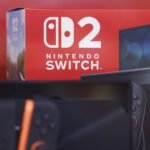
Nintendo’s recent fiscal performance reveals a challenging reality for the hardware sector, specifically regarding the supply chain pressures affecting the Switch 2. The company reported a significant 41% year-over-year decline in console shipments during the quarter ending September 30, with only 2.67 million units reaching consumers. This contraction is largely attributed to the scarcity of high-speed memory components. As demand for sophisticated NAND flash and specialized DRAM increases across the broader electronics industry—driven largely by the proliferation of artificial intelligence hardware—Nintendo has found itself competing for limited manufacturing capacity.
The resulting price hikes implemented across the United States, Canada, and Japan serve as a direct response to these escalated production costs. By passing a portion of the component inflation onto the consumer, Nintendo managed to protect its margins, but the trade-off has been a measurable softening in demand. This scenario illustrates a classic economic tension in consumer electronics: when the cost of silicon drives the retail price beyond a psychological threshold for the average gamer, unit volume tends to suffer, even for established brands with strong intellectual property.
Revenue and Profitability Discrepancies
Financial data for the second quarter underscores the difficulty of navigating a high-cost environment. Nintendo reported revenue of 448.2 billion yen, trailing analyst expectations of approximately 481.37 billion yen. Net profit reached 73.5 billion yen, missing the forecasted 82.16 billion yen target. This performance gap suggests that while price increases were intended to stabilize income, the resulting drop in hardware sales volume was steeper than what internal models had anticipated.
Despite this dip, Nintendo has maintained its ambitious sales target of 16.5 million units for the fiscal year ending in March 2027. Maintaining this forecast despite poor quarterly data indicates that leadership expects a significant pivot in consumer behavior during the upcoming holiday season and the subsequent quarter. The challenge remains maintaining this projection while the broader tech industry continues to grapple with volatile pricing in the semiconductor market.
The Role of Content in Hardware Adoption
In the gaming console industry, hardware is rarely the sole driver of revenue; it is the software ecosystem that provides the necessary justification for an expensive purchase. Current market analysis suggests that the Switch 2 is experiencing a temporary lull in “system-seller” software, which complicates the task of moving units at higher price points. While niche titles like “Tomodachi Life: Living the Dream” and the emergent success of “Pokémon Pokopia” have maintained player engagement, they have not yet achieved the scale required to drive a surge in hardware acquisition.
Investors are now looking toward the remake of “The Legend of Zelda: Ocarina of Time” as a critical catalyst. As one of the most celebrated titles in the history of the medium, the remake is positioned as a bridge between nostalgia and modern hardware capability. However, industry analysts remain cautious, suggesting that relying on legacy content to bolster modern hardware sales is a strategy with diminishing returns. The long-term viability of the Switch 2 depends less on individual remakes and more on the consistent delivery of high-production-value original software that leverages the console’s upgraded processing capabilities.
Technological Impact and Consumer Expectations
The Switch 2 platform occupies a unique position in the gaming market, balancing portable convenience with a demand for high-fidelity performance. As games become more graphically demanding, the requirements for the console’s internal memory and processing architecture become more stringent. This technical requirement is at the heart of the current supply chain crisis. If Nintendo intends to keep the Switch 2 relevant as a premium gaming device, it must either secure more favorable long-term contracts with memory manufacturers or optimize its software to run efficiently on more readily available, lower-cost components.
The push toward 2027 represents a critical window for Nintendo. With new entries in the Pokémon franchise scheduled for release, the company is betting on its strongest intellectual property to overcome the price-sensitivity currently dampening sales. If the hardware can be positioned as a necessary portal to these high-demand experiences, the company may succeed in insulating itself from the broader fluctuations of the semiconductor supply chain.
Navigating the Hardware Lifecycle
The current situation is a quintessential example of the hardware lifecycle paradox. When a device is early in its lifespan, it faces the highest component costs due to the need for the latest specifications. As time passes, component costs generally decrease, allowing for wider margins or lower retail prices. Nintendo is currently stuck in the early-lifecycle squeeze, where technology costs are high and the library of software is still maturing.
For the company to regain its momentum, the strategy must shift from defensive pricing to aggressive content expansion. Ensuring that the Switch 2 ecosystem offers experiences that cannot be replicated on mobile devices or competing consoles remains the ultimate protection against the commoditization of gaming hardware. While the current fiscal results are tempered by macro-economic factors, the resilience of the brand remains a significant asset. The industry will closely monitor whether the upcoming software releases can validate the premium price of the hardware and drive the momentum necessary to reach the 16.5 million unit annual target.
Disclaimer: This content is auto-generated for informational purposes only.
Source: Read Original News