






NSW Government Weighs Appeal After Judge Rejects Terrorism Order in Graffiti Case
The New South Wales government is considering an appeal against a landmark Supreme Court decision that denied a bid to impose a terrorism-related supervision order on a Sydney man convicted of vandalism. The ruling, delivered by Justice Desmond Fagan, has ignited a fierce debate over the legal definition of antisemitism and the conduct of state authorities.
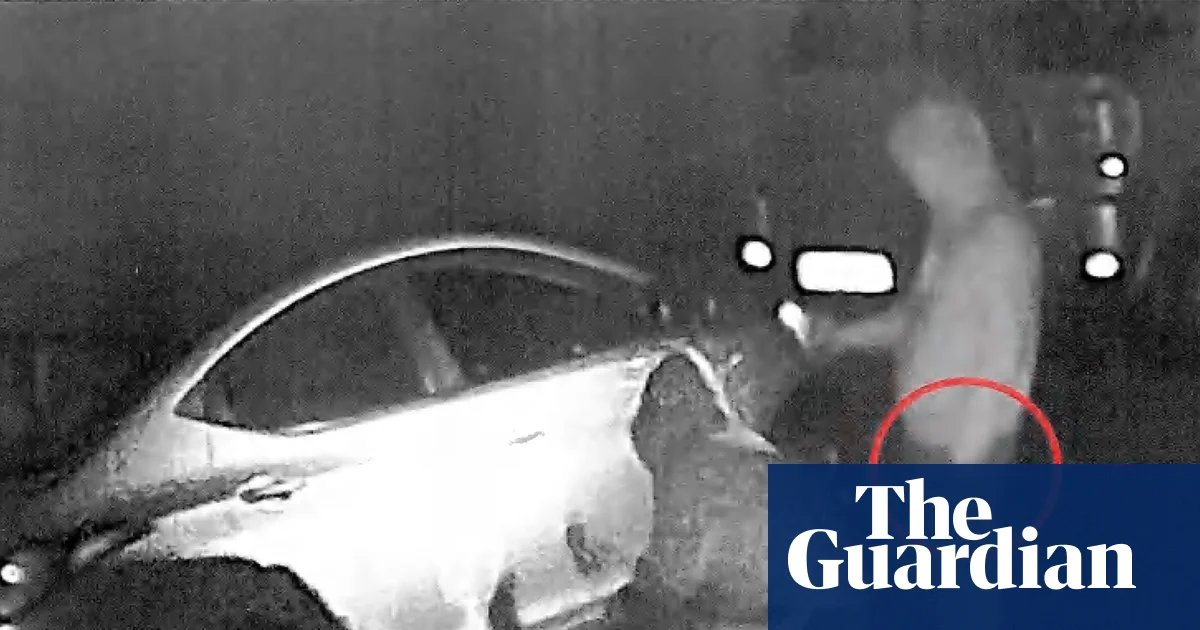
The case centers on Mohommed Farhat, who is currently serving a prison sentence after pleading guilty to 15 property-damage offences committed in late 2024. The state had sought a one-year extended supervision order under the Terrorism Act, arguing that Farhat’s actions—which included spray-painting “Fuk Israel” on vehicles and setting one on fire in the suburb of Woollahra—posed an ongoing security risk.
A “Serious Miscarriage of Justice”
In a stinging judgment published this week, Justice Fagan rejected the state’s application, branding the proceedings a “serious miscarriage of justice.” He found that lower courts and state agencies had incorrectly categorized Farhat’s conduct as antisemitic, a misclassification that he noted resulted in the defendant being treated with undue severity.
The court heard evidence that counter-terrorism police had, as early as three weeks after Farhat’s initial arrest in November 2024, concluded he was not motivated by extremist ideology. Instead, intelligence indicated he had been recruited and paid to carry out the vandalism. This critical information, however, was not shared with the prosecution or the magistrate during his original sentencing, nor was it disclosed when the state moved to label the 22-year-old—who wears a tattoo associated with Hezbollah—a terror threat.
"The material failure of police to provide critical evidence to the court has resulted in Mr Farhat’s prolonged and quite possibly wrongful incarceration," argued Greens MP Sue Higginson, who has formally requested that the Law Enforcement Conduct Commission (LECC) investigate the matter.
Judicial “Activism” vs. Legal Clarity
The ruling has drawn sharp criticism from the Executive Council of Australian Jewry (ECAJ). Alex Ryvchin, the council’s co-chair, described the judgment as "judicial activism" and warned that it ignored the "community impact" of the vandalism.
Central to the tension is Justice Fagan’s explicit rejection of the International Holocaust Remembrance Alliance (IHRA) definition of antisemitism. The IHRA definition, which has been adopted by the Australian government and various public institutions, is often used to inform how authorities interpret hate speech. Fagan, however, dismissed the formulation as “ineptly drafted” and “detached from the reality” of common language in Australia.
He maintained that disparaging Israel constitutes “political comment” rather than antisemitism, noting that for decades, many within the Jewish community have been among the most vocal critics of Israeli government policy. This stance was welcomed by the Jewish Council of Australia, which argued the judgment serves as a vital check against the use of the IHRA definition to shield Israel from legitimate criticism.
Path to Appeal
The NSW government, navigating the political and legal fallout, has remained cautious. Attorney General Michael Daley is currently seeking urgent legal advice on whether to appeal the decision to refuse the extended supervision order.
A government spokesperson emphasized the importance of judicial independence, stating, “Our government has taken strong action against antisemitism and hatred,” while declining to comment further on the ongoing legal proceedings.
Meanwhile, the NSW Police Force has confirmed that the handling of the case is now subject to an internal investigation. As the state weighs its next move, the case continues to highlight deep divisions over how to address antisemitism in an increasingly polarized political climate.