








The co-founder of the Geneva-based Gallifrey Foundation, a philanthropic organisation fighting to protect the ocean and endangered species, on doing ‘whatever it takes’ to achieve environmental and social change.
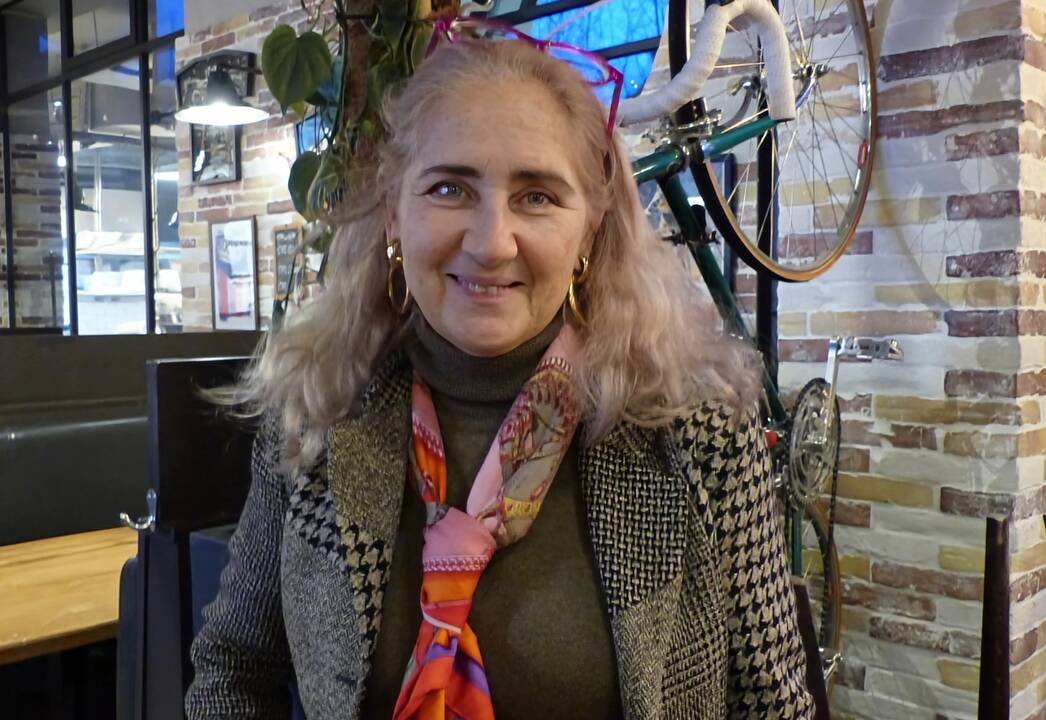
Antoinette Vermilye sits down at the Nyon cafe where we have agreed to meet and immediately apologises. She has the dregs of a cold and is wearing a green hand-embroidered mask to err on the side of caution. But it does little to muffle her enthusiasm as her eyes, which seem to smile with child-like mischief, do the talking.
Vermilye is an environmental activist with deep pockets and an iron will. Together with her husband, John Vermiyle, who she met in Geneva while both working in the airline industry, they launched the Gallifrey Foundation in 2016, a philanthropic organisation focused on marine and environmental conservation, after making a tidy sum in the United States from the sale of his luggage security business a decade earlier.
Their life and fortune, she says, changed overnight. “We asked ourselves, at the time, how much do we really need to live? What do we really value?” she says, sipping on lemon and ginger tea, her mask now cast aside. Vermilye grew up in Nigeria, where she lived near the Atlantic Ocean, which she credits for having a formative influence on her life. “Our answer was that we loved the ocean, but we also loved doing things for social good. That’s always been the driver of things,” she adds.
The couple had already dabbled on the side of their full-time jobs in environmental causes – in the 90s, John lent his business acumen to the making of a multi-national TV documentary series, The Blue Revolution, which examined humanity’s complex relationship with the sea. But they now had the freedom to dedicate the rest of their future – and their income – to advocating for what they loved most, swapping airport lounges for marine and wildlife conservation, fighting plastic pollution, overfishing, deep-sea mining, and many other causes.
Regeneration
In 2005, they moved back to Switzerland to Geneva’s neighbouring canton of Vaud, setting aside an annual budget to live “comfortably” and putting the rest into setting up Gallifrey – a nod to the home planet of the fictional Time Lord and eponymous British TV science-fiction series Doctor Who, who regenerates each time the actor playing his role leaves the show.
Though technically a foundation, Vermilye is keen to point out that it does much more than traditional grant-giving. “We are venture philanthropists; we get down and dirty,” she says, which, in a world intent on breaching the 1.5°C Paris Agreement target and degrading the planet through rampant deforestation, pollution, and resource over-exploitation, seems indispensable for any organisation plucky enough to take on the fight.
Together with Lauriane Trimoulla, the third member of Gallifrey’s small team sitting next to Vermiyle in the cafe booth, there seems to be no environmental challenge too big or small that the trio will not take on – provided, she says, they can achieve a realistic impact. It started with fighting ocean plastic pollution, their longest-running mission, as production levels continue to grow exponentially, with scientists estimating 200 trillion pieces floating in the world’s oceans. She says they chose it because “we felt we could still do something”, unlike overfishing, which only a systemic change could fix.
They collaborated with the International Union for the Conservation of Nature in developing their plastics division, co-financing an expert to work in-house and sponsoring research that ultimately led in 2017 to one of the first global reports on primary microplastics, which found that these tiny particles washed off household and industrial products could account for up to 30 per cent of the ocean’s “plastic soup”.
Involved in stalled yet still ongoing UN plastics treaty talks, Gallifrey, which has been pushing alongside other NGOs for a strong binding agreement, took to playful tactics in Geneva last summer to get a serious message across – handing out bars of soap to negotiators with cardboard packaging that read “no dirty tricks, vote for a clean plastics treaty”, a nod too to Switzerland’s clean image.
‘Whatever it takes’
Making inroads in environmental conservation requires creative approaches like these, according to Vermiyle. She likens the art of successful campaigning to a DJ “pumping up” or lowering the beat. “We’re not formulaic. We will do whatever it takes that we are capable of doing, and bring in others to try and further something forward,” she says.
Taking on commercial whaling in Iceland was another area that required “thinking outside the box”, where singling out the biggest commercial whaler – in this case, the billionaire industrialist Kristján Loftsson – could have backfired in a country with a tight community that will stand behind one of its own. Instead, Vermilye says they turned the tables and launched a campaign in 2023, thanking Iceland’s then minister of fisheries, Svandís Svavarsdóttir, for holding off on granting his company its whaling permit after reports on the inhumane treatment of hunted whales. “Because that was a unifying message, it gave her fuel in her government to be able to hold out, because otherwise they were between a rock and a hard place, “ she says. “We’re now three years on without hunting whales”.
Most recently, it has been on a mission to protect the ‘big bad wolf’ after an increasing crackdown in Switzerland and other European countries on growing wolf populations – a cause of celebration for conservationists while triggering alarm in agricultural communities over attacks on livestock. Despite being protected under the Bern Convention, Switzerland has relaxed hunting restrictions and approved the large-scale culling of wolves as a preemptive measure – a decision Vermilye deplores as going against any scientific evidence. In 2023, around 300 wolves were reported in Switzerland, while last year, 86 wolves were proactively targeted – most of them pups.
“Wolves are attacked vindictively and viciously with no reason whatsoever. They represent our intolerance to anything that doesn’t suit humans,” she says. Gallifrey is now backing the only appeal in European courts against the European Commission’s downlisting last year of wolves from “strictly protected” to “protected”, a move that critics warn would reverse decades of efforts to bring them back from near-extinction in the 1940s and that risks having long-lasting impacts on their genetic biodiversity.
The home run
We’re already two hours into the interview, and we have barely scratched the surface of Gallifrey’s ambitious portfolio of projects, which spans from efforts to ban all shark products in Switzerland – a move already taken by Austria in 2024 – to joining global calls for a moratorium on deep seabed mining. The foundation even sued Argentina in 2022 with an injunction – part of an elaborate strategy to tackle overfishing near the Galapagos Islands – a key marine corridor home to hundreds of migratory species that attracts huge international fleets.
Read more: Human-driven environmental changes in Galápagos face global pushback
Vermilye is a force to be reckoned with in a world of environmental and climate conservation still lacking equal female representation at the top. In 2020, an article in the UK media revealed the country’s then prime minister Boris Johnson was sending an all-male delegation to Cop26. Frustrated by this, it spurred her in 2020, to co-founded She Changes Climate, a global campaign demanding 50 per cent representation for women’s diversity in top-level climate negotiations. “When something bugs me, I can’t sit still and not do anything about it,” she says.
The coffee shop closes, and the evening sets in. But it seems that for Vermilye, her work day won’t end there. If only time travel existed to help this Time Lord defend Earth from its increasing environmental threats.
“We are having to become more activist”, she says animatedly, which she puts down to governments worldwide abrogating their social responsibilities and giving businesses excessive freedoms to pursue growth at the expense of environmental and social justice. Nowhere has this been more apparent than in the US, she says, where the Trump administration has marched ahead with over 70 actions undoing environmental rules, while exiting key multilateral treaties like the Paris Agreement. But it’s growing trend in countries worldwide – “a refusal to face the facts and listen to science and research”.
Countering today’s global challenges will require “extreme collaboration,” and a lot of orchestrating, she says. “It’s by doing that that you create an environment which will change inertia to energy.”