









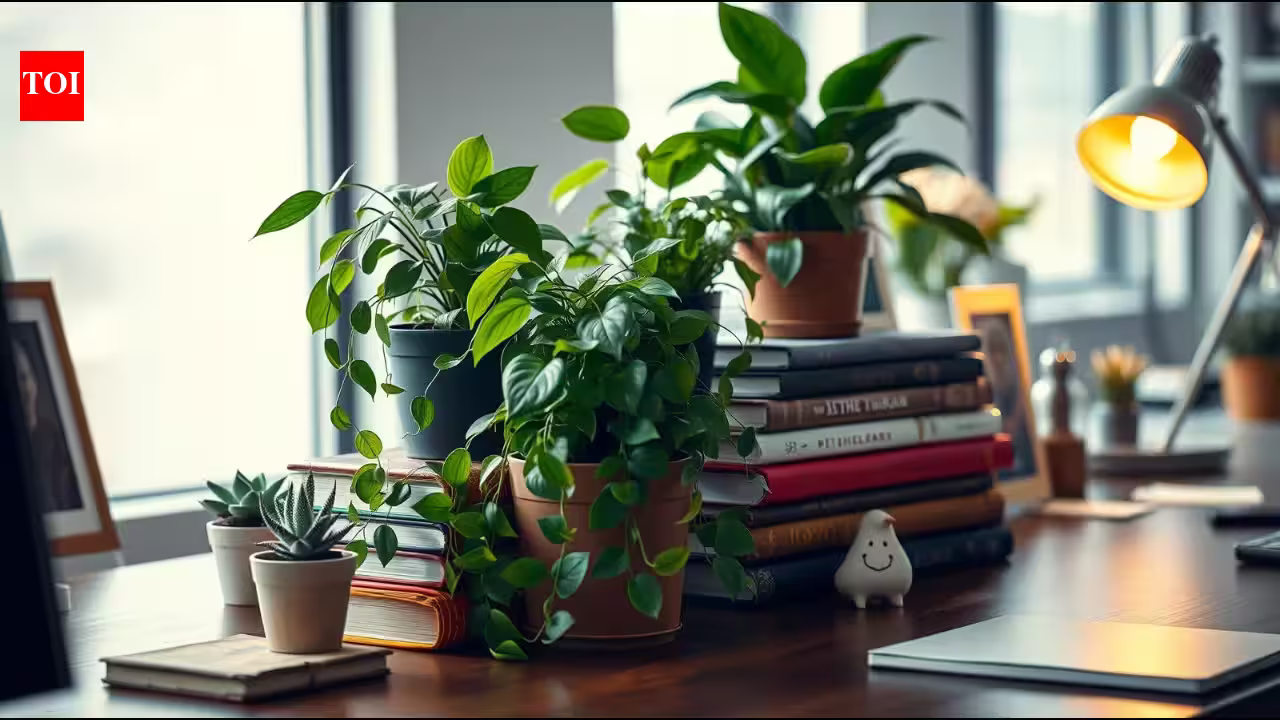
Beyond the Laptop: What Your Office Desk Says About Your Professional Persona
In the modern office, your workstation is more than just a place to park your laptop; it is a canvas of your professional identity. From lush potted plants and curated libraries to quirky figurines and carefully arranged stationery, the objects surrounding us are silent messengers. While a desk cannot serve as a full psychological profile, experts suggest that our workspace choices play a significant role in how colleagues and managers perceive our working style.
The Science of “Desk-side” Impressions
The idea that our surroundings reflect our character is backed by social science. A landmark 2002 study published in the Journal of Personality and Social Psychology demonstrated that independent observers could form surprisingly accurate judgments about an individual’s personality just by looking at their office or bedroom. Researchers found that people consistently rely on “environmental cues”—the items we choose to display—to fill in the gaps when forming impressions of others.
Essentially, your workspace is often speaking before you do.
Decoding the Decor
The objects we display communicate our values and priorities in ways we may not consciously intend:
- The Intellectual Archive: A desk piled with history books, economics journals, and handwritten notes often signals curiosity and intellectual engagement. While it doesn’t guarantee an “intellectual powerhouse,” it projects a desire to be seen as thoughtful and driven.
- The Green Oasis: While a plant doesn’t inherently prove one is “empathetic,” it demonstrates a desire to personalize the environment and improve one’s own experience of the workday. It signals that an employee has invested in their surroundings to make them sustainable and comfortable.
- The Minimalist’s Grid: An immaculately organized desk—where pens are aligned and files are filed—is frequently associated with conscientiousness and reliability. However, experts warn that this is a “snapshot,” not a diagnostic tool; a clean desk is not always synonymous with peak performance, just as a messy desk is rarely a sign of incompetence.
- The Creative Chaos: Perhaps the most misunderstood aesthetic is the “messy” desk. Psychological research suggests that while disorder can be a sign of disorganization, it can also foster non-conventional thinking. A desk covered in sketches, project notes, and active research often functions as a “laboratory of ideas.” The critical distinction lies in whether the clutter is functional or merely neglected.
Can Your Desk Influence Your Career?
While promotions are rightfully determined by skill, leadership, and performance, office perception remains a powerful undercurrent. In a professional setting, your desk acts as a “supporting actor.” It cannot win the film for you, but it can set the tone for the scene.
When qualifications between employees are similar, the “professional image” projected by a well-maintained, functional, and intentional workspace can leave a lasting impression on management. A desk that clearly communicates preparation and active involvement can reinforce the narrative that an employee is invested, organized, and ready for more responsibility.
Finding the Balance
So, what is the ideal office aesthetic? The goal should not be to manufacture a false image, but rather to curate a space that reflects your authentic work habits.
If you want to master your work personality, keep the tools that aid your productivity, display items that genuinely reflect your interests, and ensure your space is functional. By aligning your workspace with the qualities you want to project—be it creativity, reliability, or intellectual curiosity—you ensure that the “story” people tell about you is the one you intended to write.
After all, in the theater of office life, the smallest props can often leave the biggest impression.