








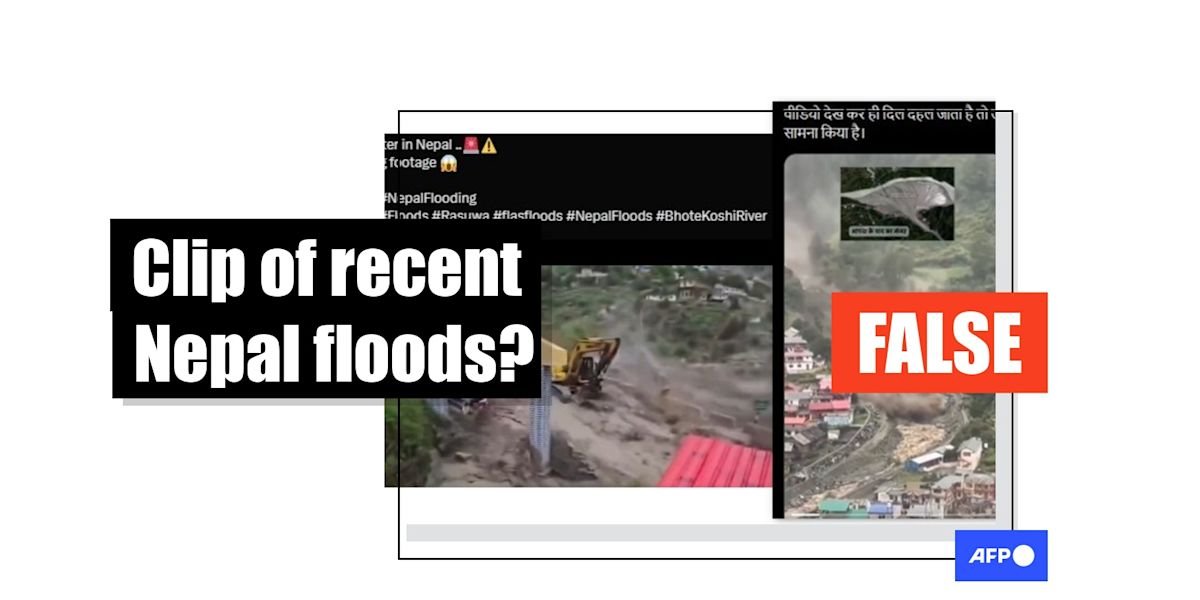
Viral Videos Misrepresent Deadly Nepal-Tibet Border Floods: A Fact-Check Investigation
In the wake of the catastrophic flooding and landslides that struck the Nepal-Tibet border in August 2026, a wave of misinformation has swept across social media. As search-and-rescue operations struggle to account for the hundreds of people caught in the disaster, users on platforms including X, Facebook, and Instagram have been circulating graphic footage falsely claiming to show the devastation in Nepal.
Independent analysis has confirmed that these videos are not from the current tragedy, but are instead recycled clips from flash floods that ravaged India’s northern state of Uttarakhand in August 2025 and 2026.
The True Toll of the Disaster
The actual crisis in the Himalayas has been marked by staggering loss. Triggered by a massive glacial collapse, according to the US Geological Survey (USGS), the disaster unleashed torrents of icy debris that surged through the Bhote Koshi and Trishuli river valleys.
Current reports indicate that the disaster has left more than 470 people dead and over 1,400 missing. The victims include a mix of local residents, foreign trekkers, and Hindu pilgrims who were en route to the sacred, snow-capped Mount Kailash in Tibet. As global temperatures rise, climate change continues to increase the frequency and severity of such glacial collapses, heightening risks for communities living in the shadow of the world’s highest peaks.
Exposing the Misinformation
Despite the gravity of the situation in Nepal, social media users have been leveraging unrelated, high-impact footage to garner engagement.
One widely shared post on X, dated August 27, 2026, featured a video of a flash flood tearing through a valley, accompanied by a caption describing the “horrifying” scenes in Nepal. Through a reverse image search and analysis of keyframes, investigators traced the footage back to an Instagram video published by AccuWeather on August 5, 2025. That video documented a flash flood in Dharali, Uttarakhand, a fact corroborated by Google Earth satellite imagery of the region.
A second viral clip, which showed vehicles being swept away by a torrent of mud, was similarly misrepresented. Records show this footage was captured on August 10, 2026, during a severe cloudburst in the Niti valley of Uttarakhand, India. The footage was originally distributed by the British news agency Newsflare and reported by Indian media outlets, including NDTV, at the time of the Indian incident.
A Pattern of Deception
This is not the first instance of digital misinformation surfacing during this humanitarian crisis. As the search for survivors continues, authorities and fact-checking organizations—including AFP—have been working to debunk a growing number of false claims and misattributed videos.
Experts warn that sharing unverified, older footage during active disasters not only spreads panic but can also hinder relief efforts by clouding the public’s understanding of the actual affected zones. As the region mourns those lost in the Nepal-Tibet border floods, users are urged to verify the authenticity of dramatic visuals before sharing them online.