










[
A Legacy of Deliberate Brilliance: Remembering Maryam Mirzakhani on Women in Mathematics Day
STANFORD, CA – May 12th – On what would have been her 47th birthday, the world today celebrates Women in Mathematics Day, a tribute to the enduring legacy of Dr. Maryam Mirzakhani. The first woman and first Iranian to be awarded the prestigious Fields Medal, Mirzakhani redefined mathematical prowess not through speed, but through profound patience and sustained intellectual exploration. Her self-description as a "slow thinker" stands as an inspiring counter-narrative in a field often perceived as a race for quick solutions.
Mirzakhani’s journey, from a young girl in Tehran with dreams of becoming a writer to a celebrated professor at Stanford University, is a testament to the power of deliberate thought. Her distinctive approach—believing that difficult mathematics demands time, patience, and sustained effort—ultimately led her to the highest echelons of her discipline. In 2014, her groundbreaking work was recognized with the Fields Medal, an achievement that shattered historical barriers and inspired countless aspiring mathematicians worldwide.
Her early life hinted at her extraordinary potential. Born on May 12, 1977, Mirzakhani’s interest in mathematics blossomed during her school years. She became a prodigious talent, winning gold medals at the International Mathematical Olympiad in both 1994 and 1995, even achieving a perfect score in the latter. After excelling at Sharif University of Technology in Iran, she pursued higher education in the United States, earning her PhD from Harvard University in 2004. By the age of 31, she had ascended to a professorship at Stanford, where her research would soon garner international acclaim.
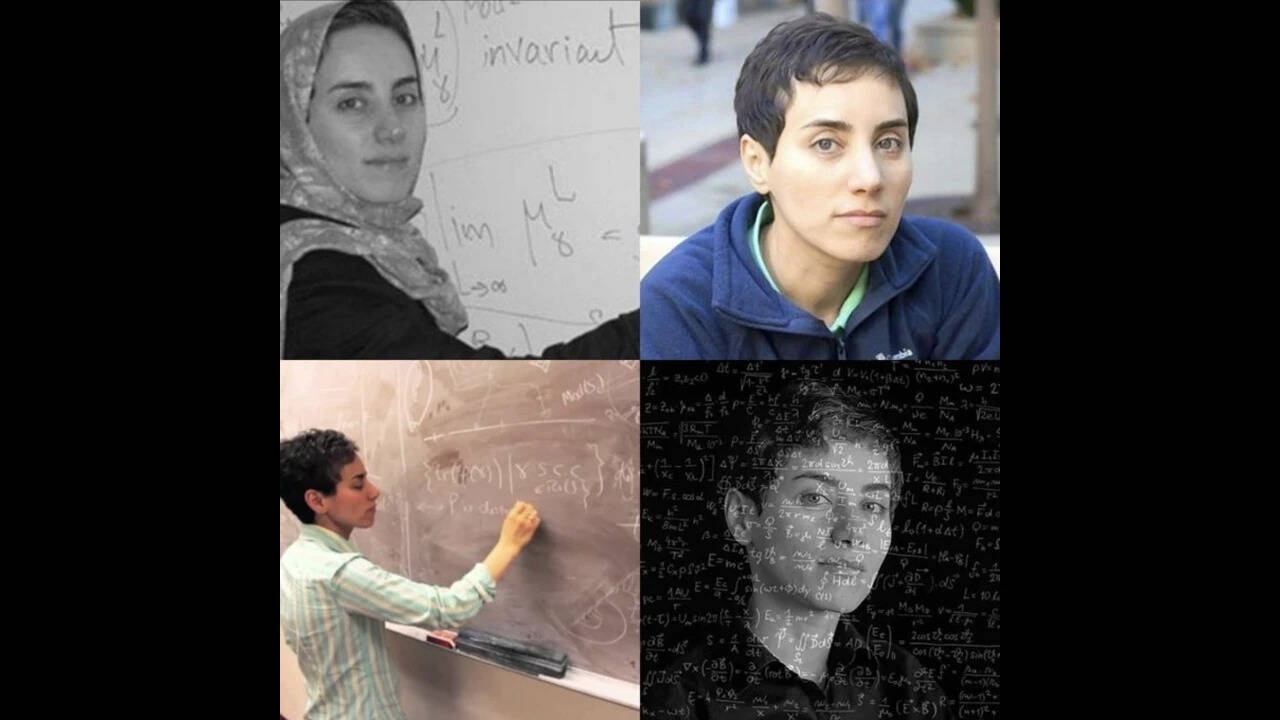
From Olympiad champion to Fields Medal winner: The extraordinary journey of Maryam Mirzakhani
Mirzakhani’s research delved into highly complex areas, including hyperbolic geometry, topology, dynamical systems, and Riemann surfaces. Her unique methodology involved an unwavering commitment to deeply exploring problems, often spending extensive periods sketching intricate diagrams and drawings on large sheets of paper – a creative process her daughter affectionately referred to as her mother’s "paintings." This visual and iterative approach allowed her to dissect and comprehend complex mathematical ideas in a way that others had not.
Her contributions fundamentally reshaped the understanding of the geometry and dynamics of Riemann surfaces and their moduli spaces. More profoundly, Mirzakhani’s work forged unexpected connections between previously disparate branches of mathematics, exhibiting what some described as a "magic wand" quality in her ability to illuminate solutions to long-standing mathematical puzzles.
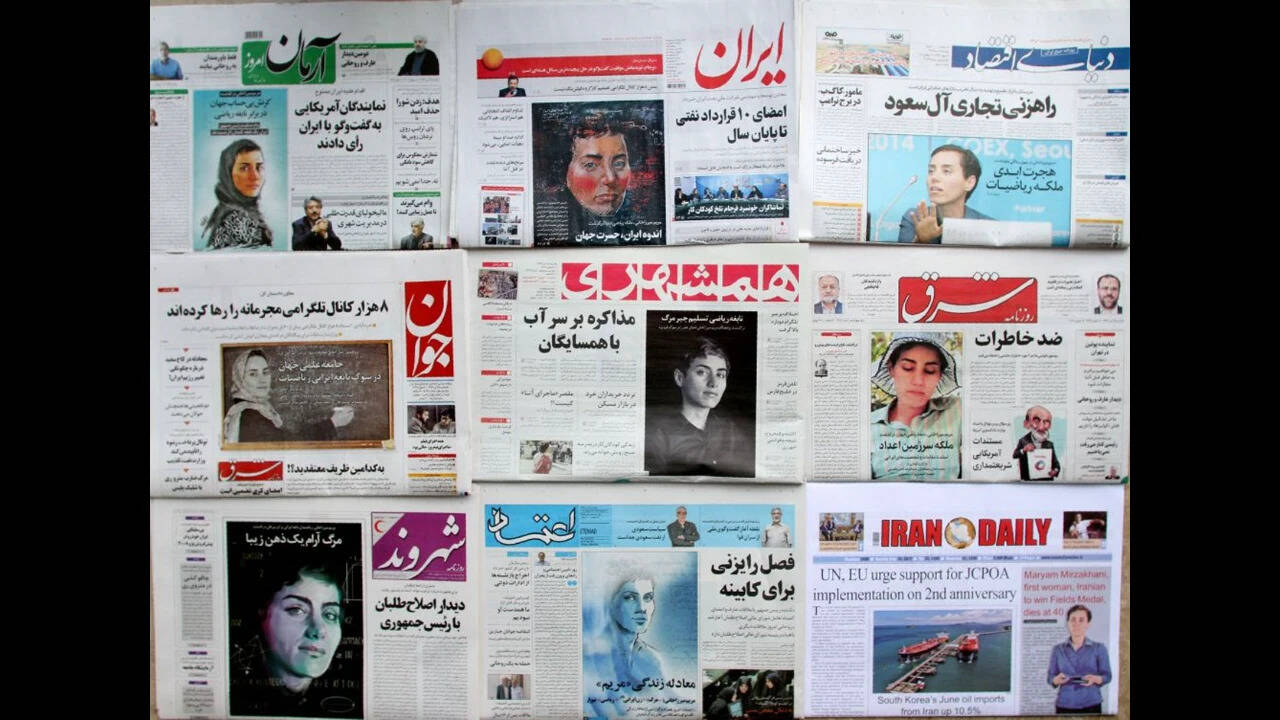
Maryam Mirzakhani: How a ‘slow thinker’ became a mathematics legend. (Getty Images)
The 2014 Fields Medal was a historic moment, not only for Mirzakhani personally but for global representation in STEM. As the first woman and the first Iranian to receive this accolade, her triumph sent ripples of inspiration across the globe, particularly empowering young women and students from underrepresented backgrounds to pursue advanced mathematics.
Tragically, Mirzakhani’s brilliant career was cut short. Diagnosed with breast cancer in 2013, the disease advanced rapidly, leading to her passing on July 14, 2017, at the age of 40. Despite her untimely death, her influence continues to resonate deeply within the scientific community and beyond. Her birthday, May 12th, is now internationally recognized as Women in Mathematics Day, a powerful reminder of her groundbreaking achievements and a call for greater inclusion and diversity in the field.
Maryam Mirzakhani’s enduring message for students is perhaps her most profound: mathematical ability is not solely defined by speed. Her life demonstrated that the most significant breakthroughs often emerge from sustained curiosity, intellectual courage, and the willingness to meticulously unravel complex problems. Being a "slow thinker," in her case, was not a hindrance but a distinct pathway to discovering extraordinary ideas and forever changing the landscape of mathematics.
Disclaimer: This article is based on the information provided and is intended for educational and informational purposes.