








Regional Powerhouses Join Forces: MNS and KRV Launch ‘Indian Languages Forum’ to Counter Central Dominance
BENGALURU/MUMBAI: In a move that signals a significant realignment in India’s regional political landscape, two staunch rivals—Maharashtra’s MNS and Karnataka’s KRV—have set aside a decade of hostilities to launch a unified front. The newly formed ‘Indian Languages Forum’ aims to challenge what the groups describe as the overreach of national political narratives, the aggressive imposition of Hindi, and deep-seated disparities in central tax distribution.
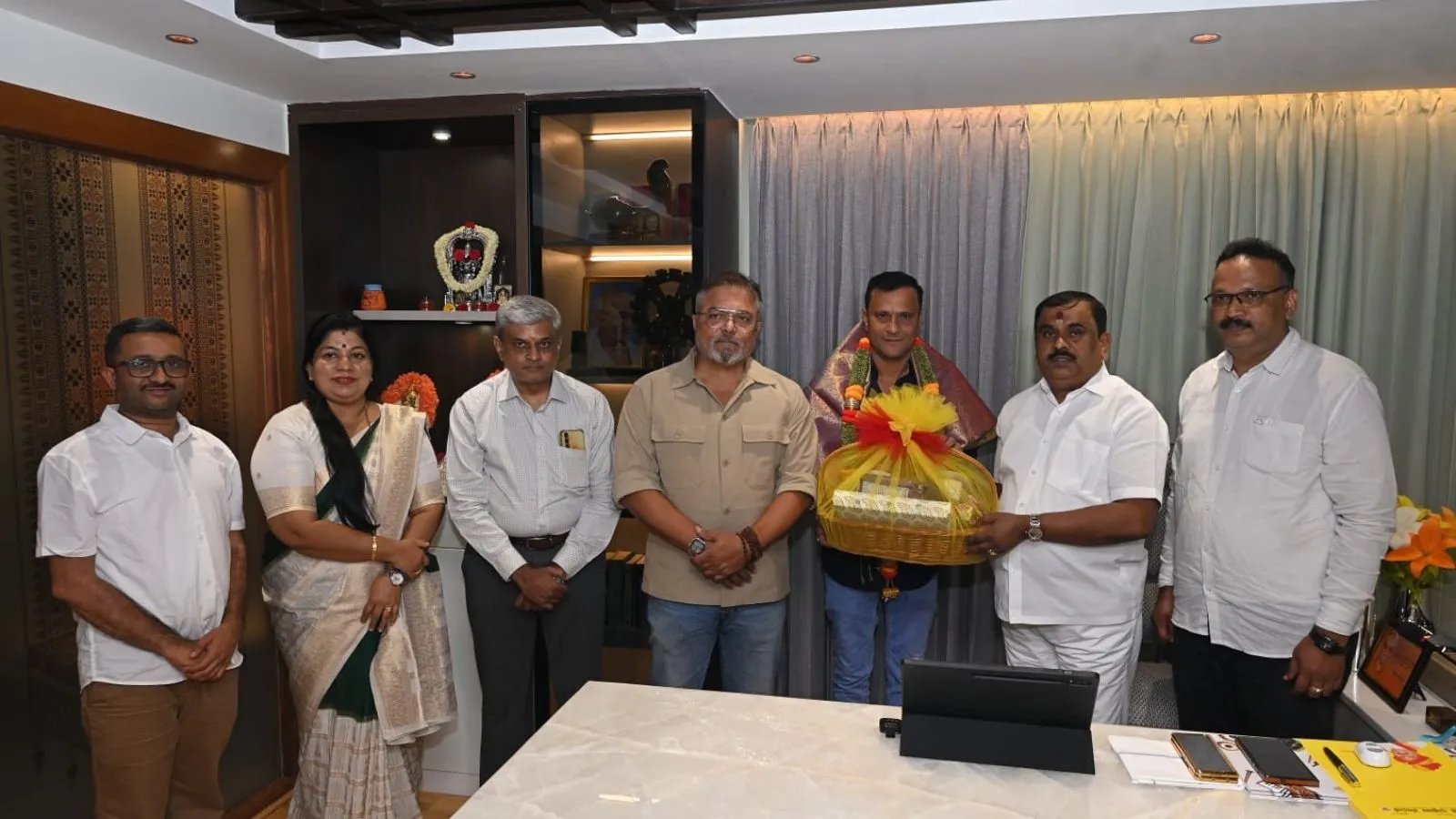
The alliance marks a historic shift; the two organizations last engaged officially in 2013 during a controversy surrounding the Railway Recruitment Board (RRB) language exams. Following their meeting in Bengaluru this Tuesday, a delegation from the Maharashtra Navnirman Sena (MNS), led by party leader Sandeep Deshpande, met with Karnataka Rakshana Vedike (KRV) chief T.A. Narayana Gowda to formalize a 10-point common minimum program.
A Unified Front Against ‘Central Bias’
The core objective of the forum is to address the systemic grievances of high-revenue-contributing states. Both the MNS and KRV contend that states like Maharashtra and Karnataka are being shortchanged by the central government, receiving a disproportionately low share of GST and other central taxes despite their massive contributions to the national exchequer.
“The Central government and the national parties have been killing the interests of the South Indian states, be it in GST, language imposition, or regional political parties,” stated B. Sannirappa, state chief secretary of the KRV. “There is a sense of urgency for South Indian organizations to unite and fight it.”
Beyond fiscal policy, the alliance is deeply concerned about the upcoming constituency delimitation process. Both parties argue that a population-based redistricting will dilute the political influence of economically prosperous states with controlled population growth, effectively granting disproportionate parliamentary power to states like Uttar Pradesh and Bihar at the expense of the South and West.
Bridging the Border Divide
The most striking aspect of this partnership is the resolution of the long-standing dispute over the border district of Belagavi, which has historically fueled deep-seated tensions between the two regionalist groups.
While the MNS and KRV have clashed for over 20 years over territorial and linguistic identity, both leaderships have signaled a pragmatic pivot. The KRV has adopted a more conciliatory tone, noting that it has no objection to the use of Marathi in Belagavi, provided it is balanced with Kannada, given the district’s official status within Karnataka. Similarly, the MNS has acknowledged the need for residents in Marathi-speaking enclaves within Karnataka to integrate into the local culture.
“The shared grievances against central policies outweigh our local territorial disputes,” members noted during the meeting.
Looking Toward a National Platform
The scope of the ‘Indian Languages Forum’ is set to expand rapidly. The coalition is already planning a national convention in New Delhi scheduled for October or November. They intend to extend invitations to regional organizations from across the country, including representation from Tamil Nadu, Andhra Pradesh, Kerala, Telangana, Puducherry, Goa, West Bengal, and Punjab.
As the MNS initiates outreach to other southern regional parties—with upcoming visits to Tamil Nadu in the pipeline—the formation of this forum marks a turning point. It suggests an emerging trend where regional outfits, feeling ignored by traditional national parties like the BJP and Congress, are opting to build their own national-level pressure groups to protect the federal fabric of India.