






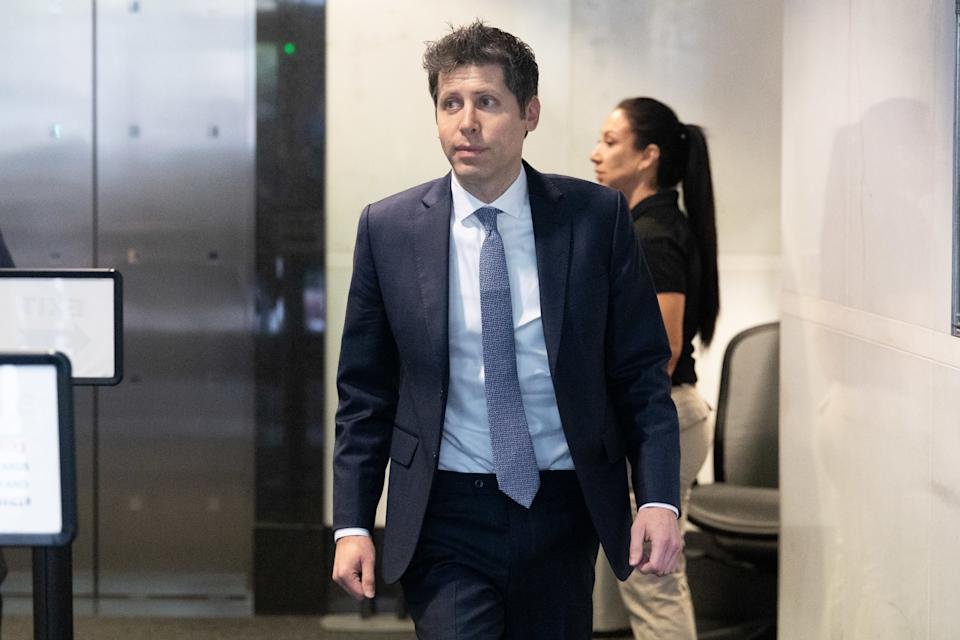
OpenAI’s (OPAI.PVT) Sam Altman faced sharp questions from the attorney for co-founder Elon Musk in the Tesla (TSLA) CEO’s lawsuit against his fellow co-founder.
Attorney Steven Molo interrogated Altman under cross-examination about whether he lied to advance his business interests and gauged his response to OpenAI’s former senior leaders accusing him of being untruthful or deceptive.
Molo flatly asked Altman if he always tells the truth or whether he has misled people with whom he does business, to which the CEO responded saying he believes he’s an honest and trustworthy business person and that he doesn’t lie to colleagues.
Musk is suing Altman and co-founder and OpenAI president Greg Brockman over claims they sought to benefit themselves by converting OpenAI into a for-profit. OpenAI says Musk is upset he left OpenAI before it became the AI leader it is today.

In his testimony, Altman said that before Musk split from OpenAI, he believed that he should be made CEO of an eventual for-profit arm of OpenAI. Musk, Altman said, argued he was the only person who could make non-obvious decisions that would eventually prove to be correct.
At one point, Molo asked Altman whether it bothered him that people have called him a liar under oath. “Yes,” Altman replied.
Musk’s attorney also asked whether he was aware that Anthropic co-founders Dario and Danielle Amodei, who previously worked at OpenAI, accused him of plotting a coup at the ChatGPT developer and said Altman misrepresented the terms of a 2019 deal OpenAI made with Microsoft.
Altman said that Dario has accused him of many things.
The CEO also faced questions related to his ouster as CEO of OpenAI in November 2023, when the company’s board accused him of not being consistently candid with its members. Altman was reappointed as CEO days later.
Molo similarly brought up the various companies Altman has ties to that plan to or have worked with OpenAI, such as Helios Energy, in an effort to show potential conflicts with his role as CEO and positions with outside firms.
Earlier, while under questioning from OpenAI’s attorney William Savitt, Altman said that prior to leaving the company, Musk wanted to be made CEO of an eventual for-profit version of OpenAI, something that Altman said made him “extremely uncomfortable.”
Altman also claimed Musk said he deserved 90% of the equity in OpenAI and that he mused about turning the company over to his children if he died without a successor plan in place.

Email Daniel Howley at dhowley@yahoofinance.com. Follow him on X at @DanielHowley.