








Congress Accuses Election Commission of ‘Deception’ Over Affidavit in Supreme Court
NEW DELHI: The Indian National Congress has launched a scathing attack on the Election Commission of India (ECI), labelling its latest affidavit submitted to the Supreme Court as “deceptive, deceitful, and duplicitous.” The opposition party’s sharp critique follows ongoing internal tensions within the poll body, with senior leaders alleging that Chief Election Commissioner (CEC) Gyanesh Kumar is bypassing his colleagues to push through unilateral decisions.
Allegations of Internal Discord
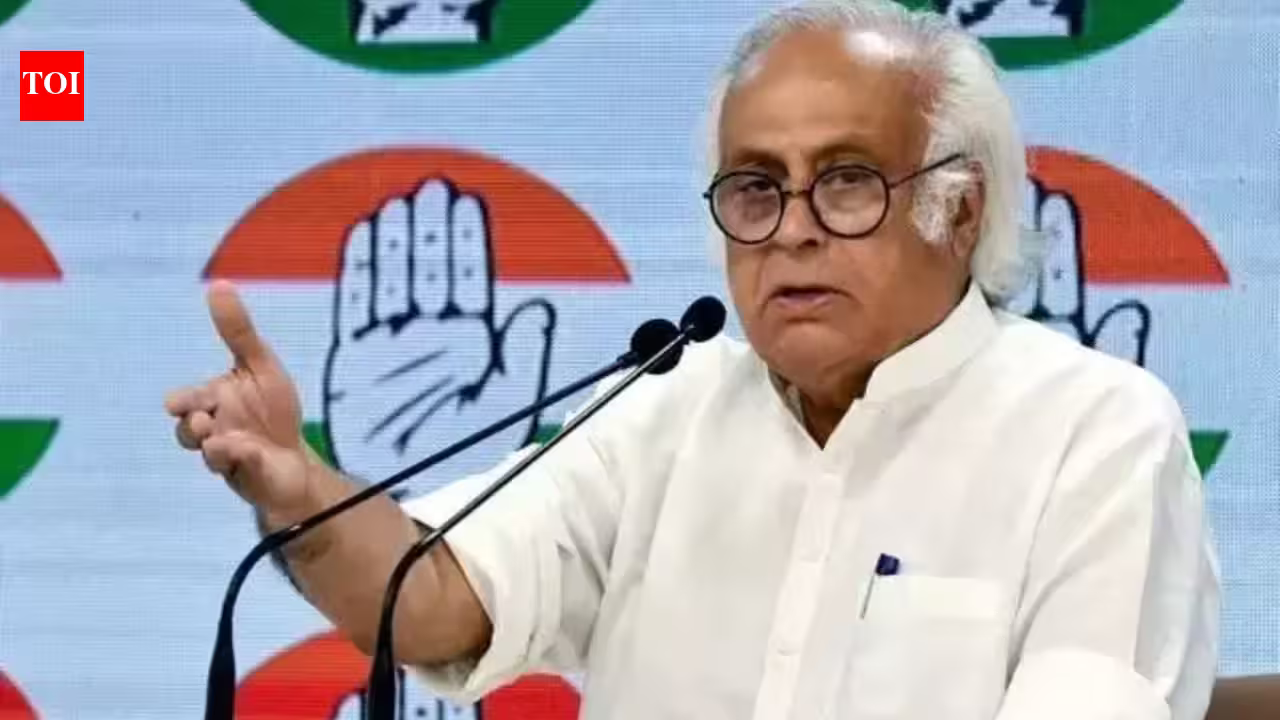
The controversy centers on the decision-making process within the Election Commission. Congress General Secretary Jairam Ramesh, speaking on behalf of the party, took to social media to highlight a disconnect between the EC’s public claims of unanimity and the reality of its internal operations.
“Oh what a tangled web we weave, when first we practice to deceive,” Ramesh remarked, quoting Sir Walter Scott to emphasize what he describes as a lack of institutional transparency. According to the Congress, while the ECI claims that major decisions—specifically regarding Systematic Voter’s Education and Electoral Participation (SVEEP) orders—were reached with the full consensus of all three commissioners, the reality is starkly different.
Ramesh alleged that the two other election commissioners had formally registered their objections to several “illegal actions” and “grave violations” ordered by the CEC. These objections, according to the Congress, were summarily disregarded. In some instances, the other commissioners were allegedly kept entirely in the dark, learning about finalized policy shifts only through media reports rather than internal communication channels.
The Form 6 Controversy
A significant portion of the Congress party’s ire is directed at the ECI’s stance on the amendment of “Form 6,” the document used by citizens to register as voters. The Congress accuses the poll panel of shifting its narrative to avoid legal scrutiny.
Initially, the EC contended that the Supreme Court had granted its seal of approval for a new declaration attached to Form 6. However, after the apex court reportedly contradicted this claim, the ECI pivoted its stance. The Commission now maintains that the new declaration form is an entirely separate entity and that the original Form 6 remains unamended.
Ramesh refuted this explanation, calling it a “deception.” He argued that the technical design of the online portal makes the distinction irrelevant, noting that the system does not allow a user to complete the Form 6 submission process without first filling out the mandatory declaration. By compelling the declaration as a prerequisite for submission, the party argues that the ECI has effectively amended the process through the back door.
Concerns Over Electoral Rolls
Beyond the procedural debate regarding forms, the Congress has raised alarms over the centralization of electoral rolls. The party has questioned the deployment of the ECINET system, alleging that it overrides the powers of Electoral Registration Officers (EROs).
The EROs are designated as the statutory authorities responsible for maintaining and certifying voter lists. By centralizing these functions, the Congress believes the ECI is undermining the local accountability that is essential to the integrity of the democratic process. Despite these mounting criticisms and the internal dissent recorded by fellow commissioners, the ECI has maintained silence on the specific allegations of centralization and the stripping of powers from statutory authorities.
As the legal proceedings continue, the Congress’s intervention signals a growing demand for greater transparency and administrative accountability within the nation’s highest election management body.
Disclaimer: This content is auto-generated for informational purposes only.
Source: Read Original News