






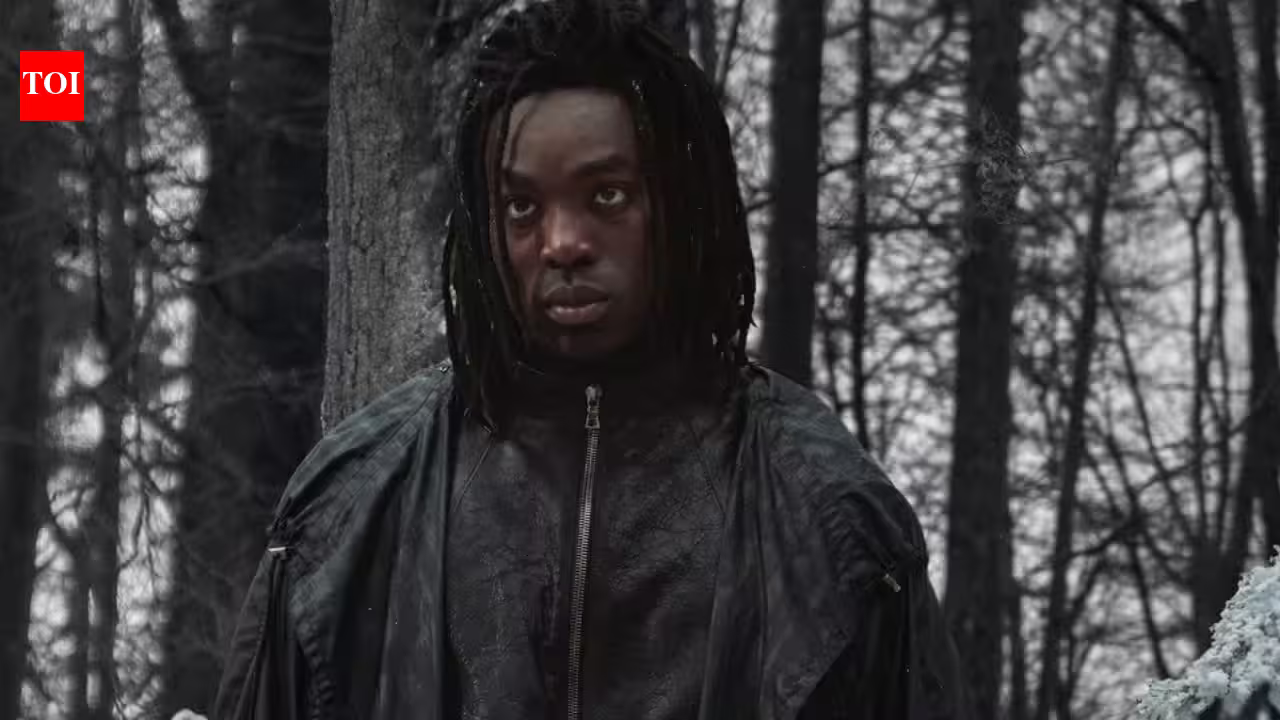
Walking Into the Fire: Paapa Essiedu Faces the Hogwarts Legacy
When the news first broke that HBO was reviving the Harry Potter universe for a long-form television adaptation, the collective reaction of the internet was as predictable as it was volatile. The franchise, which defined a generation and minted legends out of its original cast, carries a weight of nostalgia that borders on the sacred. But as the casting process began, that reverence turned into something much uglier for one actor in particular: Paapa Essiedu.
Tasked with stepping into the obsidian robes of Professor Severus Snape—a character indelibly stamped by the late Alan Rickman—Essiedu has faced a relentless onslaught of vitriol. From online trolling to heinous, racially charged threats, the discourse surrounding his casting has been, to put it mildly, a sobering reminder of the darker side of fandom. Yet, in his first major public comments on the firestorm, Essiedu is choosing to remain unbowed, meeting the noise with a quiet, steely composure.
The Shadow of the Half-Blood Prince
To play Severus Snape is to navigate one of the most complex narrative arcs in modern fantasy. Alan Rickman’s portrayal of the Potions Master was iconic; his drawl, his physical stillness, and his tragic reveal transformed a seeming villain into a martyr of unrequited love. Attempting to inhabit that space is, for any actor, a daunting prospect. Adding the layer of a re-imagined identity into the mix has only heightened the scrutiny.
Speaking at the 2026 TIME100 Next Gala, Essiedu addressed the elephant in the room with remarkable grace. When asked about the hate campaign that has dogged his casting announcement for the better part of a year, he didn’t lean into the trauma, nor did he shrink from the reality of the situation. He acknowledged that he entered this project with “open eyes,” fully aware that the sanctity fans place on the original films would lead to intense, and often toxic, scrutiny of any change.
A “Full Heart” in the Face of Hostility
There is a specific bravery in stepping into a role when you know a loud segment of the audience is waiting for you to stumble. Essiedu’s approach isn’t one of defiance, but of professional commitment. “The whole team has been so supportive of me,” he told reporters. “Obviously, my priority is the work. I wouldn’t take this job on [otherwise], but I walk into it with open eyes.”
His comments reflect a maturity rarely seen in the rapid-fire world of social media discourse. Rather than engaging in the mud-slinging, Essiedu is framing his performance as a “mantle” taken on with an “open and full heart.” It is a delicate balance: acknowledging that the fandom has a “broad spectrum” of reactions while maintaining that his duty—and his focus—remains firmly on the creative output rather than the online commentary.
Beyond the Noise: Shifting the Focus to Craft
It is easy to forget, amidst the toxicity of hashtag wars and casting petitions, that there is a massive production team laboring to translate J.K. Rowling’s world into a new medium. Essiedu was quick to pivot the conversation toward the collective effort behind the upcoming HBO series.
“I’m really proud of what I’ve seen so far,” he said, shifting the spotlight away from his own experience and onto the craftsmanship of his colleagues. “There are so many people who worked so hard on this project—and who it means so much to. It’s been a long time coming. It’s been a long time that people have been saying a lot of things, and now’s the time for people to engage with what we made.”
This is the central challenge for the new series: moving the audience from the comfort of their memories into a new interpretation. Essiedu is essentially daring the audience to watch the show, urging them to engage with the actual artistry rather than the projected anxieties of a fanbase protective of its childhood.
The Weight of Expectation for HBO’s Reboot
The stakes for the HBO series, which is set to premiere on December 25, are gargantuan. The original film series concluded nearly a decade and a half ago, and for millions, it remains the definitive visual representation of the Wizarding World. To reboot this, particularly with a fresh cast, is a gamble of studio-level proportions.
The casting of a Black actor as Snape—a character historically coded by his pale, brooding exterior in the books and Rickman’s performance—is a bold narrative choice that signals a move away from a “shot-for-shot” remake. It suggests that HBO is looking to emphasize the themes of the story rather than purely chasing the aesthetic of the 2001 adaptation. For Essiedu, this means he is not just playing a character; he is playing a catalyst for a new era of the franchise.
The Verdict: Will the Magic Hold?
As the countdown to the premiere of Harry Potter and the Philosopher’s Stone begins, the industry will be watching closely. Not just for the ratings, but for the cultural reception of this new iteration. If the show succeeds, it will likely be because performers like Essiedu were able to overcome the initial friction of change and offer something that feels honest and distinct.
Paapa Essiedu has clearly decided that the work is worth the fight. By refusing to be derailed by the vitriol, he is asserting that a legacy is not a static object to be preserved in amber, but a living story that can evolve. Whether the fans will accept this evolution remains to be seen, but as the premiere date approaches, Essiedu stands ready. He has weathered the storm before the cameras even started rolling; now, he invites the world to see if his version of Snape can cast a new spell. The verdict arrives on Christmas Day, but one thing is certain: Essiedu has already proven he has the spine for the task.
Disclaimer: This content is auto-generated for informational purposes only.
Source: Read Original News