








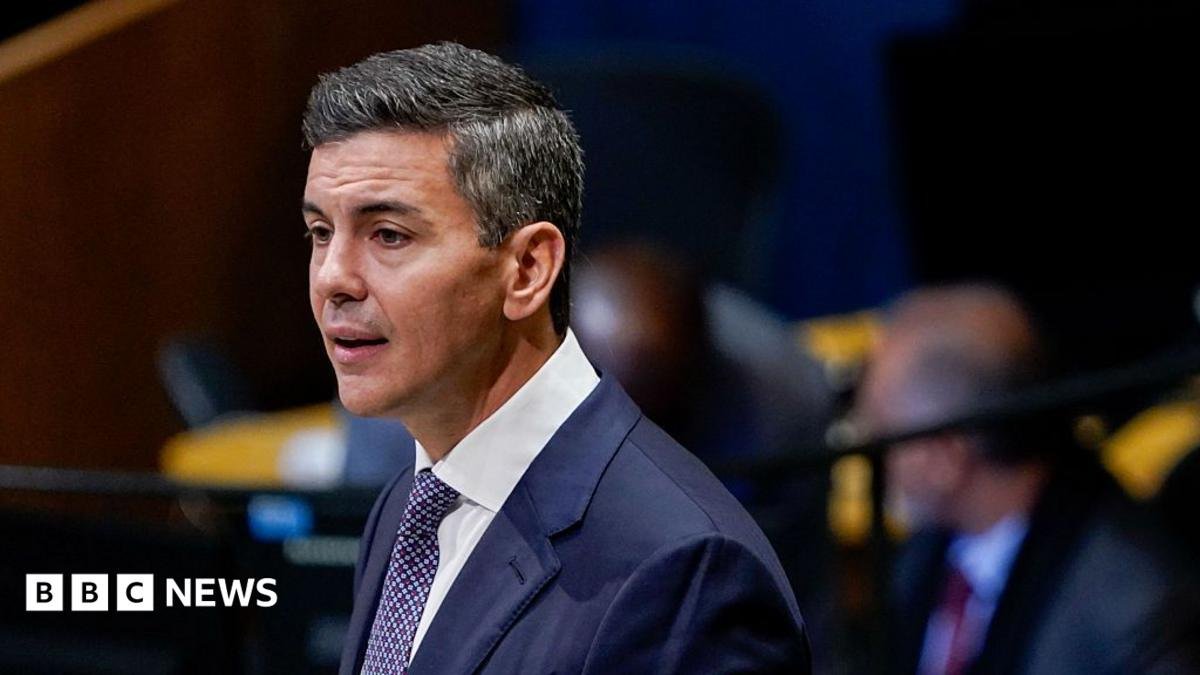
ASUNCIÓN — In a seismic shift for Paraguayan politics, President Santiago Peña announced his resignation late Thursday, succumbing to intense public pressure and a looming impeachment trial following the catastrophic collapse of Ueno Bank.
The embattled leader, who took office in 2023 representing the conservative Colorado Party, delivered the news in a somber video message posted to social media platform X. “I want to apologise to the people if at any point I failed,” Peña stated, his voice tight. “It was never my intention to betray the trust you placed in me. My resignation is a measure taken to protect the stability, social peace, and democratic institutions of our nation.”
The political crisis that toppled his presidency centers on his historic ties to Ueno Bank, a massive digital lender that serves roughly three million customers—a staggering 60% of Paraguay’s adult population. Earlier this week, the bank entered an insolvency process, freezing all operations and effectively locking millions of citizens out of their life savings and pension funds.
As news of the collapse broke, public outrage reached a boiling point. Protesters flooded the streets of Asunción, demanding accountability from a government they felt had prioritized private interests over public welfare. The situation intensified when lawmakers in the lower house of Congress launched a formal impeachment probe, alleging that Peña, who held shares in the company owning Ueno until last year, had engaged in severe conflicts of interest and executive misconduct.
While Peña has consistently rejected these allegations of impropriety, the political environment became untenable as the nation faced the prospect of a protracted impeachment trial. By stepping down, Peña effectively halts the congressional proceedings, though the shadow of the banking scandal remains the defining narrative of his short-lived administration.
To mitigate the fallout, the Paraguayan government has moved rapidly to manage the financial fallout. The Central Bank of Paraguay has officially seized the digital lender, and Congress has fast-tracked emergency legislation to initiate a repayment process for the millions of affected depositors. A new president for the Central Bank has also been appointed in a bid to restore confidence in the nation’s battered financial sector.
Peña, a former economist, had been elected on a platform of growth and stability, comfortably defeating a centre-left challenger just over a year ago. His rapid fall from grace marks the deepest political crisis for the Colorado Party in recent memory. As the country grapples with the fallout of the bank failure, authorities remain on high alert, hoping that the leadership change will calm the volatile streets and prevent further civil unrest. For now, Paraguay enters a period of profound political uncertainty as it seeks to stabilize both its economy and its democratic integrity.
Disclaimer: This content is auto-generated for informational purposes only.
Source: Read Original News